
By Nadia Rahman · Cosmetic Chemist & OEM Industry Writer · Published 27 August 2026
Mexico is not the first country a Malaysian beauty brand thinks of when it goes looking for a factory. Korea, China, Thailand and home ground are the usual four. But Mexico keeps turning up in sourcing conversations for two specific reasons: its contract laboratories quote genuinely small first runs, and a brand that also wants to sell in the United States or Canada can serve all three North American markets from one production site. This guide walks a Malaysian brand owner through ten Mexican factories with live, verified websites — and, just as importantly, through what it actually takes to bring a Mexican-made cosmetic into Malaysia under NPRA.
Key takeaways
- Mexico’s contract-manufacturing sector is built from mid-size independent laboratories, mostly in Jalisco, Estado de México, Guanajuato and Mexico City — not global CDMOs.
- Entry minimums are unusually friendly: one lab publishes ready-to-label stock from 10 units and private label from 100, another quotes a project value of about MXN 50,000 instead of a unit count.
- Mexico regulates the factory, not the product. That speeds up a Mexican launch, but it also means the factory is not automatically producing the dossier NPRA will want from you.
- Ocean freight from Mexico to Port Klang runs roughly 40 to 55 days. Budget a six-month cycle from purchase order to Malaysian shelf, not three.
- Halal is the deciding factor for most Malaysian brands. Mexican laboratories rarely hold a JAKIM-recognised halal certificate, and that gap is not something a contract clause can fix.
Why Mexico is showing up in Malaysian sourcing shortlists
Two things changed. First, Malaysian brands with ambitions beyond ASEAN increasingly want a North American production base so their US and Canadian stock does not cross an ocean twice. Mexico sits inside the USMCA trade area with road freight into both markets, which makes it structurally cheaper for that leg than any Asian option. Second, Mexican laboratories have become far more visible in English. Several now publish English sites, US FDA registration numbers and Health Canada references, which is a fairly reliable signal that they already handle export paperwork rather than serving only the domestic market.
What has not changed is the distance to Malaysia. Nothing about Mexico makes it a convenient supplier for a brand whose only market is Malaysia. It becomes interesting the moment your sales map includes North America, or the moment you need a formula or a format that local capacity genuinely cannot deliver.
What Mexico is genuinely good at making
Mexican contract laboratories are strongest in creams, lotions, serums, hair care and body care — the emulsion and surfactant categories that make up the bulk of any private-label range. Sun care is a real specialism, unsurprisingly for a country with the climate and the domestic demand to support it, and at least one laboratory sells sunscreen and repellent in bulk for brands that fill their own packs.
Colour cosmetics are thinner on the ground but not absent; one factory on this list runs mascaras, shadows, pigments, primers and palettes alongside in-house container moulding, which is a rare combination anywhere. Fragrance capability exists in Mexico City. What you will find less of than in Guangdong or Gyeonggi-do is the very high-technology skincare tier — encapsulated actives, novel delivery systems, K-beauty texture engineering. If that is your product, Mexico is probably not your factory.
The ten Mexican cosmetic factories, and what each is actually good at
Every screenshot below was captured from the company’s live website in August 2026. Details are as each company publishes them; none of it has been independently audited, and you should confirm current capability directly before committing.
1. Cosmética Lab Natural
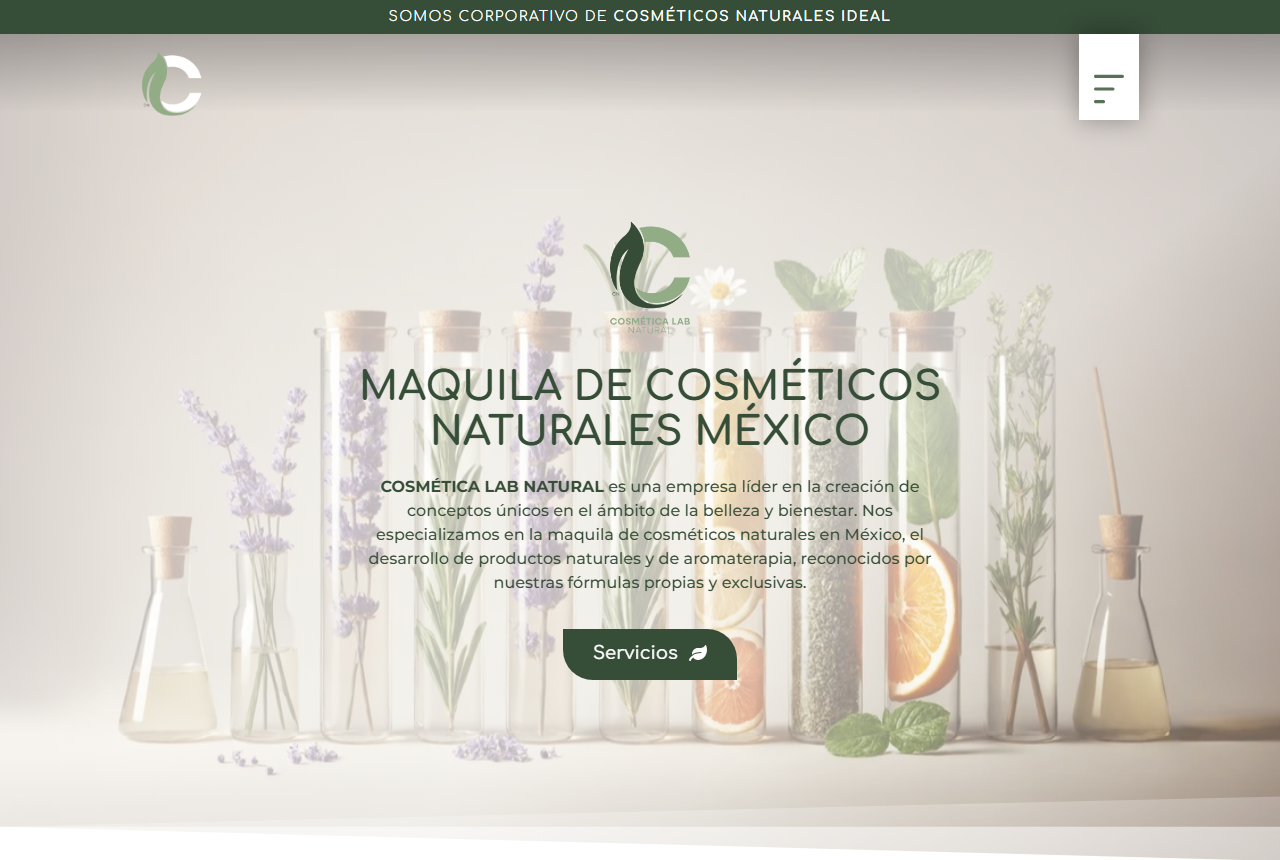
HQ: Mexico (city not published) · Type: Naturals contract laboratory · Best known for: Herbal, aromatherapy and botanical formulations
Part of the Cosméticos Naturales Ideal group, this laboratory works almost entirely in the natural and botanical space and lists a catalogue north of 250 products spanning skincare, personal hygiene, baby care and aromatherapy. For a Malaysian brand chasing a plant-forward story, that ready library shortens development considerably. The caution is scope: supplements and household lines sit in the same catalogue, so ask which lines run on which equipment before you assume a dedicated cosmetic suite.
2. CosmetiLab 18
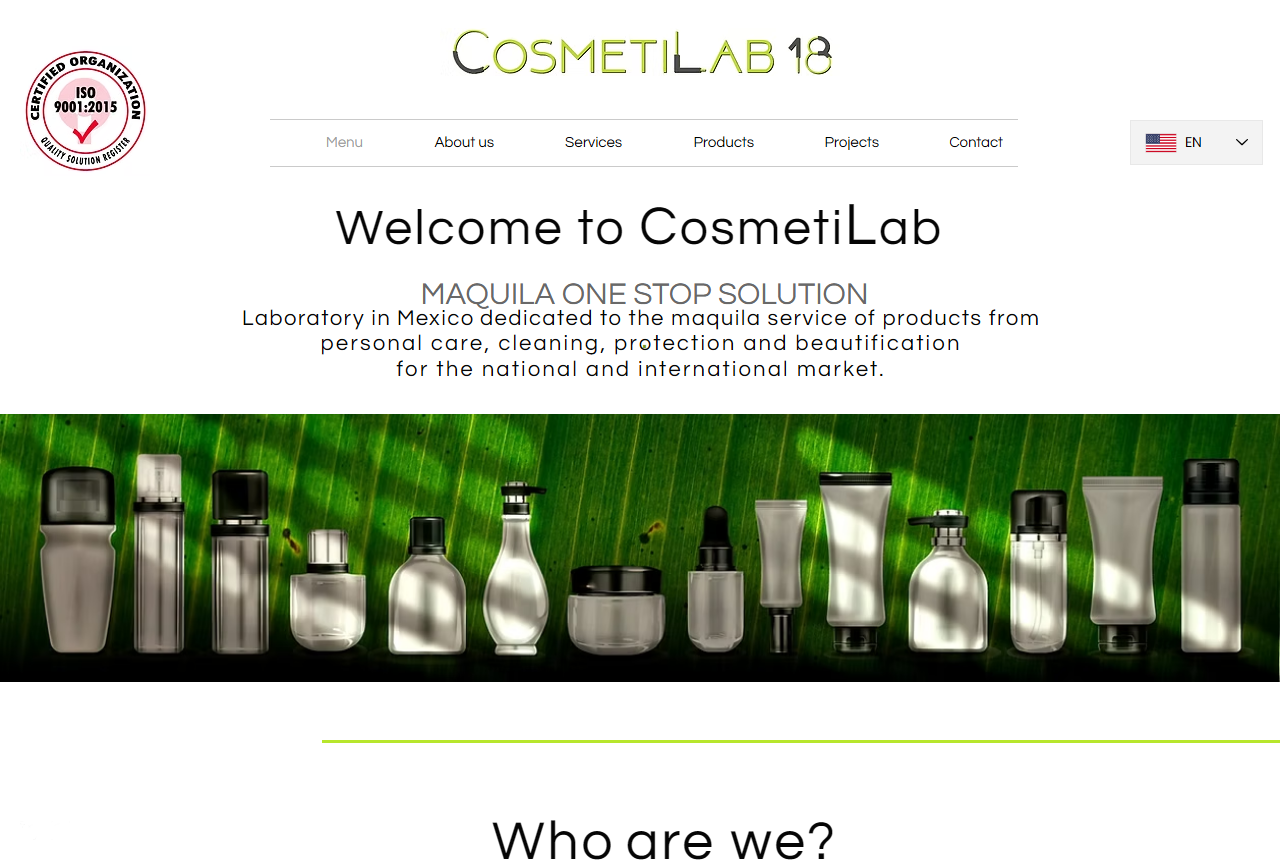
HQ: Mexico · Type: Multi-category maquilador · Best known for: Formulation, filling, QA and logistics under one contract
CosmetiLab 18 is the rare Mexican lab that states its certification position plainly rather than implying it: ISO 9001:2015 in hand, with ISO 22716 and ISO 14001 declared as in progress. That honesty is worth something when you are assessing a supplier from 16,000 km away, though it also tells you the cosmetic GMP certificate is not yet available to attach to an NPRA submission. Its category range stretches into home, automotive and pet products, so segregation questions matter here more than usual.
3. Eureka Cosmética
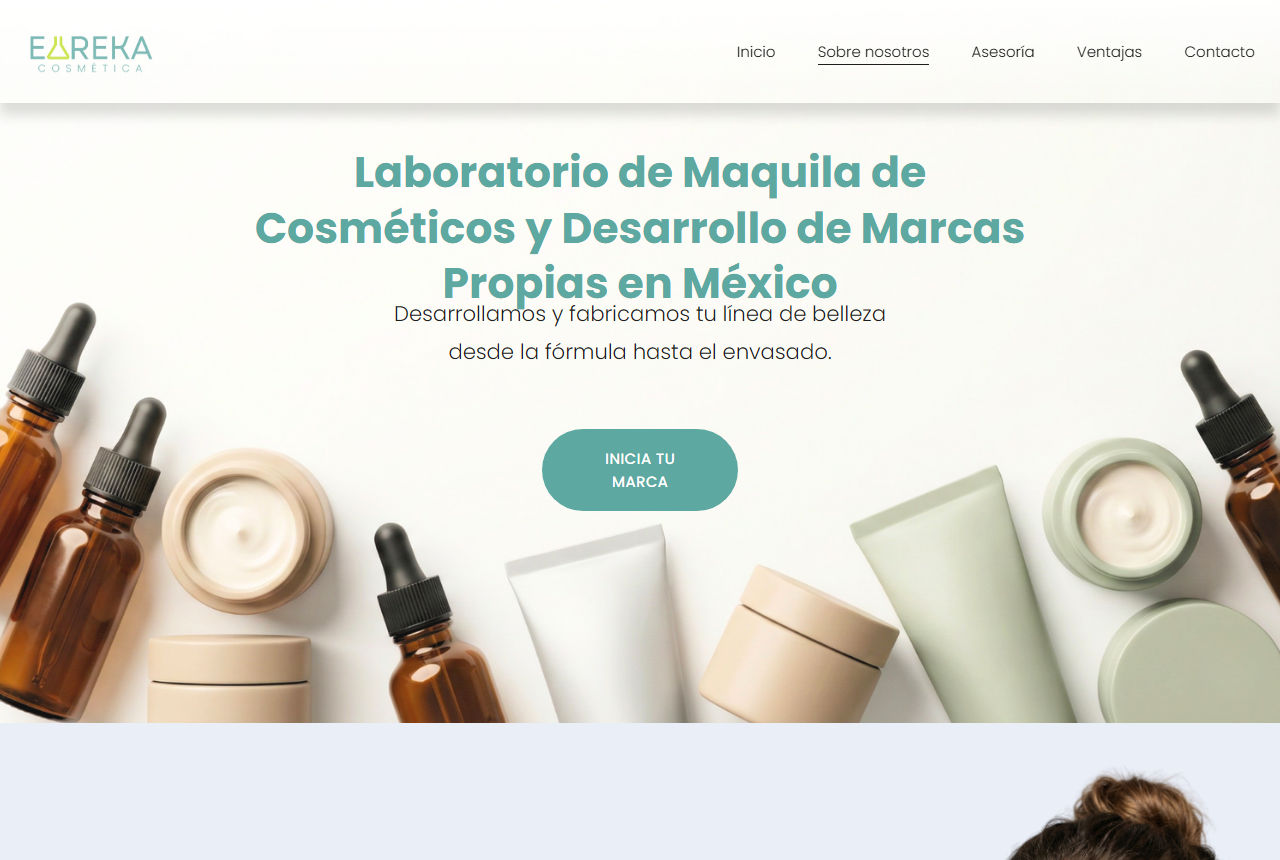
HQ: Zapopan, Jalisco · Type: Private-label laboratory · Best known for: Hand-holding first-time brand founders
Eureka has structured its whole offer around people who have never manufactured before — formulation, pack selection, label design and compliance advice arrive as one bundle rather than four quotations. Volumes are described as accessible rather than numbered, which in practice means it will talk to you about a few hundred units. It publishes no certifications, so a Malaysian buyer should get the Mexican operating notice and GMP position in writing early, because NPRA will eventually want to know who made the product and under what system.
4. Gardenia Naturals Labs (GNL)
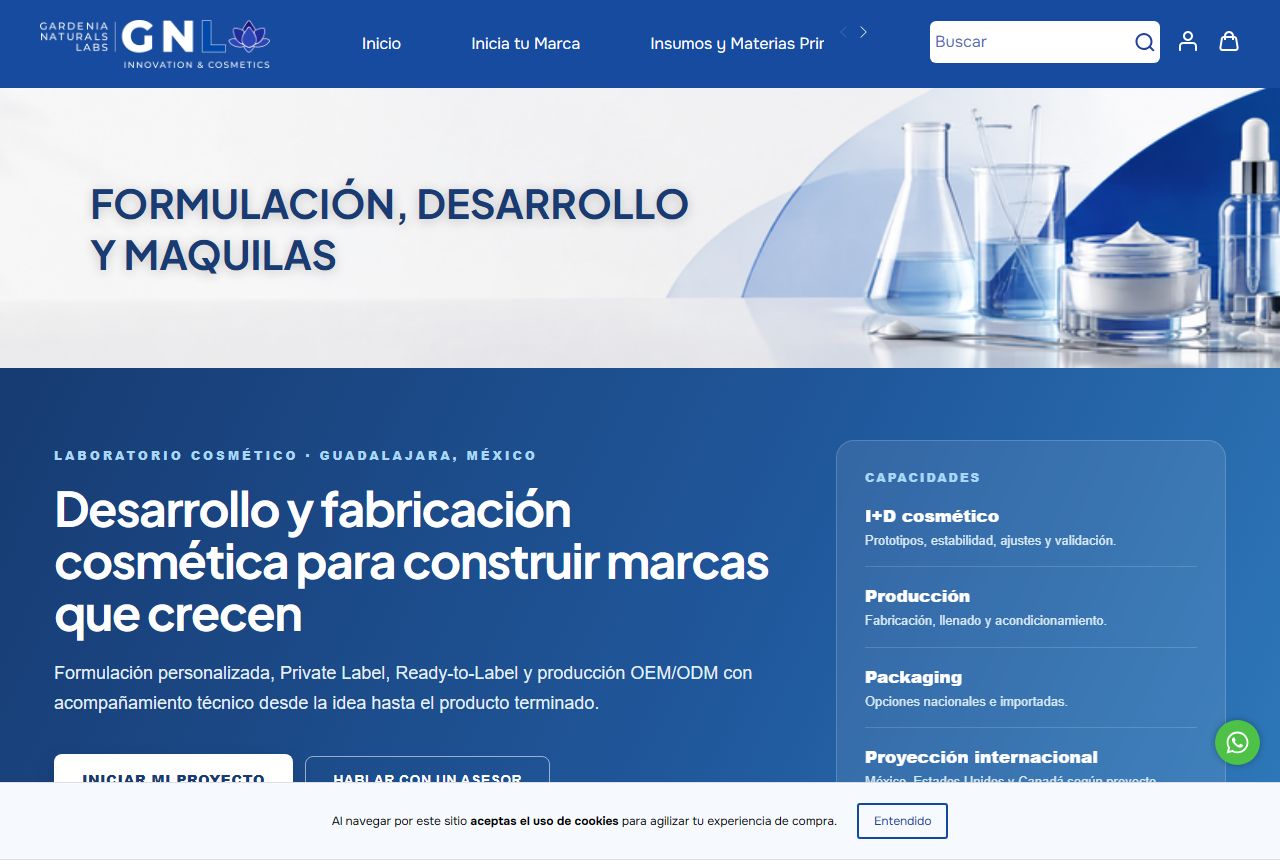
HQ: Guadalajara, Jalisco · Type: Contract manufacturer and raw-material supplier · Best known for: Ready-to-label from 10 units, private label from 100
GNL publishes the most concrete entry terms on this list and claims more than 550 brands developed since 2020, working across facial and body skincare, hair care, dermocosmetics, sun care and naturals. It states COFEPRIS, US FDA and Health Canada registrations, which for a Malaysian brand is mainly useful as evidence that the documentary muscle exists — none of those registrations carries any weight with NPRA. Note that its homepage is a consumer shop; the contract-manufacturing offer lives on the maquila page.
5. Helleskin Laboratorios
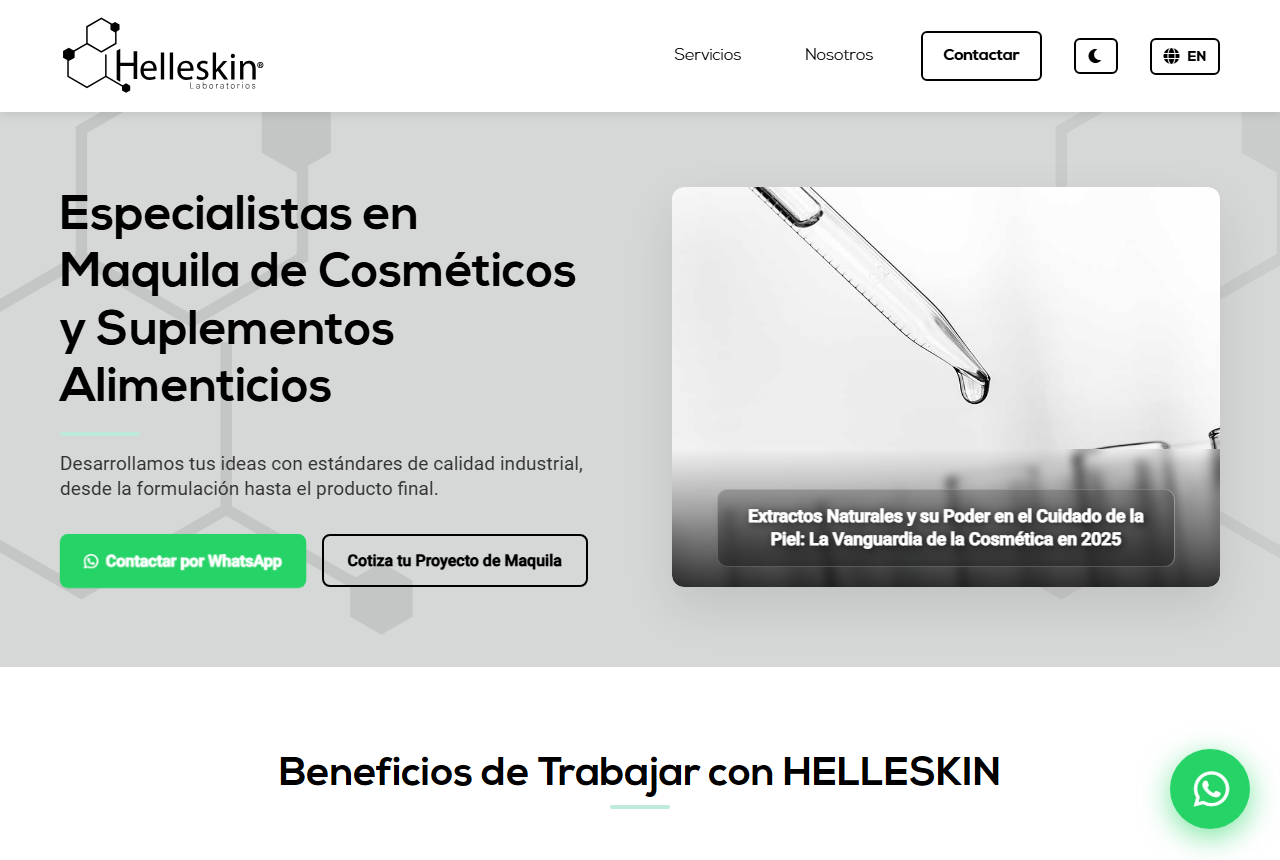
HQ: Mexico (city not published) · Type: Formulation laboratory and maquilador · Best known for: Cosmetics and dietary supplements from the same partner
Helleskin runs cosmetic and food-supplement formulation side by side, which suits the increasingly common Malaysian playbook of pairing a skincare range with an ingestible collagen or beauty drink. Its published material describes over a decade of formulation work across cosmetics, health, food and agro-industrial sectors. It says very little publicly about plant location, capacity or certification, so treat the website as a door rather than a dossier — and remember that a supplement bound for Malaysia takes a different NPRA route from a cosmetic.
6. IMAQ Industrial Maquiladora
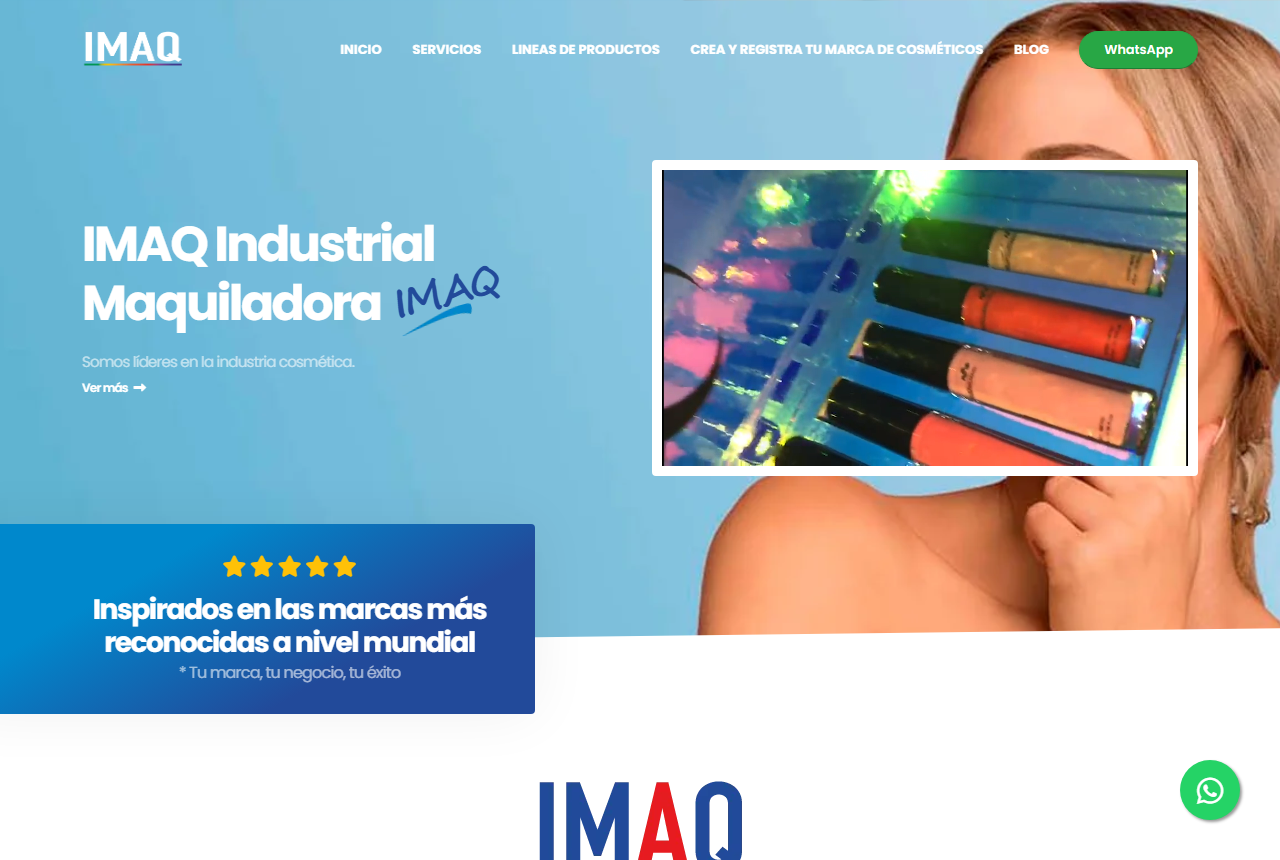
HQ: Naucalpan de Juárez, Estado de México · Type: Vertically integrated manufacturer · Best known for: Colour cosmetics with in-house containers and decoration
IMAQ claims more than 60 years in cosmetics and, unusually, moulds its own containers — injection and blow moulding in house, plus hot stamping, screen printing, tampography and multi-colour flexographic labels. For a Malaysian brand that has been burned by a packaging supplier missing a filling slot, that single-roof control is the genuine draw, and its colour range (mascaras, shadows, pigments, primers, palettes) is deeper than most Mexican independents. It publishes no certifications online, so that conversation has to happen by email.
7. Laboratorios Anteii
HQ: Jalisco · Type: Manufacturer and distributor · Best known for: Facial, hair and body care with export documentation habits
Founded in 1989 and running a full English site, Anteii is the most export-fluent operation here: it states COFEPRIS good-manufacturing-practice status, a SEDEX ethical audit and a US FDA cosmetic registration number. It is also unusually clear about what it will not do — it states it does not produce colour cosmetics or makeup. For a Malaysian buyer that published boundary is more useful than a vague promise, because it means the quotation you get back will be for work the plant actually does.
8. Naturalcare Cosmetics Lab
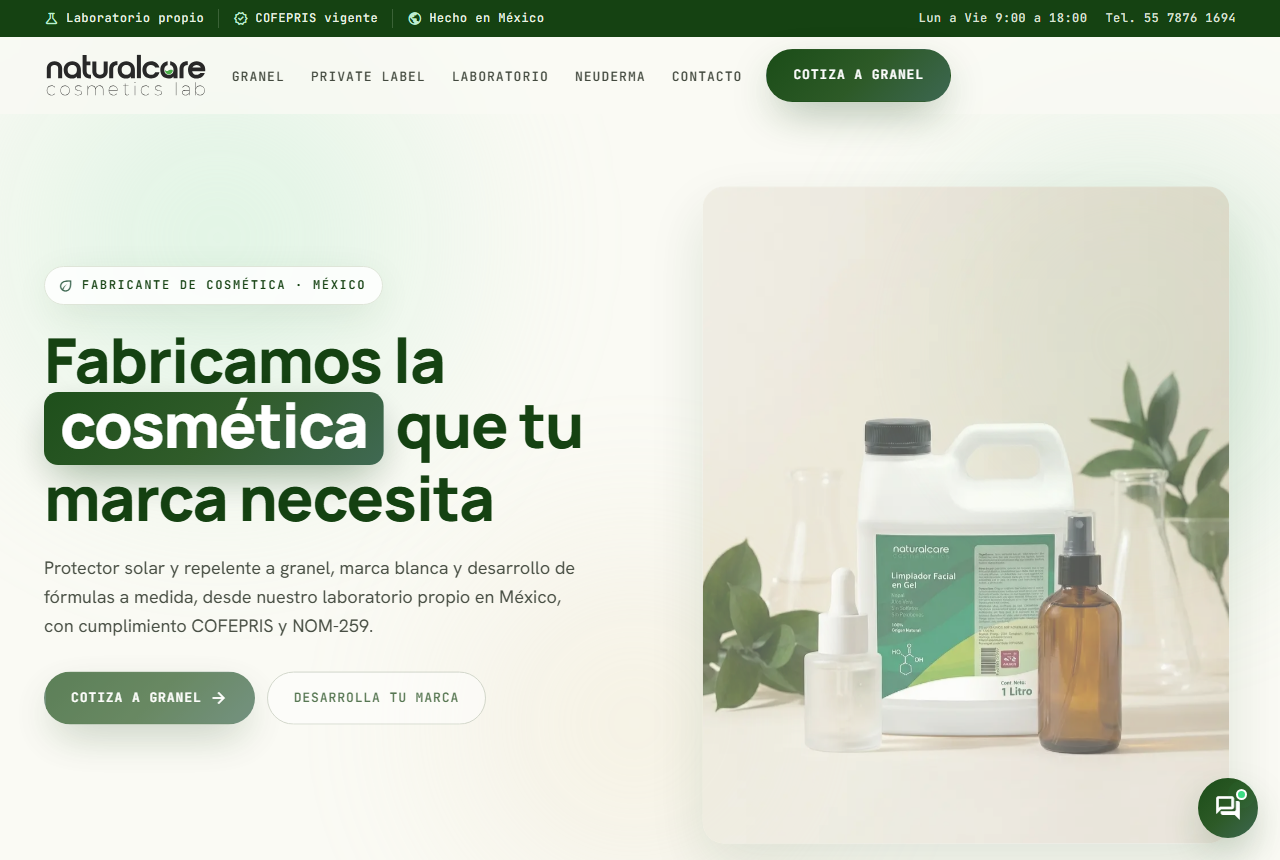
HQ: Metepec, Estado de México · Type: Own-plant laboratory · Best known for: Bulk sun care and repellent, and published compliance detail
Naturalcare is the most documentation-forward company on the list: it publishes its COFEPRIS operating-notice key and names the two Mexican standards it manufactures and labels to. Its bulk offer — sunscreen and insect repellent supplied in drums for the brand to fill — is an interesting option for a Malaysian brand that already has local filling and only needs the formula. It is a younger business than Anteii or IMAQ, with a web presence dating from 2020, so weight your reference checks accordingly.
9. OMC — Organik Maquiladora Cosmética
HQ: León, Guanajuato · Type: Contract manufacturer with brand-setup services · Best known for: Broad format range plus decoration and labelling
OMC covers makeup, skincare, hair care and hygiene with natural, organic, vegan and clinical positioning options, and wraps production in the administrative extras a first-time founder usually has to source separately — brand registration, barcode registration and more than a hundred label and decoration types. It states it already ships to Mexico, the United States, Spain, Guatemala and Peru, so an Asian destination would be new territory rather than routine. Its claim to make “absolutely any cosmetic product” deserves a specific test against your own formula.
10. Tecnología Cosmética
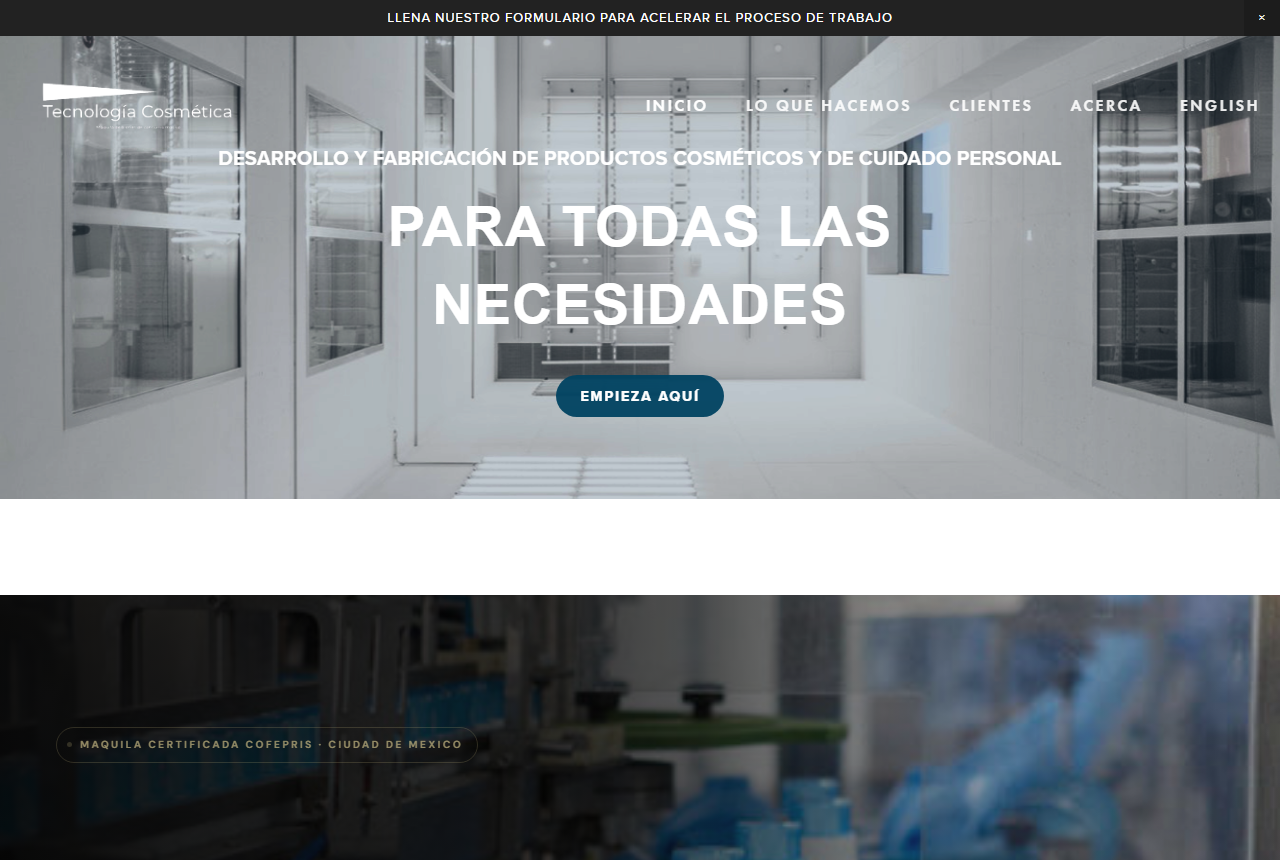
HQ: Ciudad de México · Type: Contract manufacturer, private label · Best known for: Three decades across skincare, fragrance and home care
One of Mexico City’s longest-running maquiladores, with a stated COFEPRIS good-manufacturing-practice certification and six declared categories including fragrance — a capability few independents on this list share. Its published entry point is a project value of roughly MXN 50,000 rather than a unit MOQ, which suits a Malaysian brand launching three or four small SKUs at once better than one high-volume hero product. Its process runs consultation, formula development, stability testing, then production with labelling.
Registering a Mexican-made cosmetic with NPRA
This is the part that surprises brands sourcing outside ASEAN for the first time. In Malaysia, every cosmetic product must be notified to the National Pharmaceutical Regulatory Agency through the Quest3+ system before it can be sold, and the notification holder is the Malaysian company — not the Mexican factory. Your name is on the file, and your company answers for the product.
Practically, that means you must extract from the factory a full quantitative or qualitative ingredient breakdown in INCI naming, confirmation that nothing in the formula sits on the ASEAN Cosmetic Directive’s prohibited annexes, manufacturer details and a manufacturing declaration, and finished-product specifications. A Mexican laboratory producing for its domestic market has never needed to assemble that package in this form. Ask for it during quotation, not after the bulk is made — a formula that has already been scaled up is expensive to reformulate.
Two other points worth knowing early. Mexico does not pre-register cosmetic products at all, so there is no “Mexican registration certificate” to hand NPRA; what exists is the factory’s operating notice and its compliance with Mexico’s own manufacturing standard. And a US FDA registration or Health Canada notification, which several of these laboratories hold, carries no weight in a Quest3+ submission. Useful evidence of capability, irrelevant as approval.
The halal question, and why it is the hard one
For most Malaysian beauty brands this is where a Mexican shortlist either survives or ends. If your positioning depends on halal certification — and for a large share of the Malaysian market it does — you need a certificate that JAKIM recognises, either JAKIM’s own or one from a foreign body on its recognised-certifier list. Mexico has no significant halal cosmetics certification infrastructure, and none of the laboratories above advertises a JAKIM-recognised certificate.
Getting one arranged from scratch means a foreign certification body auditing a Mexican plant that has never been through the process, on ingredients and cleaning regimes that were never designed with it in mind. It is not impossible. It is slow, expensive, and entirely at your cost. If halal is non-negotiable for your brand, source in Malaysia or elsewhere in ASEAN and keep Mexico for a non-halal export line, if at all.
Shipping: what 40-plus days at sea does to your launch plan
There is no short route from Mexico to Malaysia. Container freight from Manzanillo or Lázaro Cárdenas on Mexico’s Pacific coast to Port Klang typically runs in the region of 40 to 55 days door to door, usually with a transhipment, and Atlantic-side departures are longer still. Add production, quality release and Malaysian customs clearance and a realistic purchase-order-to-shelf cycle is five to six months.
Plan around it rather than fighting it. Order deeper on your first run than you would from a Malaysian factory, because a stockout cannot be fixed in under two months. Watch shelf life — a 24-month product that spends two of those months in a container arrives with less runway than your retail buyer assumes. And air freight is not the rescue it is from Guangzhou; the distance makes it punishing on cost for anything but samples and launch stock.
MOQ and unit cost: where Mexico wins and where it does not
Mexico’s advantage is the entry point, not the unit price. Published minimums on this list — 10 units ready-to-label, 100 units private label, or a project value rather than a unit count — are well below what most Asian export factories will accept, which makes Mexico genuinely attractive for testing a concept.
The maths changes at volume. Once you are ordering tens of thousands of units, Mexican labour and raw-material costs are no longer competitive against Guangdong, and the freight bill to Malaysia is a permanent structural penalty rather than a one-off. Also remember that a low bulk MOQ does not mean a low packaging MOQ: a custom bottle or pump routinely carries a minimum in the thousands regardless of what the filling floor will accept, and that is usually what actually sets the size of your first order.
Where COFEPRIS and the ASEAN Cosmetic Directive disagree
Mexico and Malaysia regulate cosmetics under different ingredient lists. Malaysia applies the ASEAN Cosmetic Directive’s annexes of prohibited and restricted substances; Mexico applies its own framework under COFEPRIS. They overlap heavily, but not perfectly, and the gaps tend to appear exactly where a formula is interesting — UV filters and their permitted concentrations, certain preservatives, and colourants approved in one region and not the other.
The consequence is simple and avoidable: send the full INCI list with percentages to whoever handles your NPRA work before you approve the formula. A late-stage substitution of a UV filter or preservative means new stability and compatibility testing, and can push a launch back a quarter. This is the single most common way an overseas sourcing project quietly loses three months.
Payment, contracts and the language gap
Most of these laboratories operate primarily in Spanish. Two of the ten run genuinely bilingual sites; the rest expect Spanish correspondence, and machine-translated technical specifications are a poor foundation for a manufacturing agreement. Budget for a Spanish-speaking intermediary on the technical documents at minimum.
On commercial terms, expect a deposit against a first order and confirm in writing who owns the formula, what happens to unused raw material and packaging, what the stability and shelf-life commitment is, and how a failed batch is remedied. The distance makes remedies harder to enforce, which is exactly why they need to be specific. Pay attention to Incoterms too — an EXW quotation from a factory in León or Guadalajara leaves a long, expensive inland leg entirely on your side of the ledger.
When manufacturing in Malaysia is simply the better answer
Be honest about the trade. Source in Malaysia when halal certification matters to your positioning, when you need to be on shelf in under four months, when your volumes are modest enough that freight would dominate landed cost, when you expect to iterate the formula more than once, or when you want to be able to stand in the room during a trial batch. Malaysian OEMs work to ASEAN Cosmetic GMP and many hold ISO 22716 and JAKIM halal certification already, which means the NPRA file is something they assemble routinely rather than something you have to teach a supplier to produce.
Mexico earns its place when North America is a real part of your sales map, when a Mexican laboratory has a formula or format you cannot get locally, or when you want to test a concept at 100 units without committing to a full production run. Those are good reasons. “It looked cheaper” is not one of them once the container is booked. For a sense of how the alternatives compare, our guides to Brazilian cosmetic factories and Canadian cosmetic factories cover the same ground for the other two markets Malaysian brands ask about most.
A practical shortlist process for a Malaysian brand
If Mexico still makes sense after all of the above, work in this order. Shortlist three laboratories whose published categories match your product, and email each in Spanish with a one-page brief: product type, target unit volume, packaging format, destination markets, and the fact that the product will be notified in Malaysia under the ASEAN Cosmetic Directive.
Ask every one of them for four things before you discuss price — a copy of the current COFEPRIS operating notice, a statement of manufacturing standard compliance, a full INCI breakdown of the proposed or nearest existing formula, and two export references. A laboratory that supplies all four quickly is telling you something real about how it will behave when a batch goes wrong. Then send the INCI list for an ASEAN annex check before you pay a development fee. More sourcing guides for Malaysian brand owners sit in our cosmetics, skincare and personal care archive.
Frequently asked questions
Can I sell a Mexican-made cosmetic in Malaysia?
Yes, provided the product is notified to NPRA through Quest3+ before sale and complies with the ASEAN Cosmetic Directive’s ingredient annexes and labelling rules. The notification is held by a Malaysian entity — your company or your appointed local holder — not by the Mexican factory. Because Mexico does not pre-register cosmetic products, there is no Mexican product certificate to submit; you will instead need the manufacturer’s details, a manufacturing declaration and a complete ingredient breakdown from the laboratory. Confirm current requirements with NPRA before you commit to a production run.
Do Mexican cosmetic factories hold halal certification recognised by JAKIM?
Generally no. Mexico has very little halal cosmetics certification infrastructure, and none of the ten laboratories reviewed here advertises a certificate from a body on JAKIM’s recognised-certifier list. Arranging one means bringing a foreign certification body to audit a plant with no prior experience of the process, at your cost and on your timeline. If halal certification is central to how your brand is positioned in Malaysia, a Malaysian or ASEAN manufacturer that already holds it will be faster and cheaper. Verify any halal claim directly against JAKIM’s published recognised-certifier list.
How long does shipping from Mexico to Malaysia actually take?
Plan on roughly 40 to 55 days of transit from a Mexican Pacific port such as Manzanillo to Port Klang, usually via a transhipment hub, with Atlantic-coast departures longer. Adding production time, quality release, documentation and Malaysian customs clearance, a realistic first-order cycle is five to six months from purchase order to retail shelf. That has three consequences: order deeper than you would locally, check that remaining shelf life on arrival still satisfies your retail buyer, and do not rely on air freight as a recovery option for anything beyond samples.
Is a Mexican factory cheaper than a Malaysian OEM?
Not usually on landed cost. Mexico’s advantage is the low entry minimum — a few of these laboratories will start at 10 to 100 units — which makes it attractive for testing a concept rather than for volume production. Once you factor in 40-plus days of ocean freight, import duties, the cost of assembling an NPRA-ready dossier from a supplier unfamiliar with ASEAN requirements, and the absence of halal certification, a Malaysian OEM is usually cheaper and always faster for the Malaysian market. Mexico makes commercial sense mainly when North America is also part of your sales plan.
Related reading
Sourcing further up the price ladder? Top 10 Cosmetic Suppliers in Switzerland for Malaysian Brands (2026).
Company details, certifications and minimum order quantities above are as published by each manufacturer in August 2026 and were not independently audited. Regulatory requirements change — verify current cosmetic notification, labelling and halal certification requirements directly with NPRA and JAKIM before committing to any production run.
About the author
Nadia Rahman is a cosmetic chemist and OEM industry writer covering formulation, contract manufacturing and cross-border sourcing for Malaysian beauty brands.
Comparing European options too? Our guide to cosmetic companies in the Netherlands for Malaysian brands covers ten Dutch contract manufacturers, their minimums, and the NPRA import steps that apply either way.