By Michelle Chong · Skincare Product Development Lead · Published 10 August 2026
Canada rarely comes up when a Malaysian beauty brand starts asking where to make its products. Korea, China and Thailand dominate the conversation, and for good reason — they are close, cheap and familiar. But a growing number of Malaysian brands are chasing something Asian factories struggle to sell: a country-of-origin story that reads as clean, cold-climate and regulated. “Made in Canada” does that, and it does it at a price point that is not as far above Korea as most people assume.
This guide looks at ten real Canadian contract manufacturers, then does the part most listicles skip: what it actually takes to bring their output into Malaysia legally, what it costs you in time and freight, and when you should stop reading and call a factory in Selangor instead.
Key takeaways
- Canada’s cosmetics manufacturing base is concentrated in Ontario, mostly within an hour of Toronto, with two specialist laboratories in British Columbia and one in Alberta.
- Minimum order quantities here are unusually low. Three of the ten companies below publish a no-MOQ position on private label, which makes Canada a realistic option for a Malaysian brand testing a single SKU.
- Every product still needs an NPRA notification through Quest3+ before it can be sold in Malaysia, regardless of how well-regulated the country of manufacture is. Canadian compliance does not transfer.
- Ocean freight from Vancouver or Montreal to Port Klang runs roughly 30 to 45 days on a good routing. Budget three to five months from purchase order to warehouse, not weeks.
- Halal is the weak point. Almost no Canadian cosmetics manufacturer holds a JAKIM-recognised halal certificate, so if halal positioning is central to your brand, local Malaysian production is the shorter road.
Why a Malaysian brand would look at Canada at all
Three reasons come up repeatedly in sourcing conversations.
The first is positioning. Malaysian consumers have been trained by a decade of K-beauty marketing to read country of origin as a quality signal. Korea owns “innovative”, Japan owns “precise”, France owns “luxury”. Canada is unclaimed territory in the Malaysian market, and it carries a clean, natural, cold-climate association that suits skincare, hair care and baby care lines particularly well.
The second is documentation quality. Canadian manufacturers produce ingredient disclosures and safety documentation in a format built for North American and European regulators. When you later submit to NPRA, that paperwork tends to be complete and internally consistent, which shortens the back-and-forth considerably compared with factories that assemble a dossier only when a customer asks for one.
The third is the low-minimum culture, which genuinely surprises people. Canadian private-label houses built their businesses serving thousands of small North American indie brands, and several of them will run a first order that a large Asian factory would not take a meeting about. If you are weighing this against the more familiar option, our companion guide to cosmetic factories in China for Malaysian brands sets out the same trade-offs from the opposite direction.
Ontario: the Greater Toronto manufacturing cluster
Seven of the ten companies here sit in Ontario, and six of those are in or immediately around Toronto. If you are planning a factory visit, this is efficient — you can see most of your shortlist inside three days without leaving one metropolitan area.
Apollo Health & Beauty Care
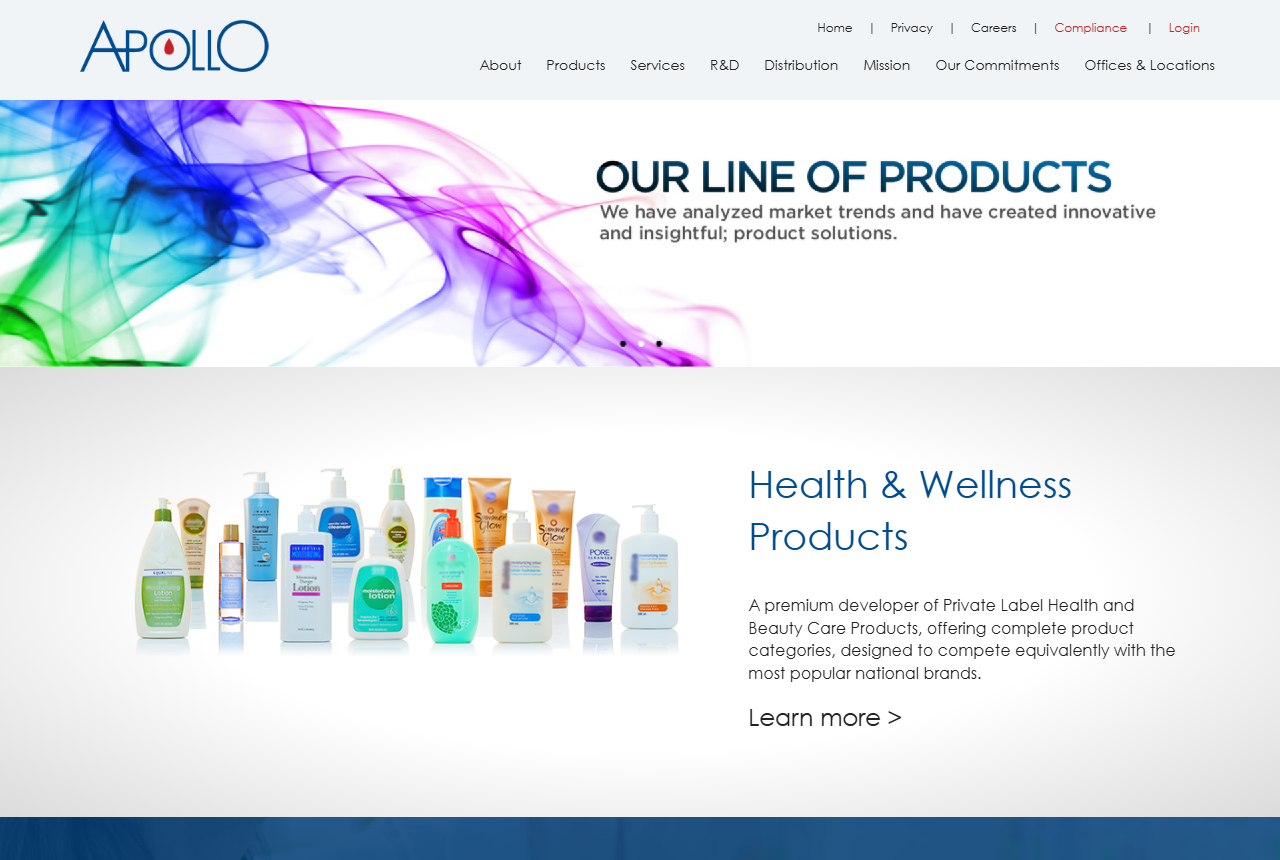
HQ: Toronto, Ontario · Type: Private label and control label manufacturer · Best known for: Retail-scale personal care programmes
Apollo is the volume player in Canadian personal care, describing itself as the country’s largest private label and control label manufacturer. Its bread and butter is producing retailer-owned lines that sit next to national brands on shelf — body wash, liquid soap, hair care, baby care and specialty bath. For a Malaysian brand, the realistic use case is a mature line running consistent volume, not a launch. If you are ordering a few thousand units, you will get further with almost anyone else on this page.
ATS Health & Beauty Care
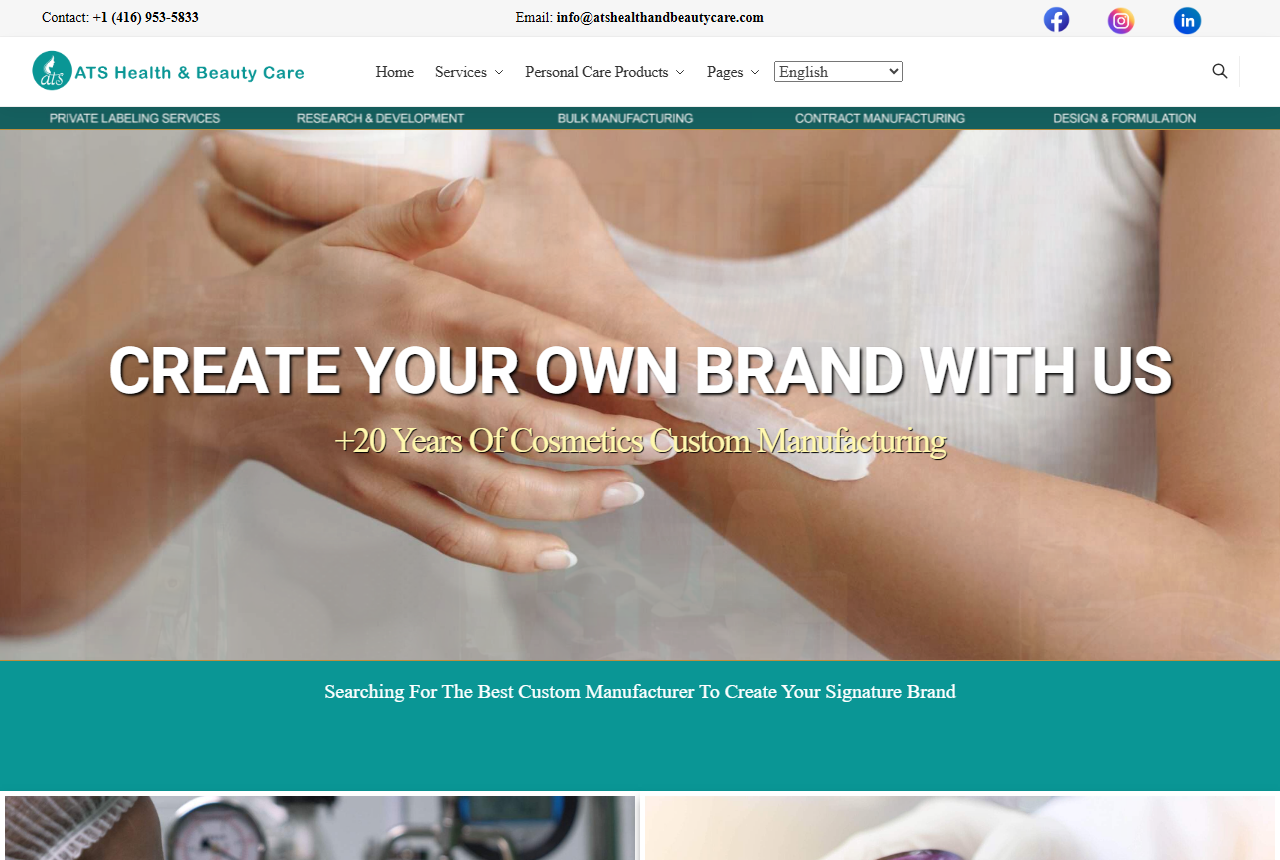
HQ: Toronto, Ontario · Type: Private label, contract and bulk manufacturer · Best known for: Hair care, including textured and curly-hair formulations
ATS has been running custom cosmetics manufacturing for over twenty years and is the strongest hair-care specialist in this group, with a dedicated curly-hair line alongside standard shampoo, conditioner and treatment work. It is one of the few Canadian manufacturers that publishes its minimum outright — 5,000 pieces per SKU — which is refreshing but also a real number to plan around. It also holds a Health Canada licence for NPN manufacturing, useful if your formula edges into treatment claims.
Clamar Cosmetics
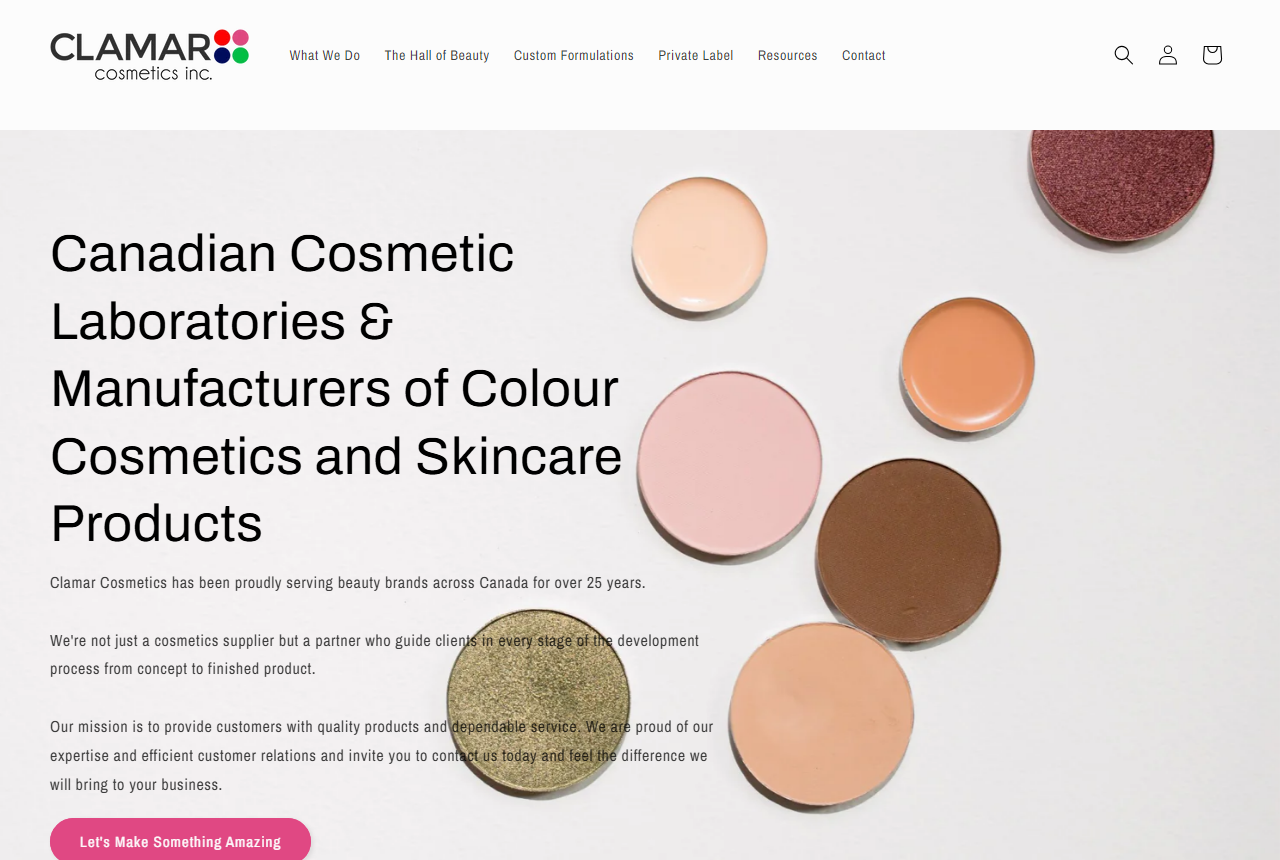
HQ: Pickering, Ontario · Type: Contract manufacturer and colour house · Best known for: Colour cosmetics and formula validation
Clamar is where you go in Canada for makeup. It compounds in-house across liquid, cream, powder and hot-pour processes, which covers lipstick, foundation, eyeshadow and mascara without subcontracting. The company states it develops over 750 new formulations a year and supports around 250 entrepreneurs annually, so the operating model is clearly built around many small brands. Its formula-validation service is worth noting if you already have a formula and need it scaled properly.
Cosmetic Labs Canada
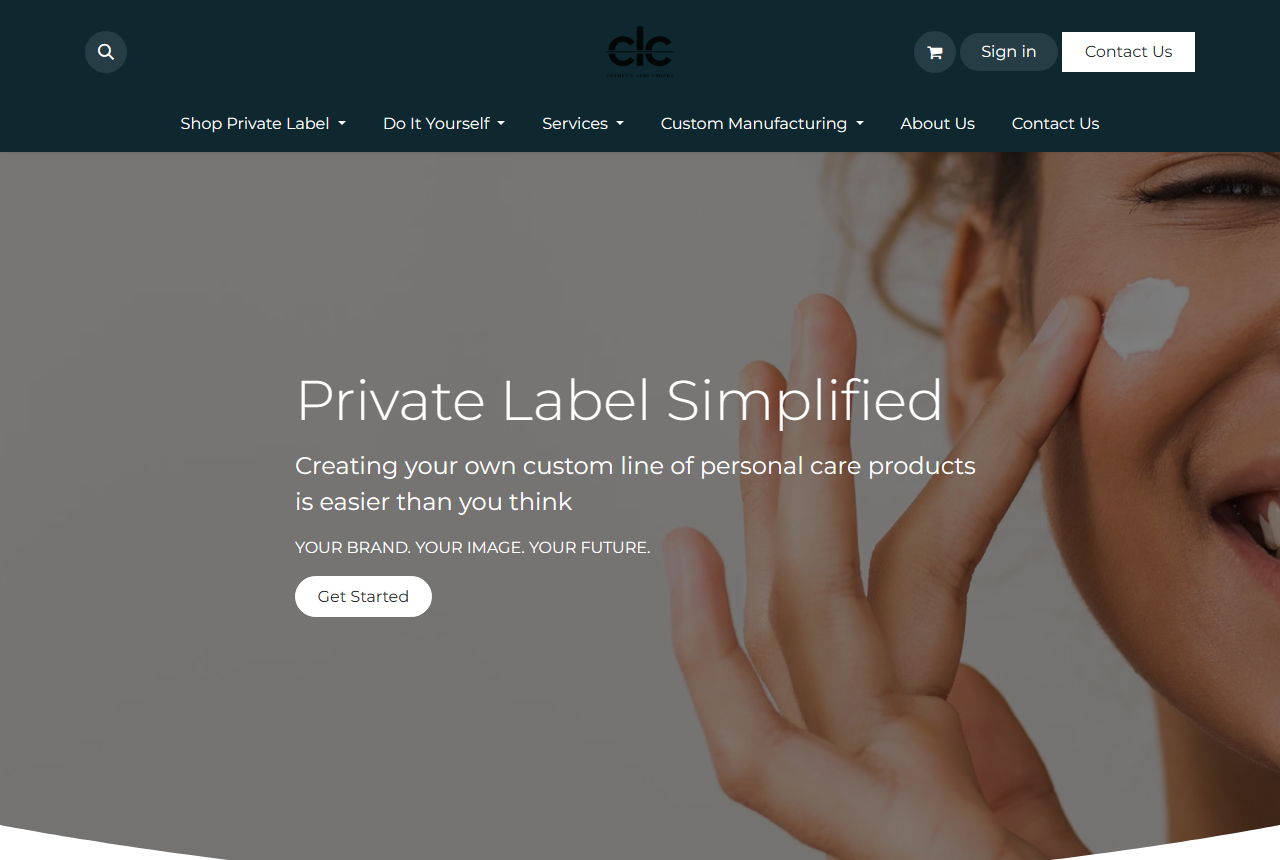
HQ: Sault Ste. Marie, Ontario · Type: Private label with in-house design and print · Best known for: Complete turnkey packages for small brands
This is the most hand-holding option on the list. Alongside skincare, hair care, bath and body, men’s grooming and pet care, Cosmetic Labs Canada does graphic design, digital mockups, label and box design, and screen and foil printing under one roof. It advertises low minimums and turnaround from as little as 21 business days after label approval. The catch for a Malaysian buyer is geography: Sault Ste. Marie is a long inland haul from either coast, which adds cost and days before your container even reaches a port.
Nature’s Own Cosmetics
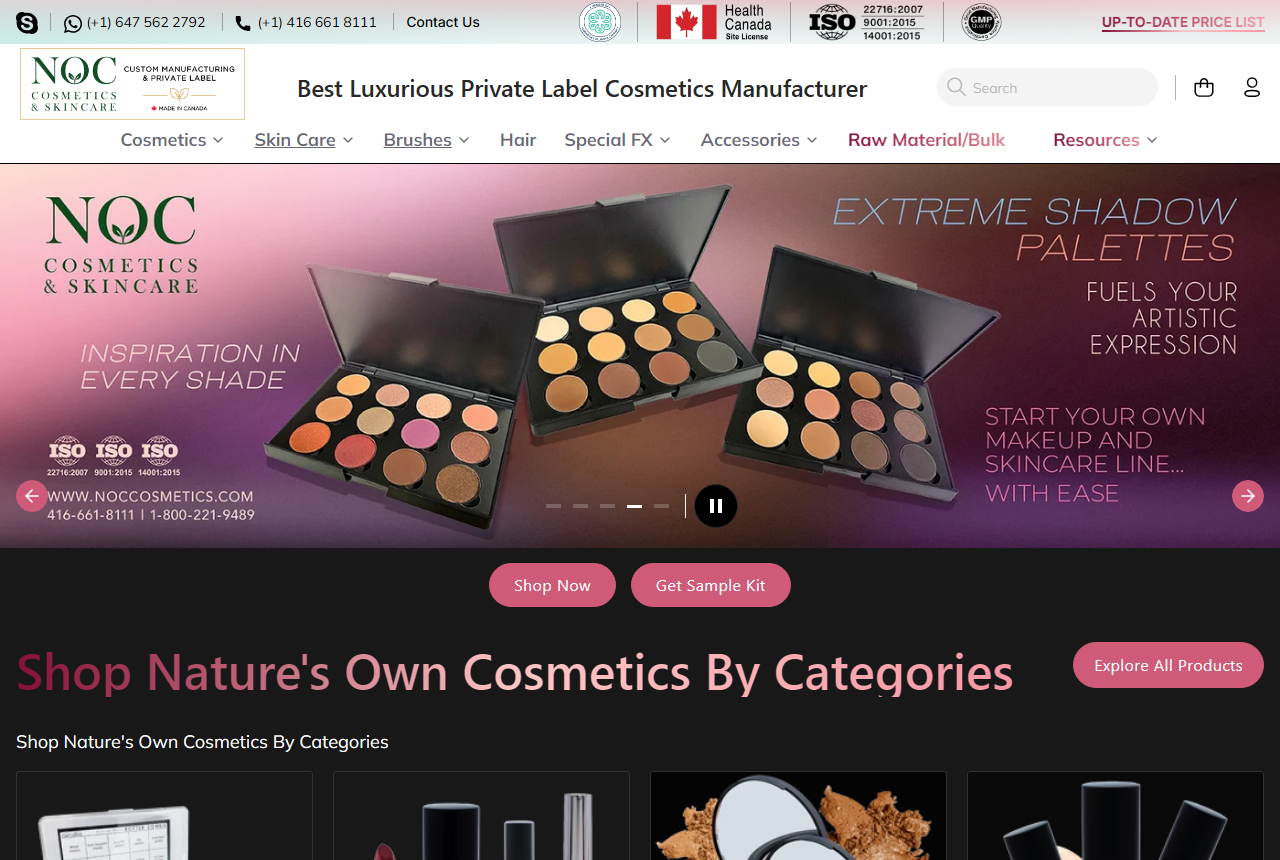
HQ: North York, Ontario · Type: Private label and custom manufacturer · Best known for: Colour cosmetics, brushes and special-effects makeup
Formerly Jordane Cosmetics, this is a colour house with a genuinely unusual sideline in theatrical and special-effects makeup. It publishes ISO 22716, ISO 9001 and ISO 14001 marks plus a Health Canada site licence, and advertises no minimum on private-label orders — a rare combination of certification depth and small-order flexibility. The model leans towards choosing from an existing catalogue and putting your brand on it, so ask early if you need something formulated from scratch.
Pinnacle Cosmetics
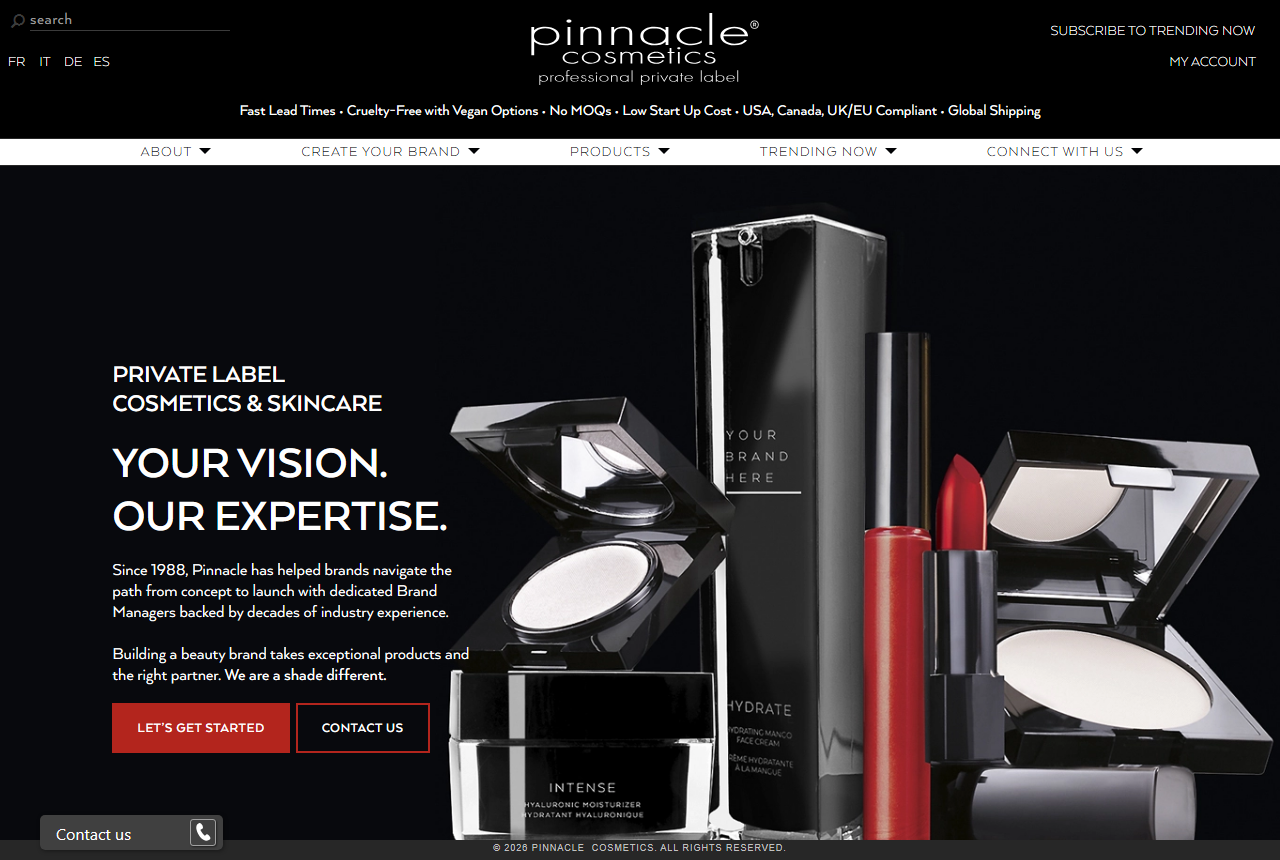
HQ: Etobicoke, Toronto, Ontario · Type: Professional private label · Best known for: No-MOQ colour cosmetics and skincare
Trading since 1988, Pinnacle built its position on removing the minimum order barrier entirely and assigning every client a named brand manager. It publishes cruelty-free and paraben-free formulations with vegan and halal-certified options, GMP-compliant Canadian facilities, and compliance for the US, Canadian and UK/EU markets, with two to three week lead times on a first branded order. Note that “halal-certified options” here refers to certificates issued outside Malaysia — see the halal section below before you build marketing around it.
Vicora Cosmeceuticals
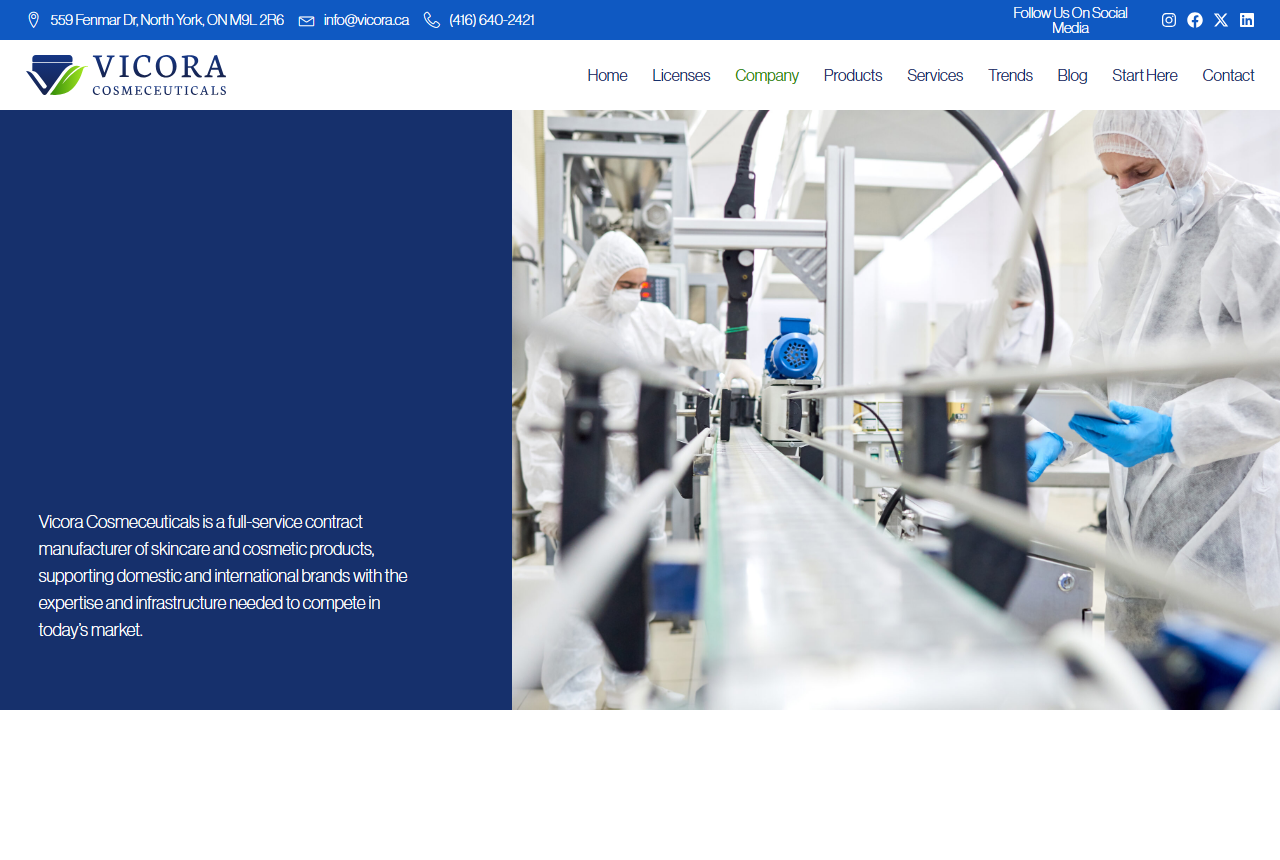
HQ: North York, Ontario · Type: Full-service contract manufacturer · Best known for: Organic-certified processing and documented licences
Vicora publishes the clearest credential list of anyone here: a Health Canada site licence, USDA Organic certified processor status, GMP certification through Food, Health and Consumer Products of Canada, and US FDA registration under MoCRA. For a Malaysian brand that intends to sell into North America as well as home, that last one saves a step. Services run from custom development through private label to contract filling and packaging. Minimums are not published, so establish them in writing early.
British Columbia and Alberta: the specialist laboratories
The three western entries are smaller and more technical. They are the right call when your problem is the formula rather than the volume.
Cosmaceutical Research Lab
HQ: Surrey, British Columbia · Type: Contract manufacturer and R&D laboratory · Best known for: Products that cross from cosmetic into OTC drug territory
Over twenty years old and 100% Canadian owned, this lab’s distinguishing feature is its licence set: cGMP, US FDA registration, a Health Canada Drug Establishment Licence and a Natural Health Products licence. If your product carries an active that pushes it out of pure cosmetic classification — a sunscreen filter, an anti-dandruff agent, an antiperspirant salt — a lab licensed on both sides of that boundary is worth the extra distance from Toronto.
DBO Labs
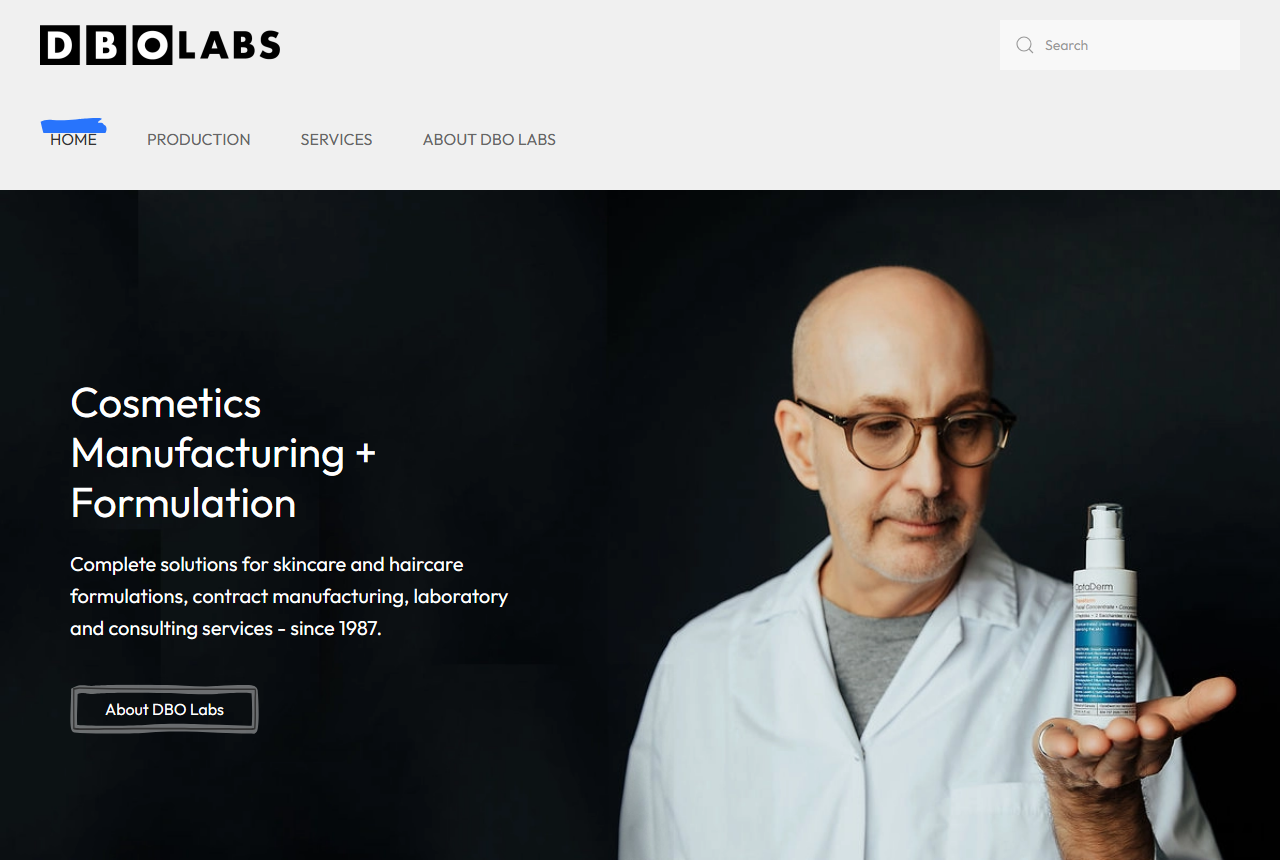
HQ: Burnaby, British Columbia · Type: Formulation laboratory with contract manufacturing · Best known for: Custom skincare and hair-care development since 1987
DBO Labs is the oldest continuously operating name on this list and leads with formulation rather than filling capacity. Client references on its site describe twenty-year relationships and a boutique operation, which is an accurate reading of the scale. Take a development brief here; do not bring a national rollout. It publishes no certifications, so a GMP and stability-testing discussion should happen on the first call.
Swift Innovations
HQ: Ponoka, Alberta · Type: Contract research and manufacturing · Best known for: Bioactive extraction and natural-ingredient formulation
Swift is the outlier: an operation that reads more like an ingredient house than a filler, working with proprietary blends, extracts, peptides, essential oils, encapsulated bioactives and surfactants, with a stated focus on green processing and replacing synthetics with organic alternatives. It says it does not insist on minimum order quantities. Choose it for a natural-claims product or a formulation problem, not for scale.
Registering Canadian-made products with NPRA
This is the part that catches out first-time importers. Nothing about Canadian regulatory status carries into Malaysia. Health Canada’s Cosmetic Notification Form, the Cosmetic Ingredient Hotlist, a GMP certificate from a Canadian body — none of it substitutes for a Malaysian notification.
Every cosmetic sold in Malaysia must be notified to the National Pharmaceutical Regulatory Agency through the Quest3+ portal before it goes on sale. The notification is submitted by a company incorporated in Malaysia, which becomes the Company Responsible for Placing the Product on the Market. If you are a Malaysian brand, that is you; you cannot delegate it to your Canadian factory. Notification is per product and per variant, and it is valid for two years before renewal.
Practically, you will need from the factory: the full quantitative formula, a manufacturer’s declaration confirming the product is made under GMP, artwork and labelling for review, and a Letter of Authorisation naming you as the party permitted to notify. Ask for all four in the quotation stage, not after you have paid a deposit. Canadian manufacturers generally produce these quickly because their documentation is already structured for regulators — but they will not have seen a Malaysian request before, so send them the ASEAN Cosmetic Directive ingredient annexes rather than assuming familiarity.
One trap worth flagging: an ingredient permitted under Canada’s Hotlist is not automatically permitted under the ASEAN Cosmetic Directive that Malaysia applies. Certain UV filters, preservative concentrations and colourants differ. Run your ingredient list against the ASEAN annexes before you approve a formula, not after the first container ships.
Lead times, freight and MOQ: the honest numbers
Distance is the price of a Canadian country-of-origin story, and it is charged in weeks.
Sea freight from Vancouver to Port Klang typically runs 25 to 35 days in transit; from Montreal on the east coast, expect 35 to 45 days, since the routing goes via Europe or the Suez. Add two to four weeks of production, one to two weeks for artwork approval and label proofing, a week for inland trucking to port, and roughly two weeks for Malaysian customs clearance and delivery. A realistic purchase-order-to-warehouse window is three to five months for a first order and two to three months for a repeat.
Air freight is available and occasionally sensible for a launch batch of a light, high-value product like a serum, but it will typically cost several times the sea rate per kilogram and can quietly erase the margin on anything below a premium price point.
On MOQ, the published numbers are genuinely low — but read them precisely. A no-MOQ claim applies to the bulk manufacturing and filling stage. It does not apply to your packaging. Custom bottles, jars, pumps and printed cartons carry their own minimums, routinely three to five thousand pieces, and that is usually what sets the real size of your first order. If you want to keep a first Canadian order genuinely small, take stock packaging from the manufacturer’s catalogue and put your differentiation into the label.
The halal question
If your brand competes in Malaysia on halal credentials, Canada is a difficult sourcing choice, and it is better to know that at the start.
Very few Canadian cosmetics manufacturers hold halal certification at all, and those that mention “halal options” are generally referring to certificates from North American or European bodies. JAKIM operates a recognition list for foreign halal certification bodies, and a certificate from a body that is not on that list does not entitle you to use the Malaysian halal logo. You may still sell the product — halal certification is not mandatory for cosmetics in Malaysia — but you cannot make the claim that a large part of the market is looking for.
Getting a Canadian facility through a JAKIM-recognised audit for one client’s product line is theoretically possible and practically unrealistic for a brand of any normal size. If halal is central to your positioning, source locally. Our list of low-MOQ cosmetics manufacturers in Malaysia is a better starting point for that brief.
When manufacturing in Malaysia is simply the better answer
Being honest about this saves everyone time. Choose a Malaysian factory over a Canadian one when:
- Halal certification matters. Covered above. This is the single clearest disqualifier.
- You are still iterating on the formula. Three rounds of samples with a Toronto lab is three international courier cycles and a lot of dead time. A KL or Penang factory can turn a revision in days and let you smell and feel it in person.
- Cash flow is tight. Ocean freight means you pay for goods that sit on water for a month before they can generate a single ringgit of revenue.
- Your product is heavy or low-value per unit. Body wash, shampoo and bath products carry poor freight economics over that distance. Serums and treatment products carry it much better.
- Your market is purely domestic. The Canadian origin story only earns its cost if your customer notices and pays for it.
A hybrid works well for a lot of brands: develop and manufacture your core range in Malaysia, and bring in one imported hero SKU where the origin genuinely adds something. For more on choosing between models, see our cosmetics and personal care OEM guides.
What to ask a Canadian manufacturer on the first call
- What is your true minimum on bulk, and separately on the packaging you would supply?
- Will you issue a Letter of Authorisation and a GMP declaration for a Malaysian NPRA notification?
- Have you exported to Southeast Asia before, and can you name a freight forwarder you have worked with?
- Which of your certifications are current, and who issued them?
- Is the formula you would supply proprietary to me, or a stock formula available to other clients?
- What is your quoted price on FOB terms at the named port, not ex-works?
That last one matters more than it sounds. An ex-works quotation looks competitive against a Malaysian delivered price and is not comparable to it. Get both quotations onto a landed-cost-per-unit basis before you decide anything.
Frequently asked questions
Do I need NPRA approval to sell Canadian-made cosmetics in Malaysia?
Yes. Every cosmetic product sold in Malaysia must be notified to NPRA through the Quest3+ portal before sale, regardless of where it was manufactured. The notification is filed by a Malaysia-incorporated company that becomes the responsible party, so as the brand owner you file it yourself — your Canadian manufacturer cannot do it for you. You will need the full formula, a GMP declaration, artwork and a Letter of Authorisation from the factory. Notification is per variant and valid for two years.
How long does it take to get a first order from Canada to Malaysia?
Plan for three to five months from purchase order to warehouse. That breaks down roughly as two to four weeks of production, one to two weeks of artwork and label approval, a week of inland trucking to port, 25 to 45 days of ocean transit depending on whether you ship from Vancouver or Montreal, and around two weeks for customs clearance and inland delivery in Malaysia. Repeat orders compress to two to three months once artwork and specifications are locked.
Is Canadian cosmetics manufacturing more expensive than Malaysian?
On unit price, usually yes, though the gap is narrower than most people expect because the Canadian dollar has run well below the US dollar for years. The bigger difference is landed cost: ocean freight, import duty, insurance and the working capital tied up during a month at sea all sit on top. Compare on landed cost per filled unit, and remember that Canadian production can command a higher retail price if the origin is part of your positioning.
Can a Canadian manufacturer make halal-certified products for the Malaysian market?
Rarely in a way Malaysia will recognise. Some Canadian manufacturers offer halal-compliant formulations certified by North American or European bodies, but the Malaysian halal logo requires certification from JAKIM or a foreign body JAKIM recognises, and few Canadian cosmetics facilities appear on that list. You can still sell the product legally — halal certification is not compulsory for cosmetics here — but you cannot carry the logo. Where halal positioning is central, Malaysian manufacturing is the practical route.
Company information in this article is drawn from each manufacturer’s official website as reviewed in August 2026 and has not been independently audited. Certifications, minimums, capabilities and lead times are as published by each company and should be confirmed directly before you enter any agreement. Regulatory requirements described here reflect NPRA guidance current at the time of writing; always check the Quest3+ portal for the latest requirements. This article is editorial research and is not a recommendation of any specific manufacturer.
About the author: Michelle Chong is a skincare product development lead who has taken beauty lines from brief to shelf across Malaysian and regional markets. She writes for MalaysiaOEM on formulation, sourcing and the practical mechanics of getting a product made.
Comparing long-haul origins? Our guide to cosmetic factories in Brazil for Malaysian brands covers a market with a very different category profile, strongest in professional hair chemistry and fragrance.
Comparing North American options? Our companion guide to cosmetic factories in Mexico for Malaysian brands profiles ten Mexican maquiladoras inside the same USMCA trade area, with entry minimums as low as 100 units.