By Zahid Osman · Manufacturing Partnerships Editor · Published 28 Aug 2026
Most Malaysian beauty founders who look overseas for a contract manufacturer look east first, to South Korea and China, or south to Indonesia. The Netherlands rarely enters the conversation — which is exactly why it is worth a look. Dutch cosmetic factories are small enough to answer your emails, technically serious enough to hold ISO 22716 and often ISO 13485, and they sit inside the EU regulatory system that a lot of Malaysian brands eventually want to sell into anyway. If your positioning leans clinical, clean-beauty or European-made, a Dutch OEM partner can carry a story that a Guangzhou line cannot.
This guide covers ten Dutch contract manufacturers whose websites we opened and captured in August 2026, and — more importantly for a Malaysian reader — what actually happens after the goods leave Rotterdam. Import duty, NPRA notification through Quest3+, halal recognition, six-to-eight week ocean transit and the MOQ arithmetic all change the answer. Sometimes they change it enough that you should stay home.
Key takeaways
- Ten Dutch contract manufacturers are profiled here, all with live, verified websites captured on 28 August 2026 — several names that circulate on other lists are dead domains.
- Typical Dutch minimums run 2,000–5,000 units per SKU for skincare and haircare and around 10,000 for colour cosmetics. That is low for Europe but high compared with a Malaysian OEM, which will often start you at 500–1,000 units.
- Importing finished cosmetics into Malaysia still requires NPRA notification through Quest3+ by a locally incorporated company. A Dutch factory cannot hold that notification for you.
- Plan on roughly 28–40 days port-to-port from Rotterdam to Port Klang, plus production. A first Dutch run realistically lands four to six months after you sign off the brief.
- Halal is the weakest link. A European halal certificate is not automatically recognised by JAKIM, so if halal is core to your brand, Malaysian or Indonesian manufacturing usually wins on this point alone.
Why the Netherlands is on the map at all
The Dutch cosmetics manufacturing sector is not large by headcount, but it is unusually well-organised. Companies tend to be mid-sized, family-held and service-led, filling for supermarket groups, pharmacy chains and export brands across northern Europe. English is effectively a working language, which removes the translation friction that slows down a lot of first-time sourcing in Europe. And because the Netherlands is a logistics country before it is a beauty country, the factories are used to shipping internationally — documentation, Incoterms and export packing are routine rather than exceptional.
For a Malaysian brand, the practical draw is a combination that is hard to find in one place: real formulation depth (including makeup, oral care and cosmetic/medical-device borderline products), certification that European retailers already accept, and order sizes that do not require a hundred thousand units. The practical drag is everything logistical — freight cost, transit time, and a regulatory handover at the Malaysian end that you, not the factory, have to manage.
The ten Dutch manufacturers worth a first email
Listed alphabetically. Numbering is for navigation only; this is not a ranking, and nothing here is a paid placement. All capability and certification claims are taken from each company’s own website as at 28 August 2026.
1. Cosmetize — Harderwijk
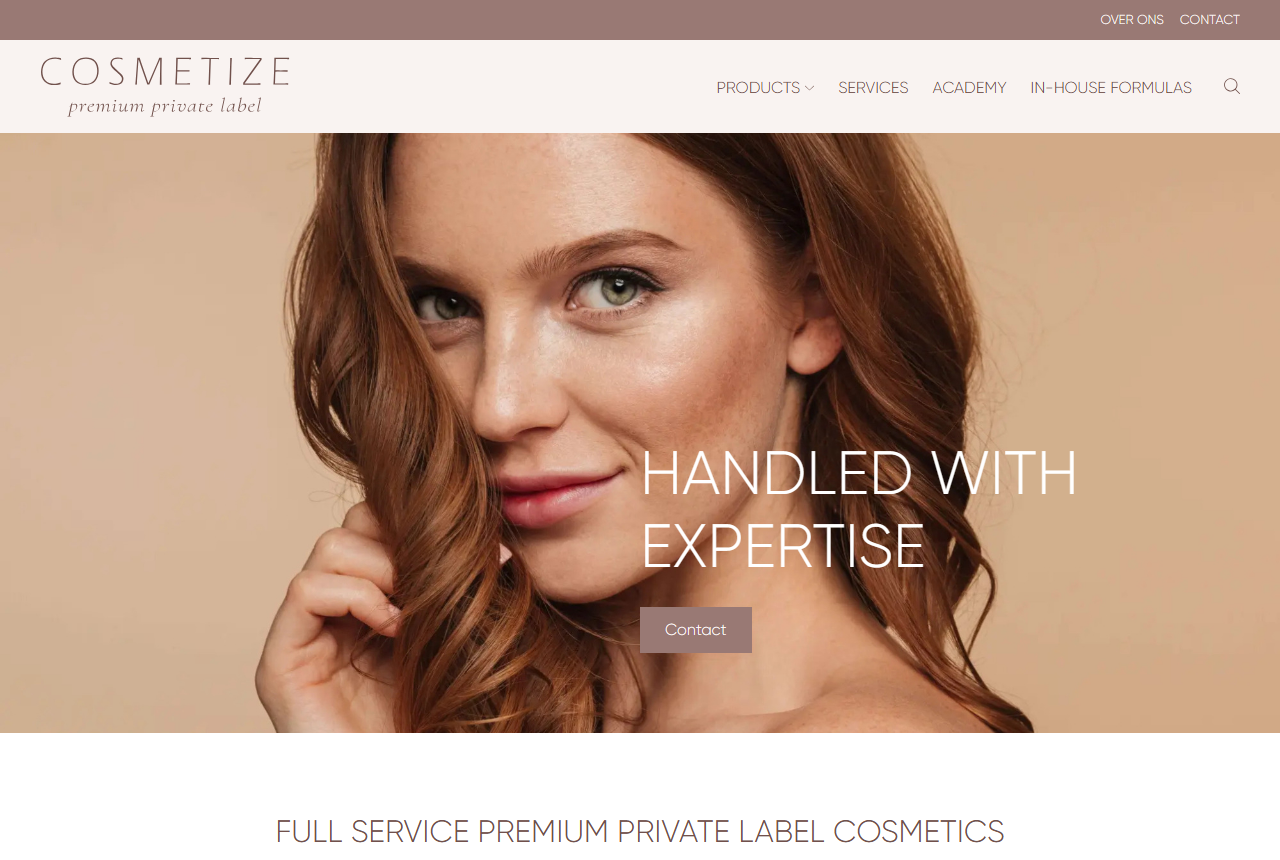
HQ: Harderwijk, Gelderland · Type: Full-service private label · Best known for: Nine product categories under one roof
Cosmetize is the broadest supplier on this list, covering face care, sun care, makeup, home fragrance, body care, hand and foot care, hair care, perfume and baby care. For a Malaysian brand planning a multi-SKU launch, that breadth is worth money — consolidating five SKUs with one supplier means one shipment, one set of documents and one customs entry instead of three. It publishes very little about minimums, so treat the first call as a qualification call rather than a briefing.
2. Delarange Cosmetics — Zeewolde
HQ: Zeewolde, Flevoland · Type: Cosmetics and medical devices · Best known for: Lip care and oral care
Delarange claims more than three decades in lip care and describes itself as one of Europe’s largest lip-care suppliers, with a second production stream in oral care — toothpaste, mouthwash, oral foam and sprays. That second stream is genuinely rare; almost no Malaysian OEM will quote you a toothpaste. If your concept is a lip treatment range or an oral-care line that needs European credibility, this is the sort of supplier worth the freight bill.
3. Frisson — Dronten
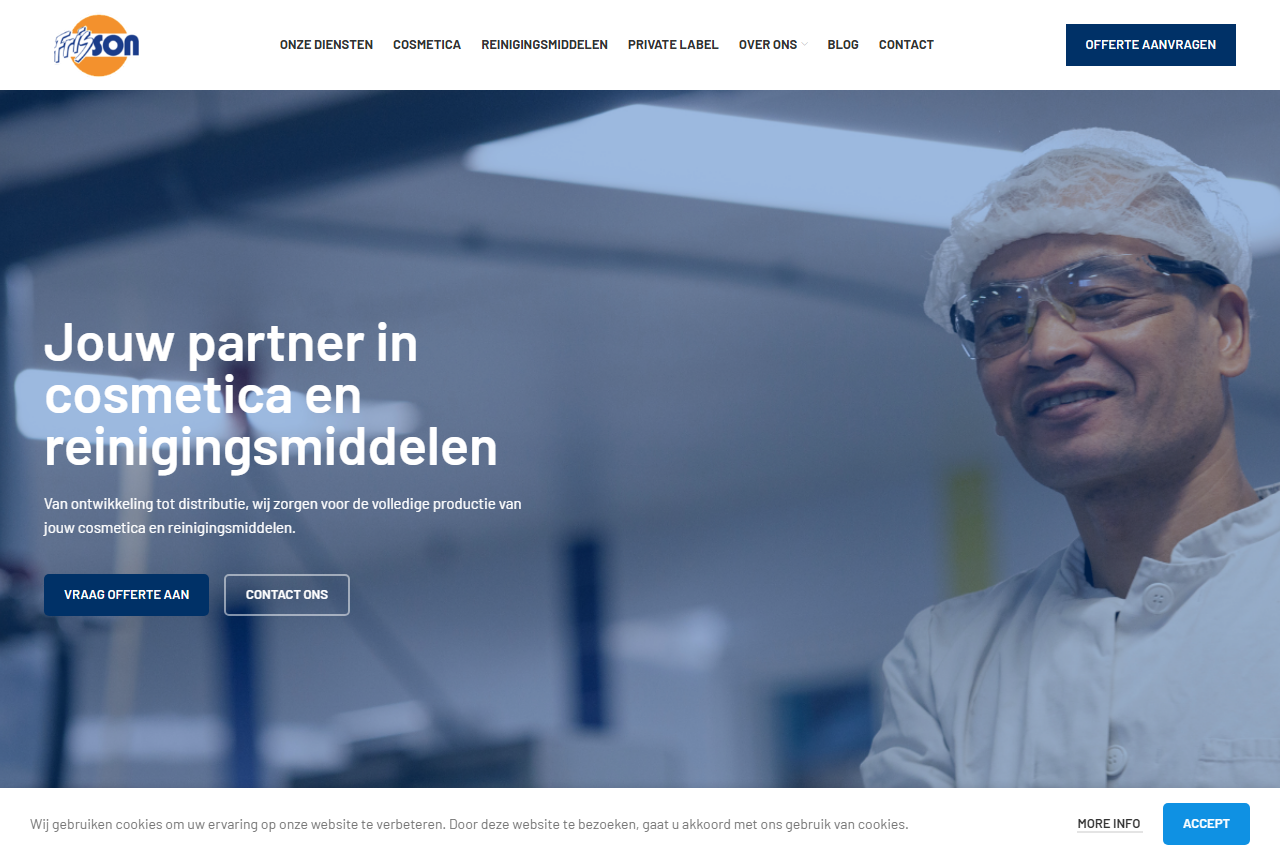
HQ: Dronten, Flevoland · Type: Private-label producer (cosmetics and cleaning) · Best known for: Taking the compliance paperwork off your desk
Frisson makes creams, perfumes, soaps, shampoos, shower gels, sun care and sprays, and quotes roughly three to four weeks from formula approval to finished goods — fast by European standards. What stands out for a small brand is that it explicitly handles safety data sheets, label copy, safety assessments and EU notification. Note that the same site also runs a cleaning-products line, so ask how production areas and warehousing are separated before you commit.
4. Girasol Natural Products — Breda
HQ: Breda, North Brabant · Type: Private label and white label · Best known for: Natural, vegan and halal-positioned formulation
Girasol develops skincare, haircare and medical-care products around natural ingredients and states that it can build 100% natural, vegan and halal formulations. It is a certified B Corporation, which is a checkable status rather than a marketing adjective. For Malaysian brands the halal claim needs care: a European halal certificate and a JAKIM-recognised one are not the same thing, so establish which certifying body issued it before you build a campaign on it.
5. Hegron Cosmetics — Purmerend
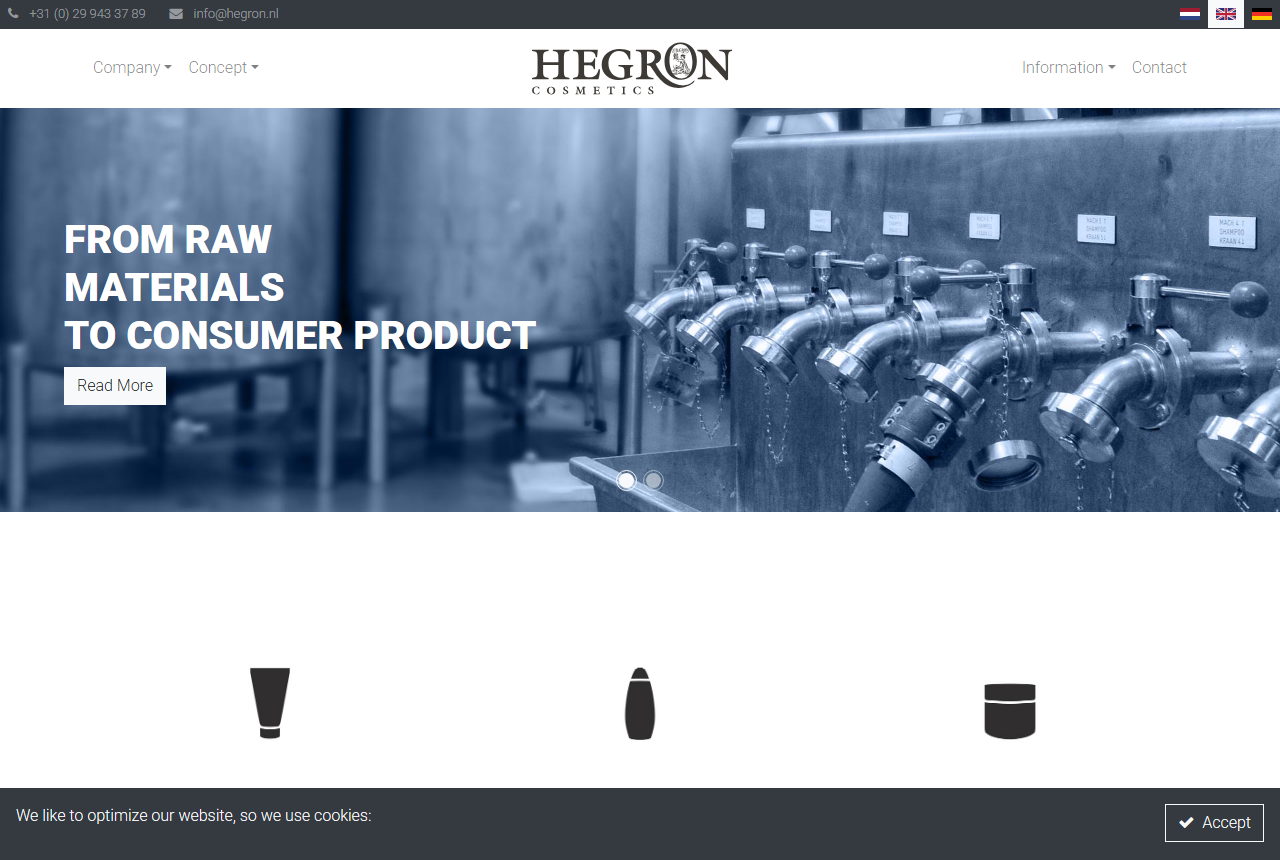
HQ: Purmerend, North Holland · Type: Private label, A-brand and own-brand production · Best known for: Retail-volume hair, bath and body
In cosmetics since 1960 and running roughly 175 staff, Hegron is a classic European personal-care plant with an in-house microbiology and development laboratory and ISO 22716 certification. Its category list reads like a pharmacy shelf: hair care, bath and shower, hand soap, styling, body care, foot care, baby, sun care, deodorant and perfume. It is built for volume, so a Malaysian brand testing a 2,000-unit concept will get more attention from a smaller house on this list.
6. Mondial Cosmetics — Alkmaar
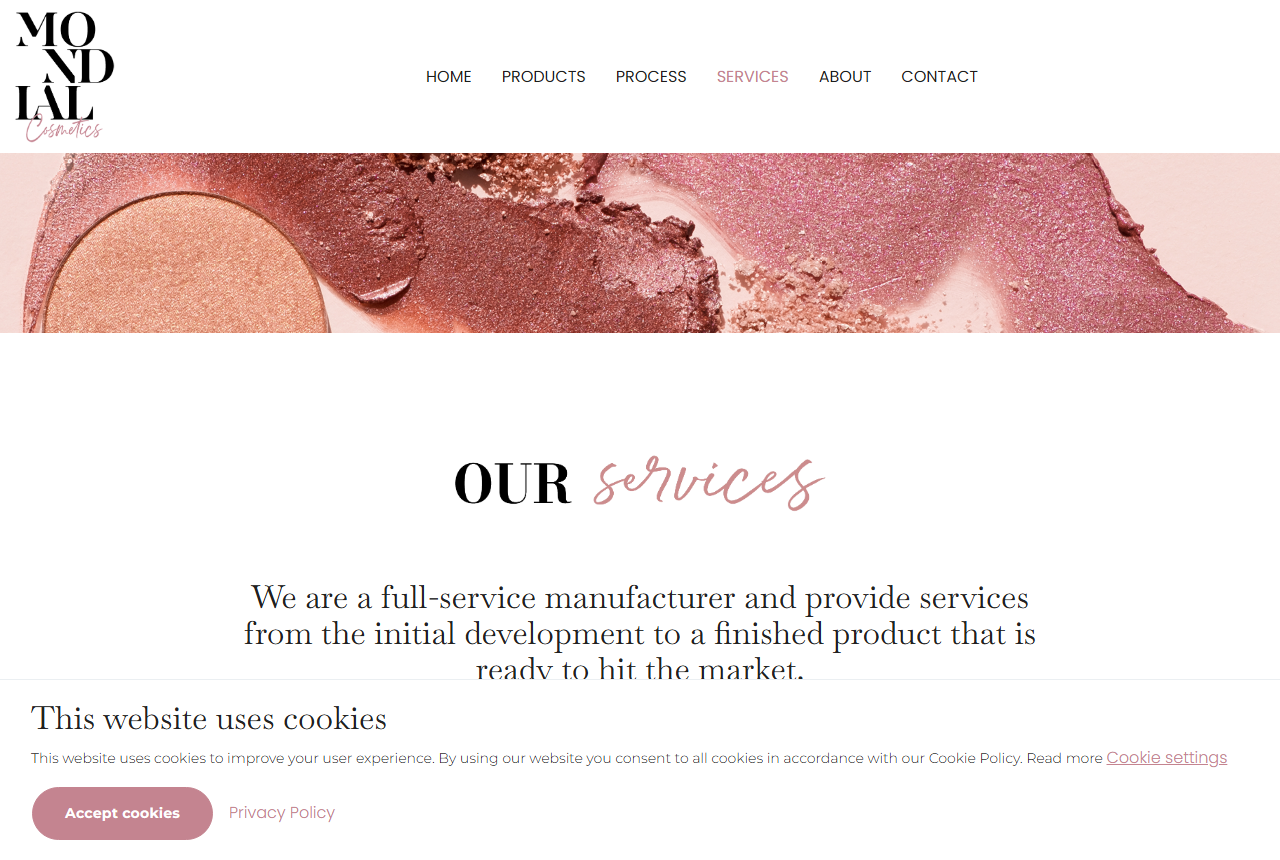
HQ: Alkmaar, North Holland · Type: Full-service colour cosmetics manufacturer · Best known for: Lipstick, mascara, foundation and nail at scale
Producing cosmetics in some form since 1936, Mondial calls itself the largest Dutch developer and maker of makeup and publishes filling capacity above 40 million units a year. Colour is a different discipline from skincare — shade matching, pigment dispersion, bullet and pan tooling — and very few factories outside Italy, Korea and China do it well. Expect makeup minimums nearer 10,000 units per shade and a longer development runway than a cream.
7. Personal Care Concepts — Heerhugowaard
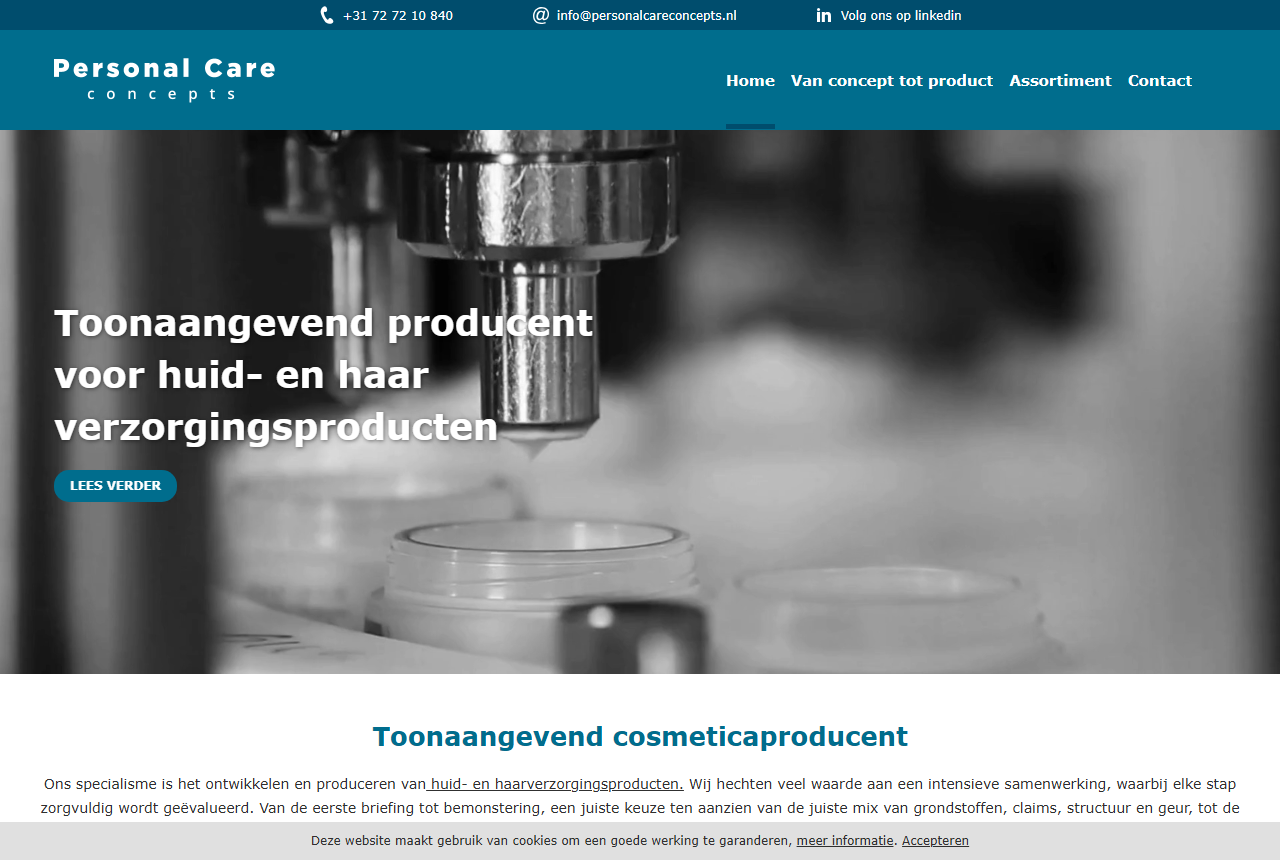
HQ: Heerhugowaard, North Holland · Type: Full-service skin and hair care producer · Best known for: Co-developing with startups and pharmacy brands
This is a specialist rather than a catalogue house: skin and hair care plus medical and natural cosmetic products, made for retailers, pharmaceutical companies, online sellers and startups, under ISO 22716. It describes its process as step-by-step co-creation — brief, sample, raw material and claim decisions, then texture and fragrance — which suits a founder who has a clear formula idea but no laboratory. The website is Dutch-only, so open in English and confirm export support early.
8. Rapide International — Haaksbergen
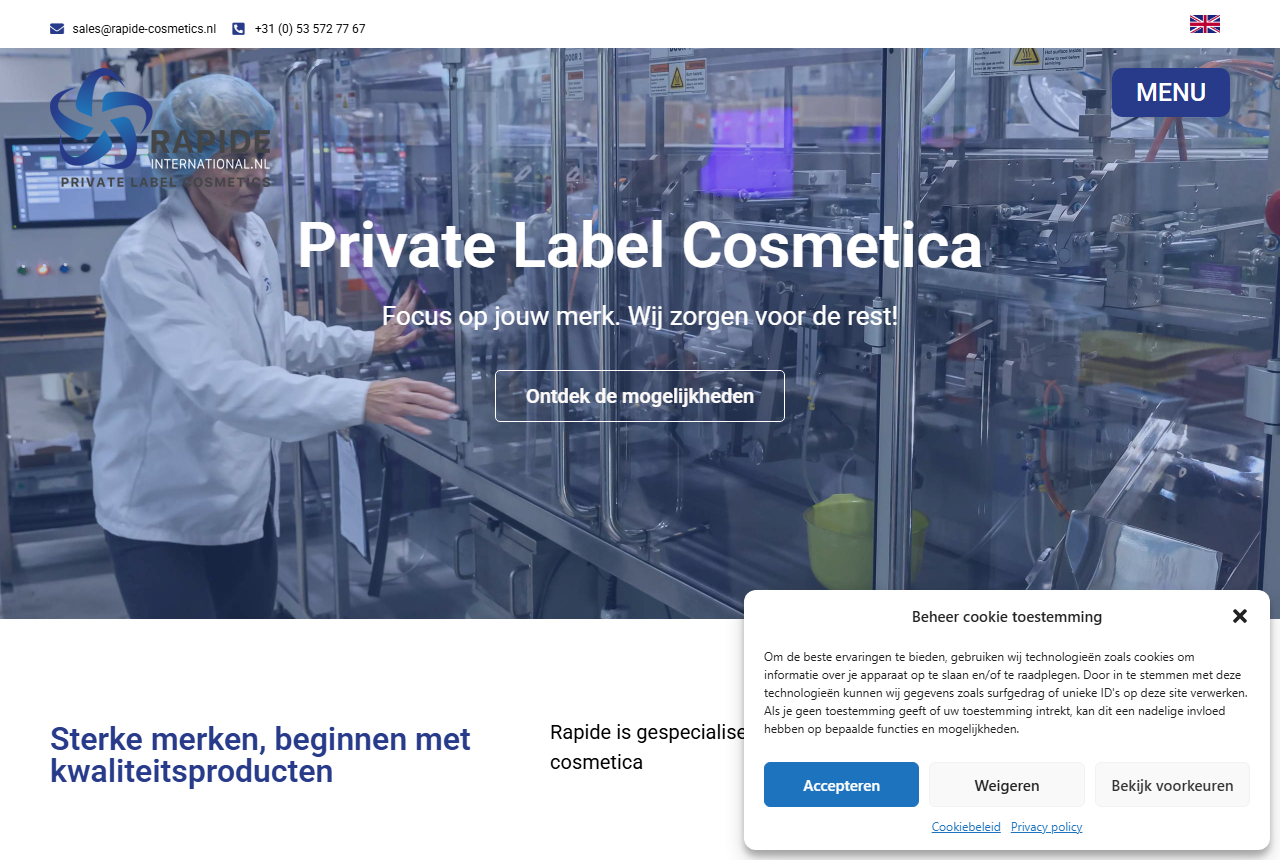
HQ: Haaksbergen, Overijssel · Type: Private label, cosmetics and medical devices · Best known for: Running ISO 22716 and ISO 13485 side by side
Rapide produces facial care, body care, baby care, sun protection, hair care, eau de toilette and home fragrance under both the cosmetics GMP standard and the medical-device quality standard, with in-house R&D, regulatory guidance, packaging advice and printing. The dual-standard setup matters if part of your range would classify as a device in Europe. It also means device batches compete for line time with cosmetic runs, so agree scheduling priority in writing.
9. Rebel Nature — Amsterdam
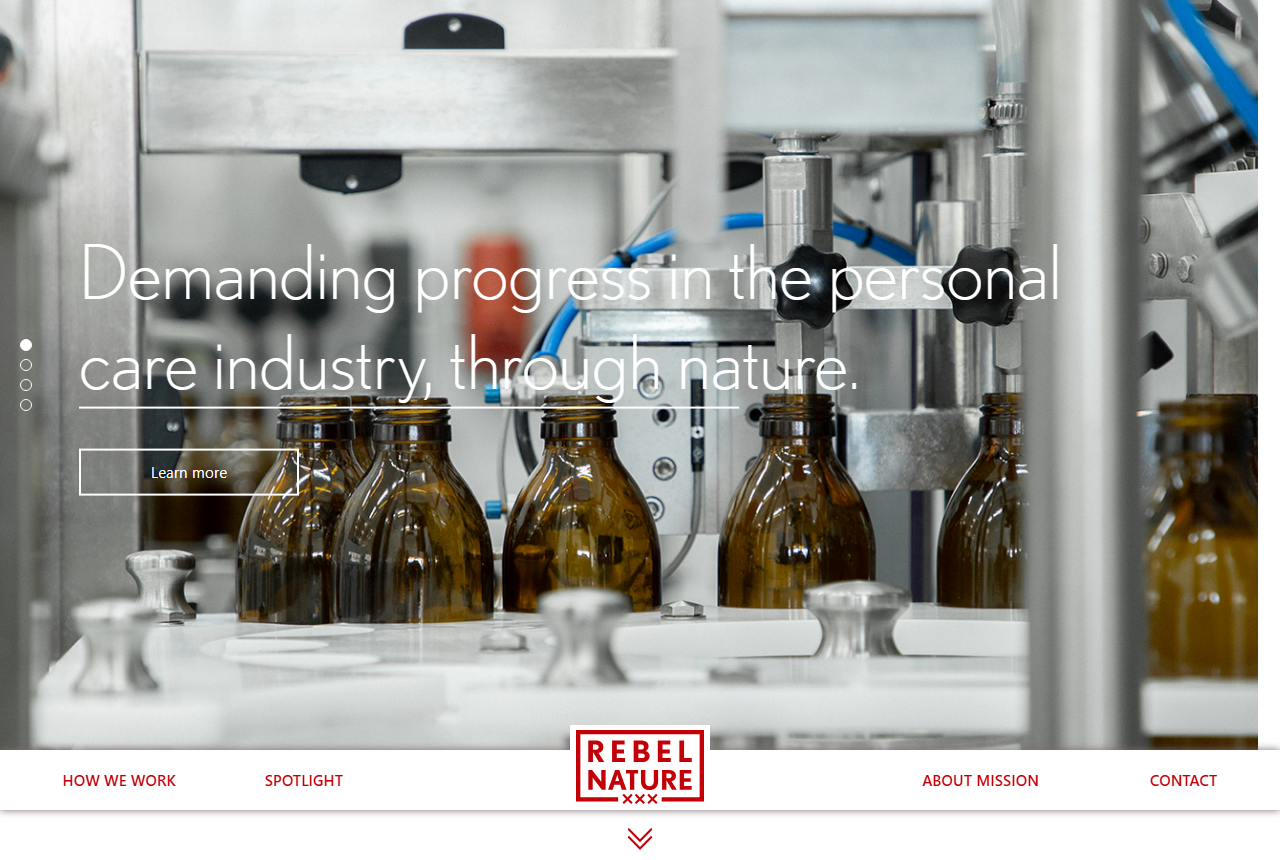
HQ: Amsterdam · Type: Contract manufacturer for natural personal care · Best known for: Low minimums on genuinely natural formulas
Rebel Nature builds only for the natural segment, drawing on a library of more than 500 natural or nature-derived raw materials, across solid sticks, liquids, creams and powders, with stated minimums starting at 2,000 pieces and an EcoVadis Silver rating. For a Malaysian clean-beauty brand that wants a small first batch and a credible European origin story, this is the most accessible door on the list. The flip side is scope: conventional preservative systems and high-pigment colour are not what this plant is for.
10. RedPharma — Almere
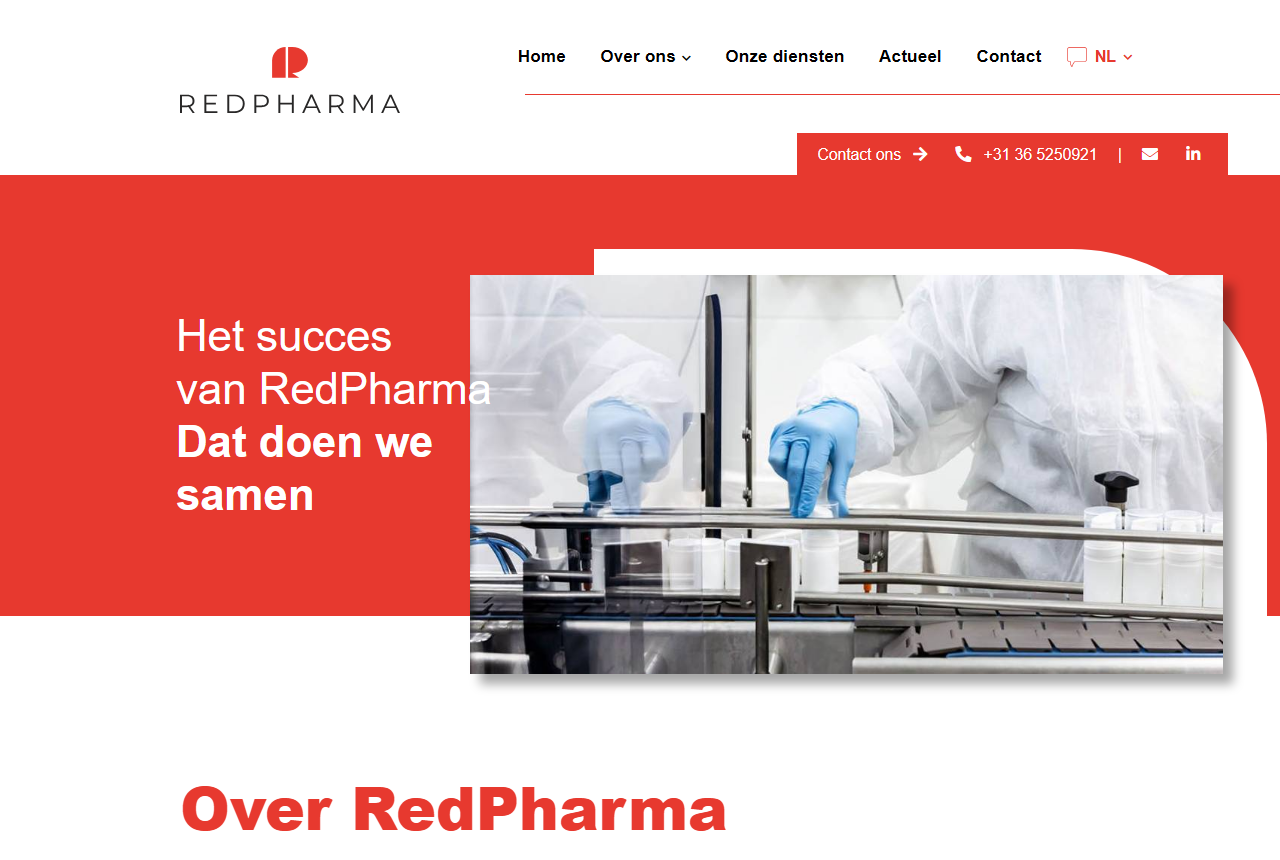
HQ: Almere, Flevoland · Type: Contract manufacturer, cosmetics and medical devices · Best known for: Gels, creams and lotions near the cosmetic/device borderline
Founded in 2017, RedPharma is the youngest company here and is organised around liquid and semi-solid production with separate R&D, QA/QC/RA, production and logistics functions. The visible weight it puts on regulatory affairs is useful if your claims sit close to a medical line. Being young means fewer reference years, so ask for references in your exact product form and check how long the current lines have been validated.
Bringing Dutch-made cosmetics into Malaysia: the NPRA reality
This is the part that catches people out. Wherever a cosmetic product is manufactured, it cannot legally be sold in Malaysia until it has been notified to the National Pharmaceutical Regulatory Agency through the Quest3+ system, and the notification holder must be a company incorporated in Malaysia. Your Dutch manufacturer cannot hold it. Practically, that means you (or your local distributor) register as a Quest3+ user, submit the product particulars, full ingredient list with percentages where required, and the manufacturer’s details, and you keep a Product Information File available for inspection.
Two consequences follow. First, the paperwork you need from the Netherlands is specific: a full quantitative formula, a certificate of analysis per batch, GMP evidence for the manufacturing site, and a Certificate of Free Sale or equivalent showing the product is legally sold in its country of origin. Ask for all of it during quoting, not after production. Second, if a distributor holds the notification, moving to another distributor later means re-notifying everything — a commercial lock-in dressed up as compliance. Notification requirements do change, so confirm the current NPRA guidance before you submit.
Ingredient rules do not travel unchanged
Malaysia follows the ASEAN Cosmetic Directive. The Netherlands follows EU Regulation 1223/2009. The two are close relatives — the ASEAN annexes were modelled on the European ones — but they are not identical, and they update on different clocks. A preservative concentration or a UV filter that is current in the EU annexes may sit at a different limit, or not appear at all, in the ASEAN lists.
The practical step is simple and cheap: send your Dutch supplier the ASEAN annexes and ask them to confirm, in writing, that the finished formula complies with the ASEAN Cosmetic Directive and not only with EU rules. Do it at the sampling stage. Reformulating after a 5,000-unit run has been filled is an expensive way to learn that one ingredient is not permitted in your home market.
Freight, duty and what it does to your landed cost
Ocean freight from Rotterdam to Port Klang typically runs somewhere in the 28–40 day range port to port, before you add loading, customs clearance and inland transport at both ends. Add production and you should plan for a first order landing four to six months after brief sign-off, and roughly three to four months on repeats. That is a long cash-conversion cycle for a young brand.
Cost-wise, the number that matters is landed cost, not the ex-works unit price. Build the stack properly: unit price, export packing, inland haulage to port, ocean freight, insurance, Malaysian import duty and SST, clearing agent fees, and the cost of money tied up for the transit period. Products with alcohol content, aerosols or pressurised packs bring extra dangerous-goods handling and paperwork. A quote that looks 15% cheaper than a local one often stops looking cheaper once the container is on the water.
MOQ arithmetic: Dutch versus Malaysian
Dutch minimums of 2,000–5,000 units per SKU are reasonable for Europe. They are still two to five times what a Malaysian OEM will typically accept for a first run. Multiply by the number of SKUs — a three-shade or three-variant launch is three minimums, not one — and the working capital difference becomes the real decision, not the unit price.
A sensible pattern for brands that genuinely want European manufacturing is to stage it: prove the concept locally at 500–1,000 units, learn what your customers actually reorder, then move the proven hero SKU to a Dutch line once volume justifies the freight and the minimums. Our guides to Polish cosmetic factories and Mexican cosmetic factories apply the same arithmetic to two other export markets, and the comparison is instructive.
Halal: the argument that usually decides it
If halal certification matters to your brand, the Netherlands is a difficult starting point. Dutch factories can and do produce formulations free of alcohol and animal-derived ingredients, and some will state halal capability. What they generally cannot supply is a certificate from a body that JAKIM recognises, because the recognised-foreign-certifier list is specific and does not cover every European halal certifier.
You have two workable routes. Either accept that the product will be marketed without a Malaysian halal logo — viable for some positioning, fatal for others — or manufacture with a JAKIM-certified Malaysian facility, where the certification is issued under a system NPRA and Malaysian retailers already accept. For brands whose core market is Malaysian Muslim consumers, this single point usually outweighs everything else on the European side of the ledger.
When local Malaysian manufacturing is simply the better call
Sourcing from the Netherlands makes sense when your positioning depends on European origin, when you need a capability that does not exist locally (colour cosmetics at scale, oral care, cosmetic/medical-device borderline products), or when you are already selling into the EU and want to produce inside that market.
Local manufacturing wins in most other situations, and it is not close. You get MOQs from a few hundred units, a factory you can visit in an afternoon, samples in days rather than weeks, JAKIM halal certification issued under a recognised system, formulations built against ASEAN rules from the start, and no ocean freight in your cost stack. For a first product, a seasonal launch or anything where speed of iteration matters, browse the cosmetics, skincare and personal care OEM guides and start with a Malaysian shortlist before you price a container.
How to run the first conversation with a Dutch factory
Come with a brief, not a question. Name the product form, the target texture and fragrance direction, the pack format and size, the claims you intend to make, the quantity for run one and your realistic reorder cadence. Say up front that the destination market is Malaysia and that the formula must satisfy the ASEAN Cosmetic Directive — this single sentence saves weeks.
Then ask five hard questions: what is the minimum per SKU and per shade; what is the total elapsed time from approved sample to goods at the port; what is the deposit and balance schedule; which documents do you supply for import registration; and who owns the formula if we stop working together. The answers, more than any certification logo, tell you whether the relationship will survive a second order.
Frequently asked questions
Do I need NPRA approval to sell Dutch-made cosmetics in Malaysia?
You need a product notification, not an approval. Every cosmetic product sold in Malaysia must be notified to the National Pharmaceutical Regulatory Agency through the Quest3+ system before it goes on sale, and the notification must be held by a company incorporated in Malaysia. Country of manufacture does not change this. Your Dutch supplier provides the technical documents — formula, certificate of analysis, GMP evidence, free-sale certificate — but the submission and the ongoing responsibility sit with your Malaysian entity. Check current NPRA guidance before you submit, as requirements are periodically updated.
How long does a first order from the Netherlands really take?
Plan for four to six months from brief to goods in your warehouse. Formulation and sampling commonly take six to twelve weeks with revisions, production another four to eight, and ocean freight from Rotterdam to Port Klang roughly 28 to 40 days port to port before customs clearance and inland delivery. Repeat orders of an unchanged formula are faster, typically three to four months. Air freight can compress the shipping leg but rarely makes commercial sense for full-size liquid cosmetics.
Is a Dutch cosmetic manufacturer more expensive than a Malaysian one?
Usually yes on unit price, and almost always yes on landed cost. European labour, energy and compliance overheads are higher, minimums are larger, and you add ocean freight, insurance, duty, SST and clearing fees on top. The honest comparison is landed cost per unit including the working capital tied up during a five-week transit. Dutch manufacturing earns its premium when it buys you something local production cannot — a European origin claim, colour or oral-care capability, or production inside the EU market you are selling into.
Can a Dutch factory make halal-certified cosmetics for the Malaysian market?
It can make products formulated to halal principles, but the certificate is the problem. JAKIM recognises specific foreign halal certification bodies, and most European certifiers are not on that list, so a certificate obtained in the Netherlands may not carry the Malaysian halal logo. If halal marketing is central to your brand, the practical answer is to manufacture with a JAKIM-certified Malaysian facility. Verify current JAKIM recognition directly before assuming any foreign certificate will be accepted.
Related reading
Sourcing further up the price ladder? Top 10 Cosmetic Suppliers in Switzerland for Malaysian Brands (2026).
Need halal-certified supply from outside Asia? Our guide to South African cosmetic factories for Malaysian brands explains why that market has three JAKIM-recognised halal certifiers.
This article is general information for brand owners, not regulatory or legal advice. Notification requirements, ingredient annexes, halal recognition lists and duty rates change — verify the current position with NPRA, JAKIM and Royal Malaysian Customs, and confirm all capabilities, certifications and minimums directly with any manufacturer before you place an order. Company details were taken from each manufacturer’s own website on 28 August 2026.
About the author
Zahid Osman is Manufacturing Partnerships Editor at MalaysiaOEM, covering how Malaysian brand owners structure and manage relationships with contract manufacturers at home and overseas.