By Aisyah Karim · Halal Cosmetics & Market Entry Advisor · Published 13 Sep 2026
South Africa is not the first country a Malaysian beauty founder thinks of when sourcing a contract manufacturer. It rarely appears on the usual shortlist of Korea, China, Thailand or Taiwan. Yet it has something those markets do not combine in one place: a mature cosmetics contract-manufacturing sector that works in English, draws its ingredient rules from the European model, and has three halal certification bodies already recognised by JAKIM. For a Malaysian brand selling to Muslim consumers here, in the Gulf or in Africa, that combination deserves a closer look.
This guide profiles ten South African cosmetic factories whose websites we checked on 11 September 2026. It then covers the practical questions a Malaysian buyer has to answer before placing an order: getting the product notified with NPRA, what a South African halal certificate can and cannot do for you in Malaysia, what the long sea route costs in time, and when a factory in Selangor or Johor is simply the better choice.
Key takeaways
- South African contract labs cover everything from 5 kg pilot batches to retail-scale production for national pharmacy and supermarket chains.
- SANHA, the MJC Halaal Trust and NIHT are all JAKIM-recognised, so a South African halal certificate can support a halal claim in Malaysia, provided it covers your exact product and the factory that makes it.
- Every imported cosmetic still needs an NPRA notification through QUEST3+ before it is sold, held by a company registered in Malaysia.
- South Africa follows EU-style ingredient lists, which overlap heavily with the ASEAN Cosmetic Directive but are not identical, so screen every formula against the ASEAN annexes.
- For a Malaysia-only brand, local manufacturing usually wins on speed, freight and paperwork. South Africa earns its place when you need its specialisms or plan to sell into Africa and the Middle East.
Why South Africa belongs on a Malaysian sourcing shortlist
Three things set South Africa apart from the Asian manufacturing hubs Malaysian brands usually compare. The first is specialism. South African factories have long served consumers with textured and coily hair and very high UV exposure, so hair relaxers, curl creams, depilatory creams and high-SPF sun care are everyday work there, not niche requests. A Malaysian brand building a textured-hair line or a hair-removal range will find deeper experience in Gauteng than in most of Asia.
The second is language and documentation. Technical files, certificates and contracts come in English, and most larger labs are used to supplying retailers that demand full product information files and trade-metrology marks. The third is halal infrastructure. South Africa has a large Muslim community and a well-developed halal certification system, and its main certifiers are recognised by JAKIM as well as by Singapore’s MUIS and several Gulf authorities. That is rare outside Muslim-majority countries.
None of this makes South Africa cheap or close. It is roughly 8,000 kilometres from Port Klang, there is no free-trade agreement between the two countries, and the rand’s volatility cuts both ways on price. The case for it is capability, not cost.
How we chose these ten factories
We started with eighteen South African candidates, drawn from search results and the contract-manufacturer directory kept by the Society of Cosmetic Chemists of South Africa. To qualify, a company had to manufacture physically in South Africa, openly offer contract, private-label or white-label work to other brands, focus mainly on cosmetics and personal care, and have a working website we could screenshot cleanly on 11 September 2026. Sixteen sites loaded and thirteen qualified; the ten below are listed alphabetically, not ranked.
Everything we say about certifications, capacity and history comes from the companies’ own published material. We did not visit any factory or produce samples. Treat each profile as a starting point for your own enquiries, not a verdict.
The ten South African cosmetic factories
1. Alchem Labs — Tulbagh, Western Cape
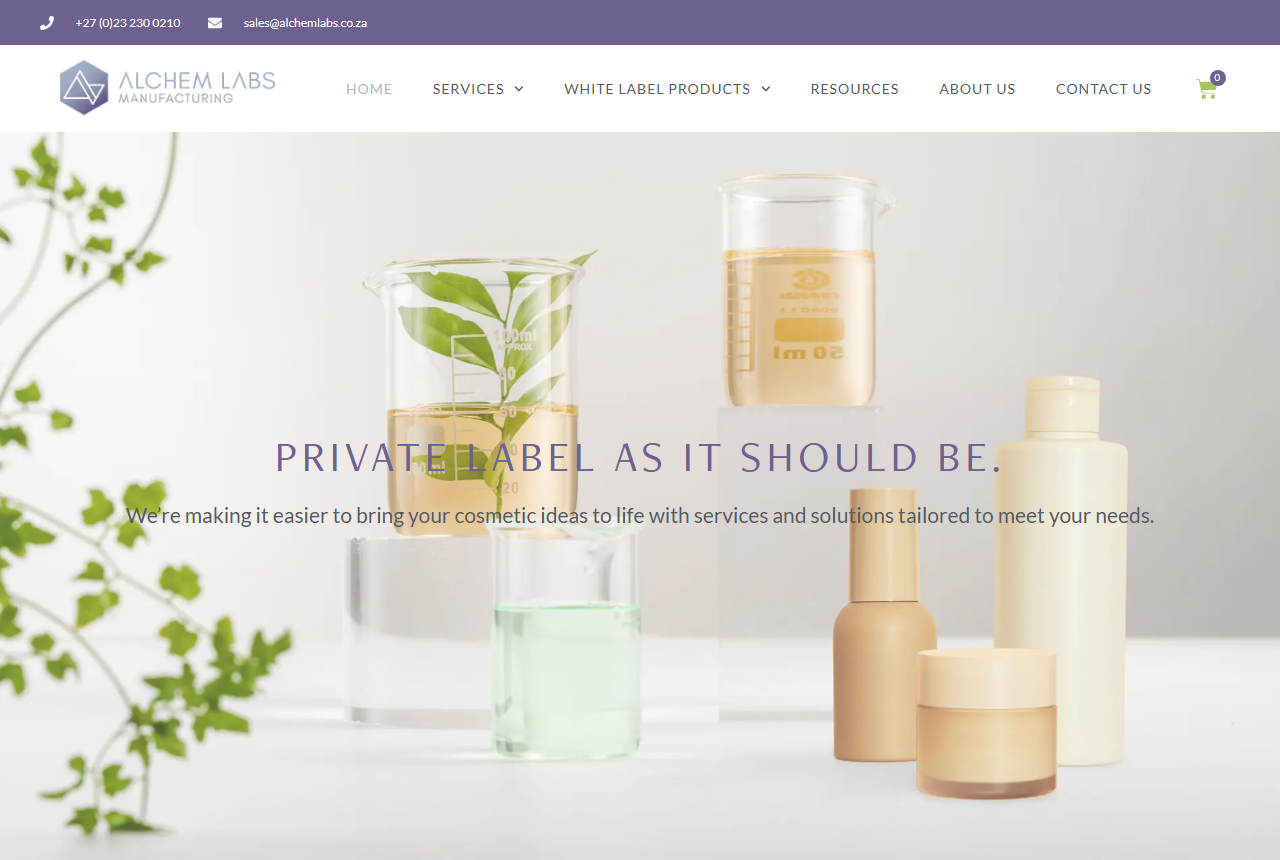
HQ: Tulbagh, Western Cape · Type: Contract manufacturer and white label · Best known for: Tiny minimums and a halal-certified facility
For a Malaysian halal brand this is the most interesting name on the list. Alchem Labs says its facility is halal-certified, and it publishes runs from as little as 5 kg up to 250 kg, so you could trial a serum or body cream without tying up a container’s worth of cash. Before you plan around the halal status, ask which body issued the certificate and check that body against JAKIM’s current recognition list.
2. Brunational — Edenvale, Gauteng

HQ: Sebenza, Edenvale, Gauteng · Type: Contract and private label manufacturer · Best known for: One-stop filling, labelling and cartoning
Brunational has more than two decades of experience and a catalogue spanning facial skincare, hair care, bath products and salon treatments. What makes it useful to an importer is the packing line: filling, shrink-wrapping, labelling, cartoning and barcoding happen on site, so goods could leave South Africa ready for Malaysian shelves once your NPRA-compliant label artwork is approved. It displays SABS and ISO 9001 approval rather than a cosmetics-GMP certificate, so ask how it would support the GMP evidence your notification file needs.
3. Customised Cosmetics — Edenvale, Gauteng

HQ: Eastleigh, Edenvale, Gauteng · Type: Contract manufacturer and private label · Best known for: Depilatories, waxes and ethnic hair care
Customised Cosmetics has been making private-label products since 2004 and quotes capacity of up to 50 tonnes a month for a single product. Its specialities, hair-removal creams, waxes and products for textured hair, are hard to source well in Malaysia. Depilatories need tight control of pH and active concentration, so ask for stability and safety data together, since NPRA can request both after notification.
4. DC Laboratories — Pretoria, Gauteng
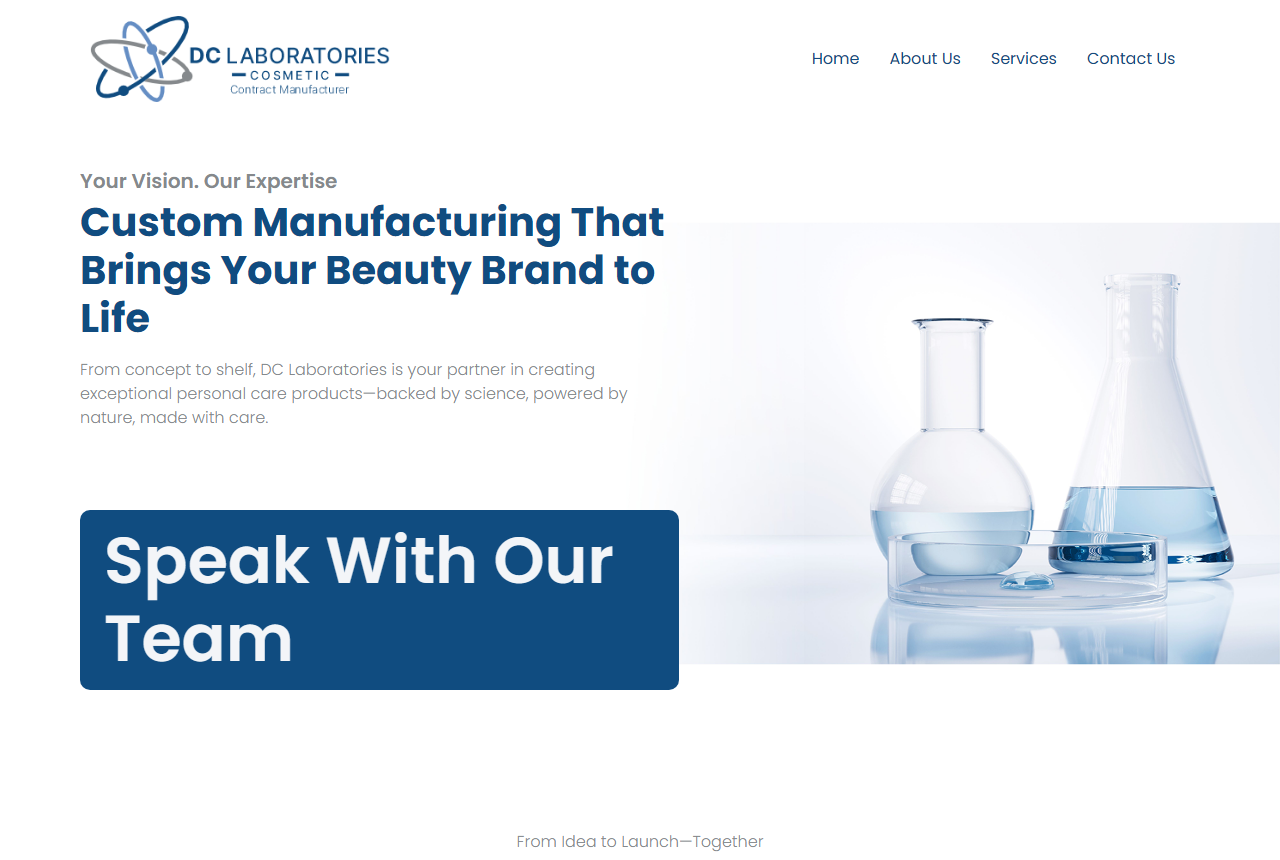
HQ: Wallmansthal, Pretoria · Type: Boutique contract manufacturer · Best known for: Personal attention for small and growing brands
A family-run lab working across skin, body, hair and fragrance, DC Laboratories suits a founder who wants to talk directly to the person developing the formula. It cites endorsements from South Africa’s trade department and its cosmetics export council, which suggests it is used to export enquiries. It says it works to ISO 22716 guidelines rather than holding a certificate, which matters when you assemble the GMP evidence for your Malaysian product file.
5. Emulcfy — Roodepoort, Gauteng
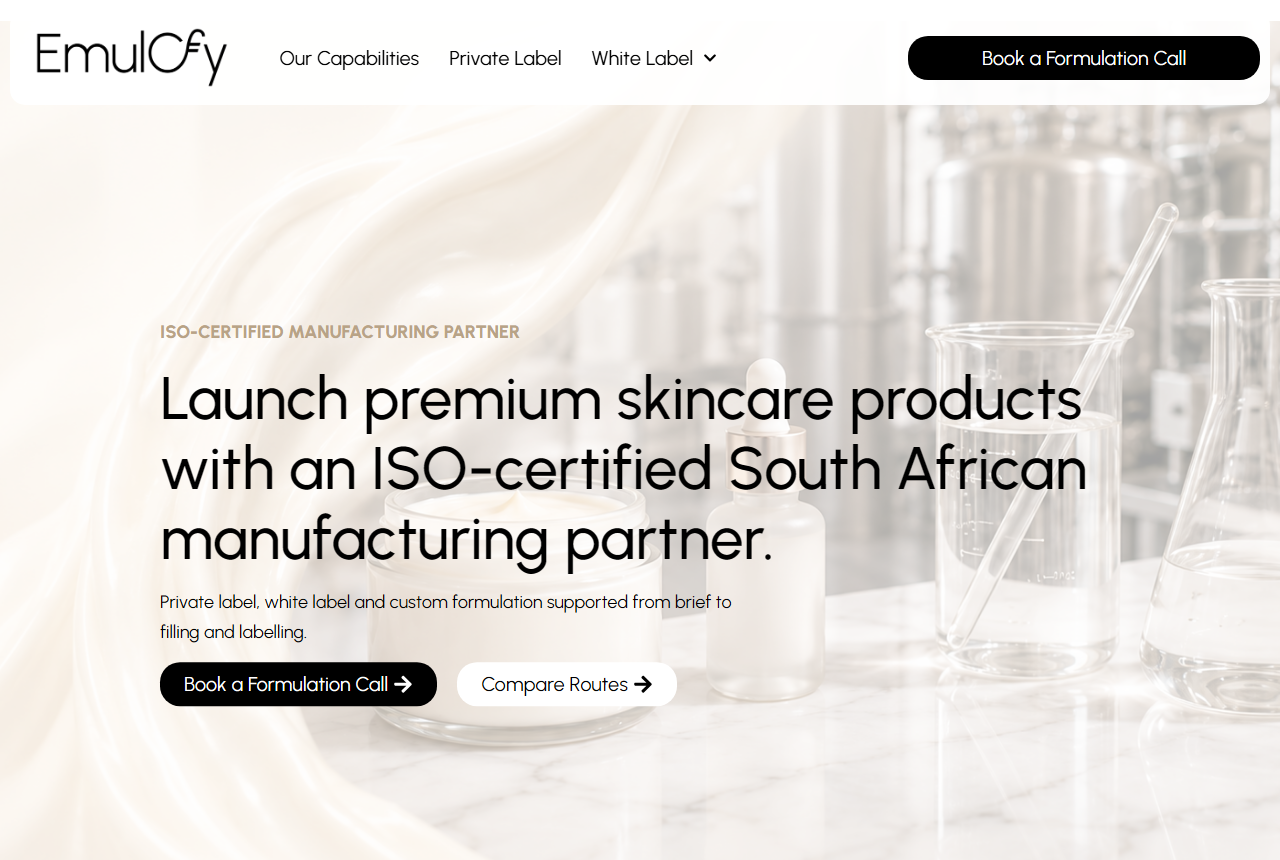
HQ: Roodepoort, Gauteng · Type: Private label, white label and custom formulation · Best known for: Clear launch routes for first-time founders
Emulcfy is a younger business, dated to 2015, that states both ISO 9001:2015 and ISO 22716 certification, a combination that makes the paperwork side of an NPRA notification easier. Its site sets private label, white label and custom formulation out as separate routes. That helps a Malaysian founder decide early whether to license an existing formula or pay for development. Ask for export references, because a young company may have limited experience shipping to Asia.
6. Lee-Chem Laboratories — Durban, KwaZulu-Natal
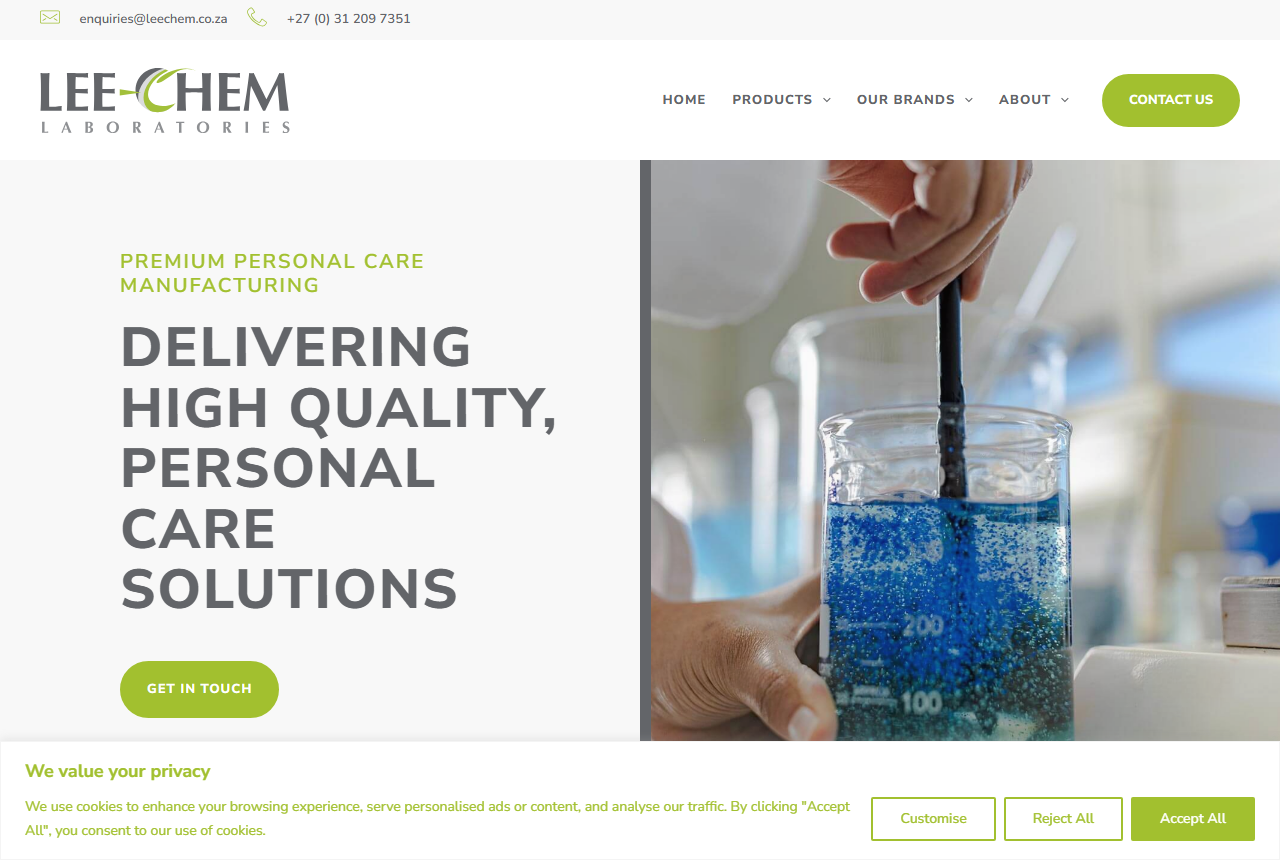
HQ: Bonela, Durban · Type: Contract manufacturer, private and white label · Best known for: Grooming and hair removal since 1962
Lee-Chem is the veteran of the group and sits in Durban, the port most likely to handle your container to Malaysia, which cuts inland trucking. It states ISO 22716 compliance and alignment with EU cosmetics rules, a useful base for a formula that must also pass ASEAN screening. Because it sells its own brands too, get formula ownership and confidentiality in writing.
7. Prime Product Manufacturing — Pelindaba, North West
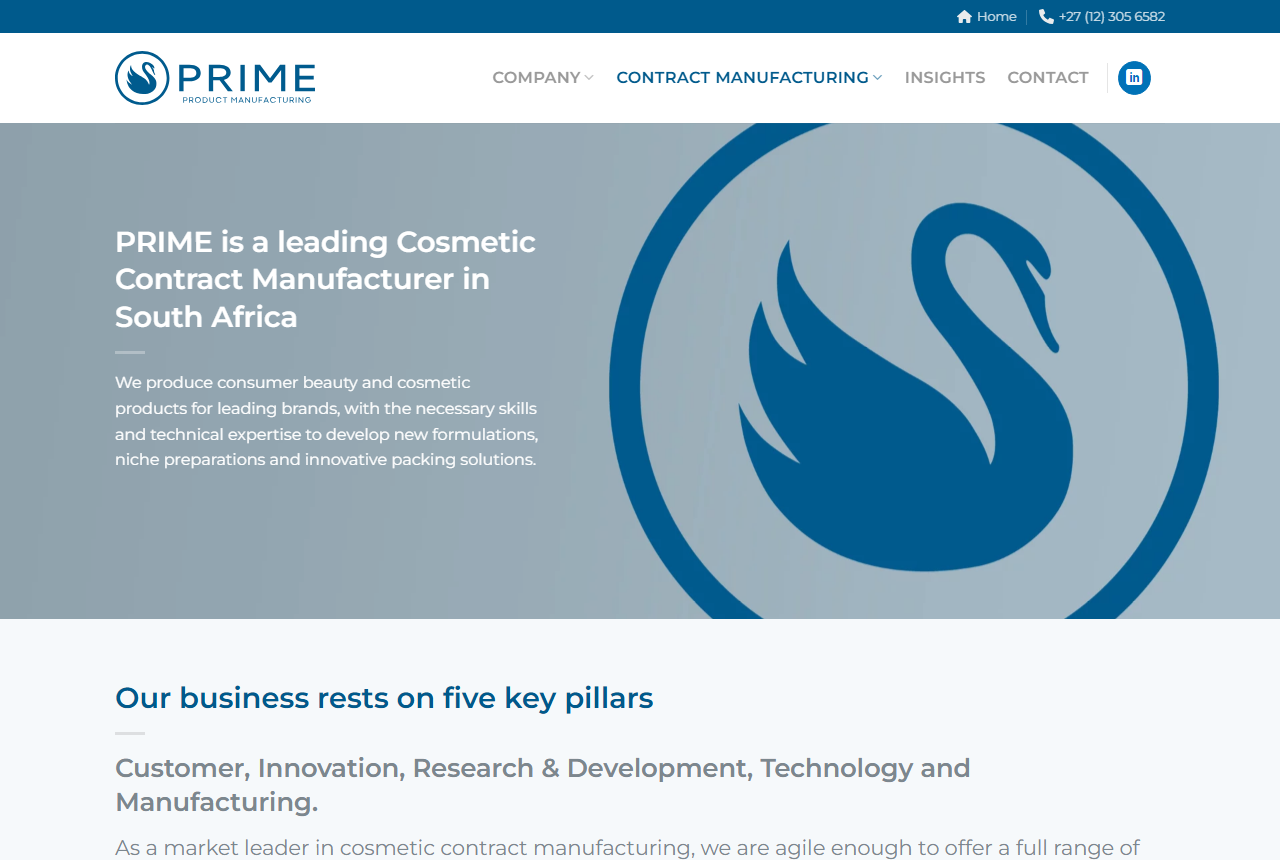
HQ: NECSA Eco-Industrial Estate, Pelindaba · Type: Cosmetic contract manufacturer and packer · Best known for: Hot-fill sticks, powders, lip balms and fragrance
Prime says it takes on the products other factories turn away, and its format list backs that up: hot-fill products, talcum and loose powders, lip-balm kits and perfumes, as well as standard creams and gels. The Society of Cosmetic Chemists’ directory credits it with being the first South African company certified to ISO 22716. It is built for established brands, so a small Malaysian start-up may find the minimums high. Perfumes are also flammable, which changes how they must be shipped.
8. Proficos — Edenvale, Gauteng
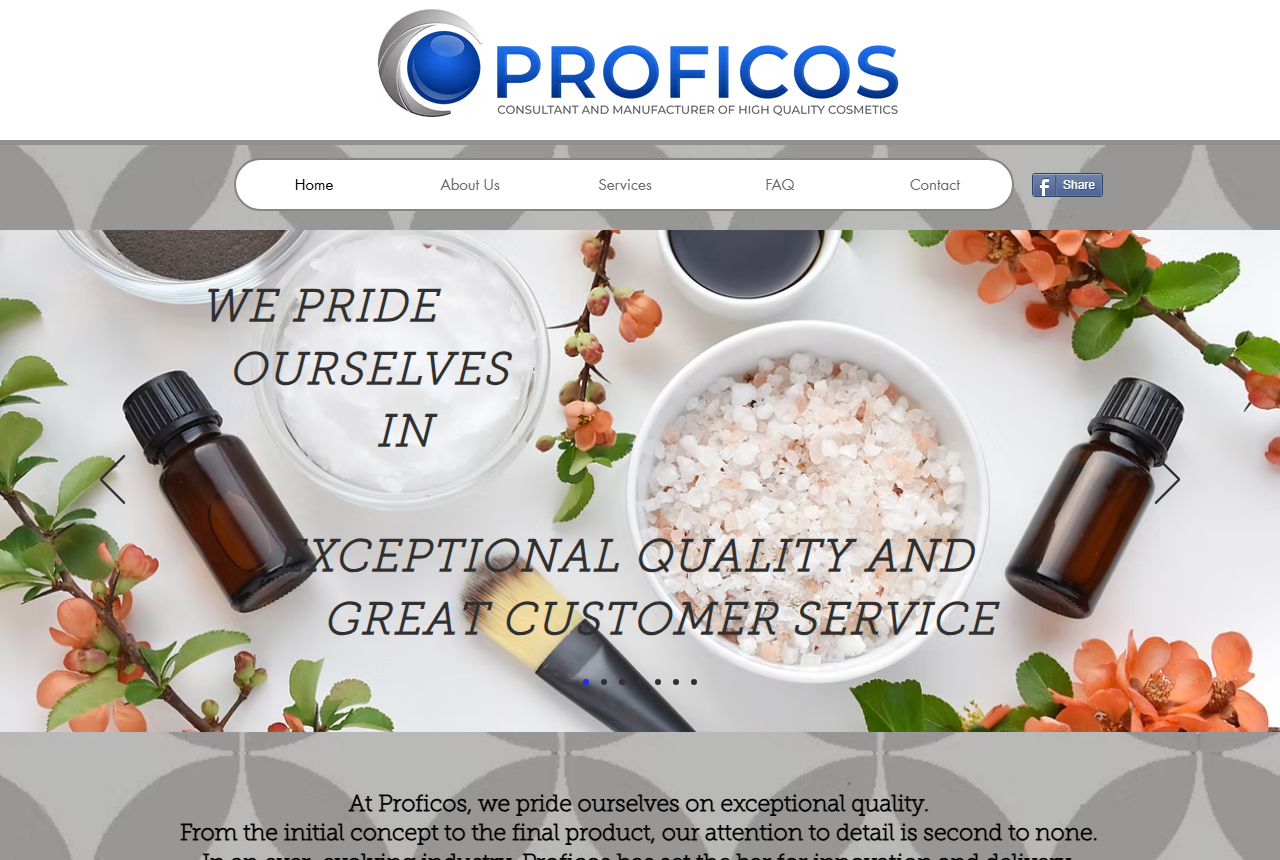
HQ: Sebenza, Edenvale · Type: Consultant and full-service manufacturer · Best known for: Colour cosmetics with in-house shade matching
Operating since 1991 from a facility of just over 4,000 m², Proficos is the pick here for makeup. It runs its own colour-matching laboratory, reports a vegan-certified plant, and offers support with EU registrations, which shows it can work to foreign regulatory files. Colourants are one area where ASEAN and South African rules differ in detail, so give Proficos the ASEAN colourant annex at the start of the project.
9. SDK Laboratories — Midrand, Gauteng

HQ: Randjespark, Midrand · Type: Turnkey contract manufacturer · Best known for: The broadest product range on this list
SDK covers skincare, hair, fragrance mists, colour cosmetics, children’s products and intimate care from a 30,000-square-foot plant, and states ISO 22716 certification. It also holds a South African medical-device certification. For a Malaysian importer that is a warning as much as a benefit: a product classed as a medical device here goes to the Medical Device Authority, not NPRA. Settle the classification before you commit to a formula.
10. Serendipity Toiletries — Pretoria, Gauteng
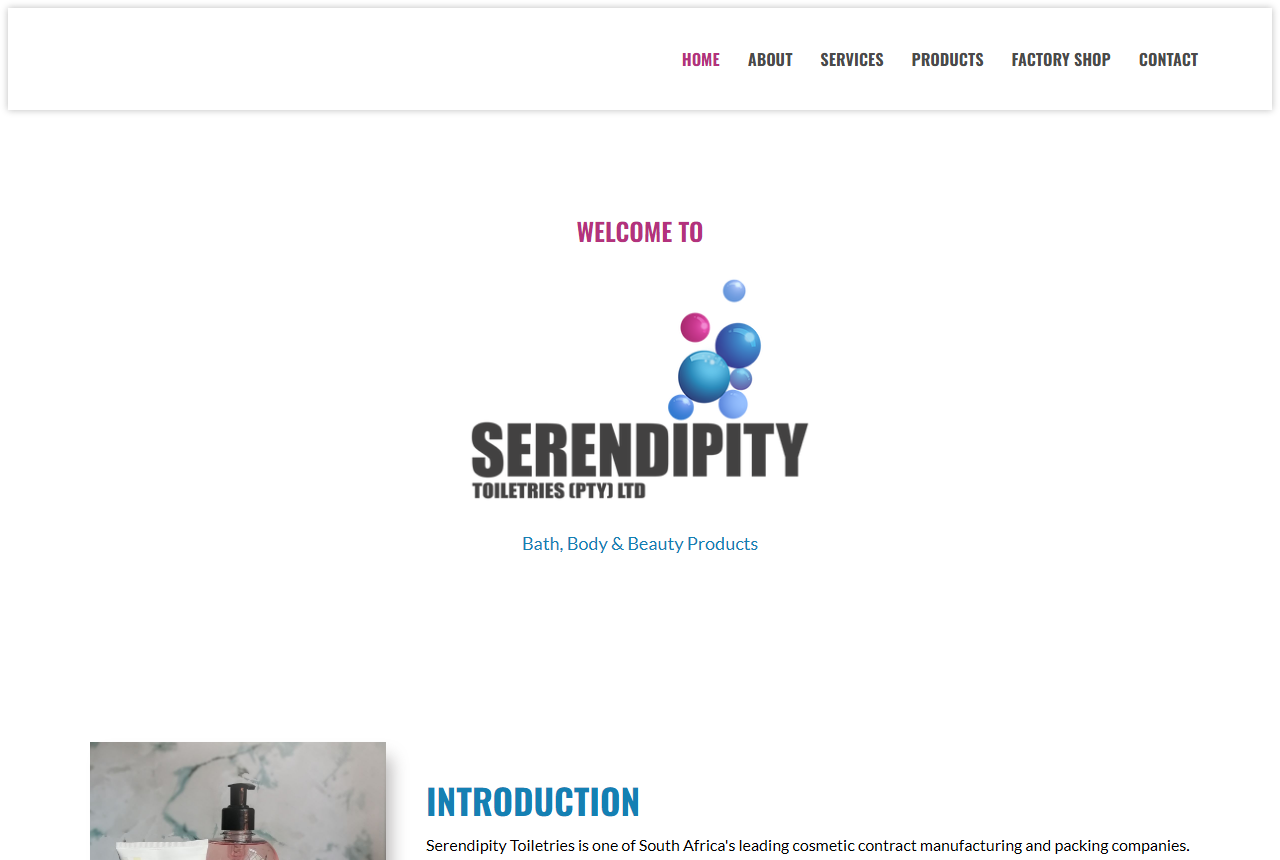
HQ: Silverton, Pretoria · Type: Contract manufacturer and packer · Best known for: Supplying major South African retail chains
Serendipity makes bath, body, sun and anti-ageing products for some of South Africa’s largest retailers, including Clicks, Woolworths and Pick n Pay. It holds ISO 22716 and a SMETA ethical-trade audit. For a Malaysian brand aiming at big pharmacy chains, a factory already approved by demanding retail buyers is a good sign. The trade-off is scale: expect minimums sized for national retail rather than a first boutique run.
The halal question: what a South African certificate does for you in Malaysia
This is the section most Malaysian readers will care about. Under the Trade Descriptions (Certification and Marking of Halal) Order 2011, a halal claim on products sold in Malaysia must be backed by JAKIM or a state religious authority, or by a foreign certification body that JAKIM recognises. The South African National Halaal Authority (SANHA) states that JAKIM has recognised it since its inception. The Muslim Judicial Council Halaal Trust and the National Independent Halaal Trust also appear on JAKIM’s recognised list.
In practice, a product certified by one of those bodies can carry a halal claim in Malaysia, but three conditions apply. The certificate must name your product and the factory that makes it, not only the manufacturer’s other lines. The body must still be on JAKIM’s recognised list when you import, because recognition is reviewed. And a foreign certificate does not entitle you to use the Malaysian JAKIM halal logo, which requires Malaysian certification. If the JAKIM logo on your pack is central to your marketing, a Malaysian halal-certified manufacturer is usually the simpler route.
Getting a South African product through NPRA
South Africa has no pre-market registration for cosmetics, so a product can be sold there without any government filing. Malaysia does require one. Before a cosmetic is imported for sale, a Malaysian-registered company must notify it to the National Pharmaceutical Regulatory Agency (NPRA) through the QUEST3+ system and hold the notification in its own name. That company is legally responsible for the product, so it must be able to obtain the full product information file (PIF) from the South African factory on request.
Before you sign, agree with the factory that you will receive the full ingredient list with percentages, a certificate of analysis for each batch, stability data, evidence of GMP (ideally an ISO 22716 certificate), and a safety assessment. Factories that supply major retailers or export to Europe usually provide these without fuss. Smaller labs may need to be told exactly what NPRA expects.
Formula screening: EU-style rules versus the ASEAN Cosmetic Directive
South Africa has no finalised cosmetics regulations of its own, so the industry follows the Cosmetic, Toiletry & Fragrance Association’s compendium, which is modelled on the EU’s ingredient annexes. Malaysia applies the ASEAN Cosmetic Directive, which also draws on the EU lists but is not updated at the same pace. A formula that is fine in Johannesburg is usually close to compliant in Kuala Lumpur, but close is not enough. Differences tend to show up in preservative limits, UV filters and colourants.
The simplest safeguard is to send the manufacturer the current ASEAN annexes with your brief and ask it to confirm every ingredient against them in writing. Do this before the first sample, not after artwork is printed. Sunscreens need extra care. South African factories test SPF to the national standard SANS 1557, but the UV filters must also appear on ASEAN’s permitted list at allowed concentrations, and your label claims must follow Malaysian and ASEAN guidance.
Shipping, lead times and landed cost
Sea freight from Durban to Port Klang is a long leg, and most services tranship through Colombo, Singapore or another hub. Allow roughly four to six weeks from factory gate to your Malaysian warehouse once you add booking, customs clearance and inland haulage, and confirm current transit times with a freight forwarder. Air freight shortens that to days but only makes sense for samples or high-value, low-weight products.
There is no free-trade agreement between Malaysia and South Africa, so standard import duty and sales tax rules apply. Check the HS code for each product with the Royal Malaysian Customs Department before you finalise a price. Aerosols and alcohol-based products such as perfumes and some sprays count as dangerous goods, which raises freight costs and narrows your carrier options. Build all of this into a landed-cost sheet per unit before comparing a South African quote with a Malaysian one.
Minimum orders and cash flow for a Malaysian start-up
At first glance, a 5 kg minimum at a South African lab looks ideal for a start-up. Five kilograms fills roughly one hundred 50 ml jars. Freight and paperwork, however, cost roughly the same whether you ship one hundred units or one thousand, so tiny batches from far away carry a heavy overhead per unit. The small-batch labs are best used for development and market testing. Plan the move to economic batch sizes, or to a closer manufacturer, once a product proves itself.
Packaging minimums matter even more. Printed cartons, custom bottles and decorated closures often have their own minimums in the thousands, whatever the bulk minimum. Many Malaysian brands save money by sourcing packaging in Asia and shipping it to the factory, but that adds another leg and more coordination. Ask each factory whether it will accept customer-supplied packaging and what it charges to handle it.
When a Malaysian factory is the smarter choice
For most brands selling mainly in Malaysia, manufacturing locally is still the default, and for good reasons. Local manufacturers already work to NPRA requirements, so the notification file comes together faster. Delivery is measured in days rather than weeks. You can visit the plant easily, and a halal product can carry the JAKIM logo if the factory holds Malaysian halal certification. Our cosmetics and skincare OEM guides cover how to shortlist and brief a local manufacturer.
South Africa makes sense in narrower cases. You need a specialism that is hard to find locally, such as textured-hair care, depilatories or certain hot-fill formats. You plan to sell into African or Middle Eastern markets where a South African origin or SANHA certification helps. Or you want a second source outside Asia to spread supply-chain risk. If you are comparing several distant options, our guides to Swiss cosmetic suppliers and Turkish cosmetic suppliers for Malaysian brands use the same approach, including the halal-recognition check.
A checklist before you send your first enquiry
- Confirm your product is a cosmetic under Malaysian law, not a medical device or traditional medicine.
- Decide which Malaysian company will hold the NPRA notification and act as the responsible party.
- Send the ASEAN Cosmetic Directive annexes with your brief and ask for written confirmation of every ingredient.
- Ask for the ISO 22716 certificate, its issuing body, scope and expiry date.
- If you need halal, get the certifier’s name and the certificate scope, and check the body against JAKIM’s current recognition list.
- Request a per-component minimum order, not just a bulk minimum.
- Get a landed-cost estimate covering freight, duty, sales tax and any dangerous-goods surcharges.
- Agree in writing who owns the formula and what documentation you receive if you later change supplier.
We also profile factories in the Netherlands for readers comparing European options.
Frequently asked questions
Can I sell a South African-made cosmetic in Malaysia without registering it?
No. Every cosmetic sold in Malaysia must be notified to NPRA through the QUEST3+ system before import or sale, whatever the country of manufacture. The notification must be held by a company registered in Malaysia, which takes legal responsibility for the product. The fact that South Africa itself has no registration requirement makes no difference in Malaysia. You will also need the full product information file from the manufacturer, so agree on this in your contract.
Is a SANHA halal certificate valid in Malaysia?
SANHA is recognised by JAKIM, so a SANHA certificate covering your specific product and its factory can support a halal claim on products sold in Malaysia. Recognition is reviewed periodically, so check JAKIM’s current list of recognised foreign bodies before you import. A foreign certificate does not allow you to use the Malaysian JAKIM halal logo, which needs local certification.
How long does shipping from South Africa to Malaysia take?
Sea freight from Durban to Port Klang usually involves transhipment. A realistic plan allows about four to six weeks from factory to warehouse once booking, clearance and inland transport are added. Air freight is much faster but is usually only worth it for samples or light, high-value items. Always confirm current schedules with a freight forwarder, because routes and transit times change.
Which South African factories suit a small Malaysian brand?
Alchem Labs publishes batches from 5 kg, and DC Laboratories and Emulcfy both target start-ups and growing brands, so all three are sensible first calls. The larger plants, such as Serendipity Toiletries and Prime Product Manufacturing, are built for retail-scale volumes. Remember that freight and paperwork weigh more heavily on small orders, so a nearby manufacturer may still work out cheaper for a first launch.
Related reading
Closer to home, see our guide to Philippine cosmetic factories checked against FDA licence records, for Malaysian brands.
This article is general information based on each company’s own published material, reviewed 11 September 2026. It is not legal or regulatory advice. Always check current requirements with NPRA, JAKIM and the Royal Malaysian Customs Department before importing.
About the author
Aisyah Karim writes about halal cosmetics, market entry and cross-border sourcing for Malaysian beauty brands, with a focus on the regulatory and certification steps that decide whether an imported product can reach the shelf.