
By Arif Hakim · Regulatory & Compliance Specialist · Published 27 Jul 2026
Malaysian beauty founders looking beyond Asia for a contract manufacturer usually end up comparing Korea, China and Thailand. Poland rarely enters the conversation, which is a gap worth closing. It is one of the European Union’s largest cosmetics production bases, its laboratories work to the same ISO 22716 GMP standard Malaysian brands already recognise, and its pricing sits well below Germany or France. For a Malaysian brand that wants a genuinely “Made in EU” claim on the carton without western European costs, a Polish factory is a serious option.
This guide profiles ten operating Polish cosmetic factories that publicly offer OEM, ODM or private-label production, then covers the part that actually decides whether the project works: getting the finished product notified with the NPRA and onto Malaysian shelves. Each company screenshot below is a homepage capture taken in July 2026, and every link goes to the manufacturer’s own website.
Key takeaways
- Poland offers EU-domiciled manufacturing at a cost level closer to Asia than to western Europe, which is why several European retail chains source private label there.
- Several Polish laboratories accept unusually small bulk batches, from roughly 25–60 kg, making a first run feasible for an indie Malaysian brand.
- Importing into Malaysia still requires your own NPRA notification through Quest3+ under the Control of Drugs and Cosmetics Regulations 1984 — an EU CPNP notification does not transfer.
- Sea freight from Poland to Port Klang typically runs several weeks longer than a regional shipment, so plan working capital and launch dates around a longer replenishment cycle.
- Halal is the sharpest dividing line. Only one factory on this list publishes a Halal certificate, so if your brand needs JAKIM-recognised Halal, sourcing locally in Malaysia is usually the faster route.
Why Malaysian brands should look at Poland at all
Poland’s cosmetics sector grew up serving European retail. Discount and drugstore chains across the continent needed large volumes of dependable, competitively priced own-label skincare and personal care, and Polish plants built the capacity and quality systems to supply them. The by-product of that history is a mature contract-manufacturing culture: factories that are used to formulating for someone else’s brand, meeting an external quality specification, and handing over a complete documentation pack at the end.
For a Malaysian brand, three things follow. The origin claim carries real weight with local consumers who associate European manufacturing with formulation rigour. The regulatory baseline is high, because everything leaving a Polish plant is built to satisfy EU Regulation 1223/2009, which is stricter than the ASEAN Cosmetic Directive in several areas of ingredient restriction and safety assessment. And the cost gap against western Europe is genuine, which is what makes the maths work at Malaysian retail price points.
Chantal — hair and scalp specialists near Warsaw
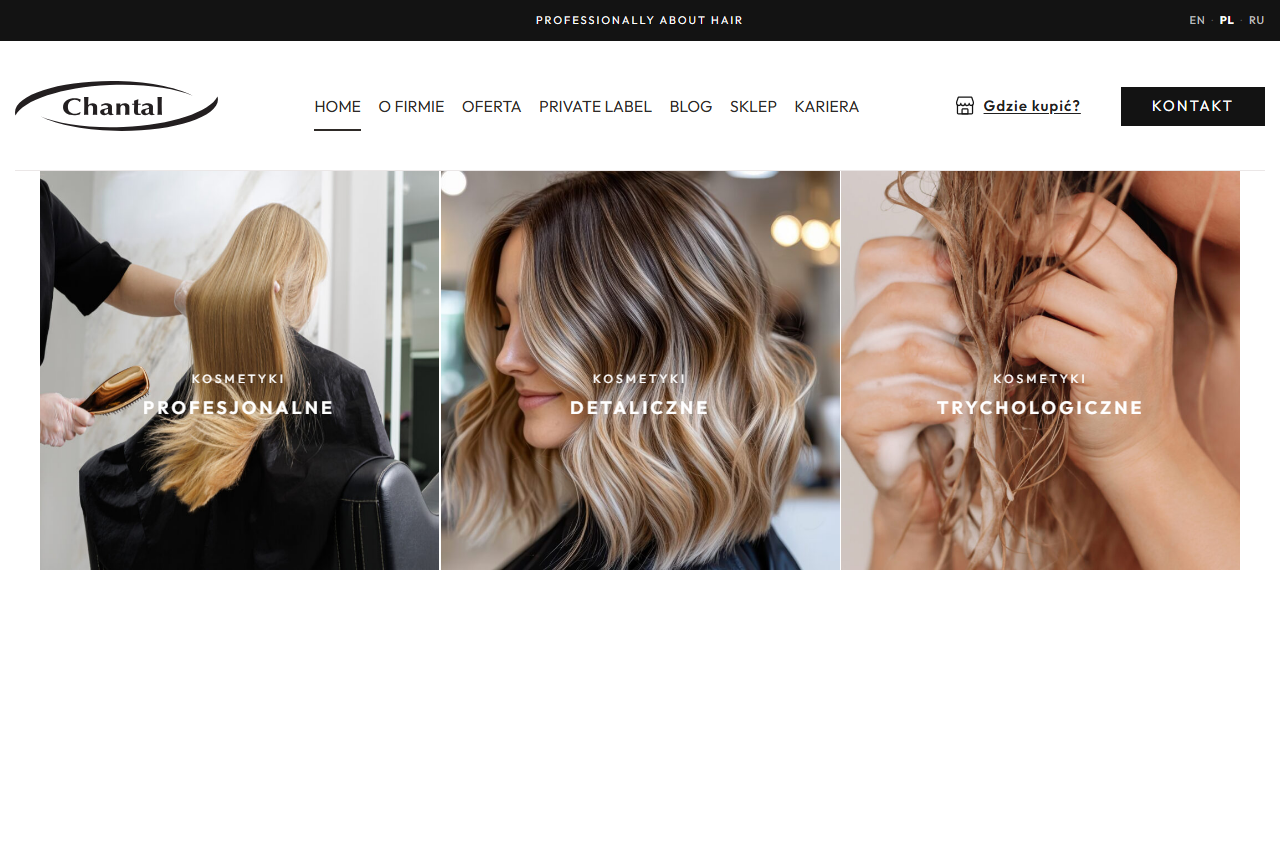
HQ: Wiązowna, near Warsaw · Type: Hair-care manufacturer with private label · Best known for: Salon and trichological hair products
Chantal has been making hair cosmetics since 1989 and runs five of its own brands across salon and drugstore channels, including Prosalon and Sessio. A factory that formulates colourants and scalp treatments every day carries technical depth that a general skincare plant simply will not have. Malaysian brands entering the hair category — particularly scalp and anti-hair-fall products, which sell strongly here — will find the conversation more productive than with a generalist. The site runs in Polish, English and Russian, so export enquiries are clearly expected.
Clover Cosmetics — the lowest published minimum on this list
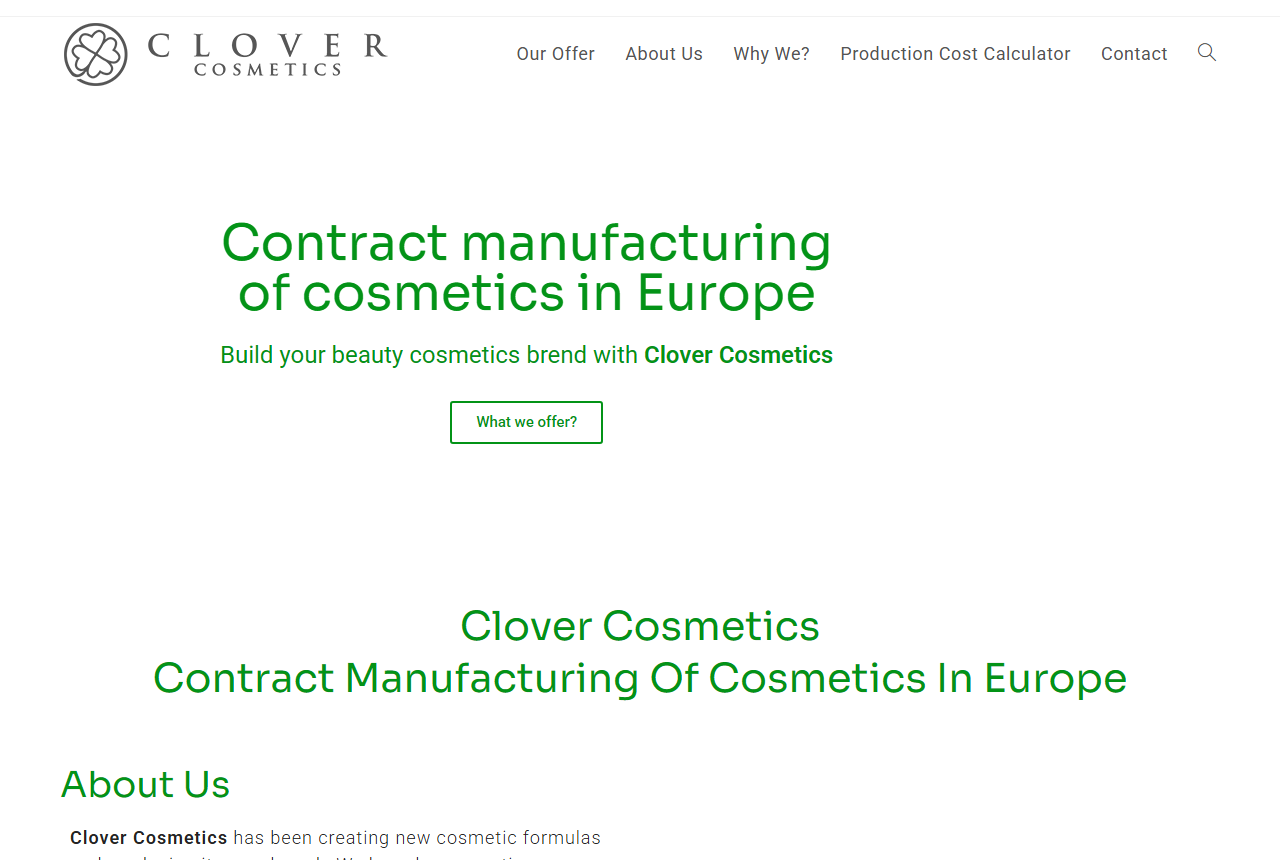
HQ: Katowice region · Type: Contract manufacturer and private label · Best known for: Small first runs across a wide skincare catalogue
Clover sells its contract work through an English-language site and publishes numbers most factories keep behind a sales call: production from 25 kg of bulk and private-label runs from around a thousand pieces. Its catalogue spans face, body, hair, men’s, baby and foot care, and it states it prepares the EU Safety Assessment Report. For a Malaysian founder testing three or four SKUs before committing capital, that published floor is the difference between a real quotation and a polite decline.
CosmoLabs — white label with a named GMP certifier
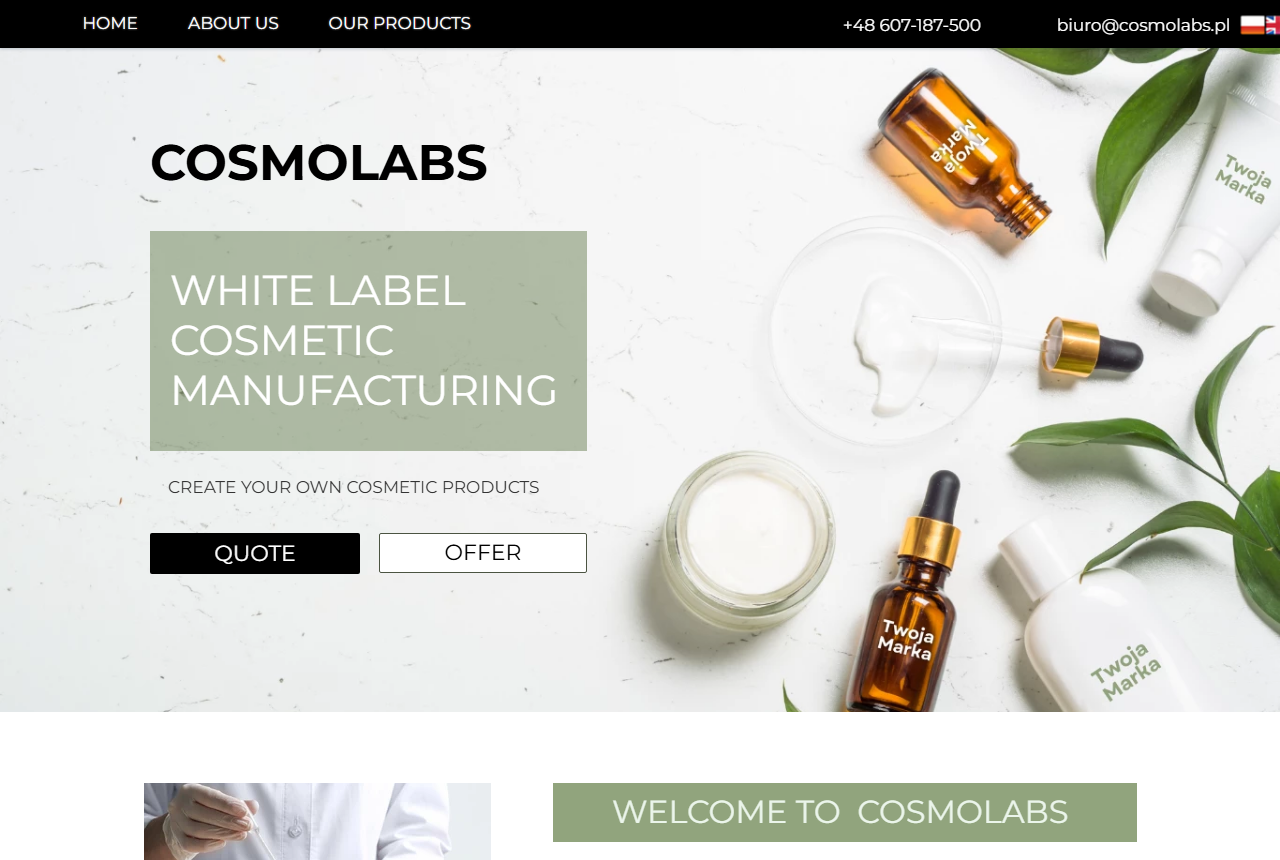
HQ: Toruń · Type: White-label and contract manufacturer · Best known for: Flexible batch sizes on mainstream formats
CosmoLabs works the classic white-label model: choose or adapt a formulation, and the factory produces, fills, labels and hands over documentation. What is worth noting is that it names DEKRA as the body certifying its ISO 22716 GMP, rather than making an unattributed claim — a small detail that makes verification straightforward when you are building your NPRA file. Product coverage is everyday skincare and hair care, which suits brands whose differentiation lives in positioning rather than in unusual actives.
Cristal Cosmetics Laboratory — cosmetics and supplements together
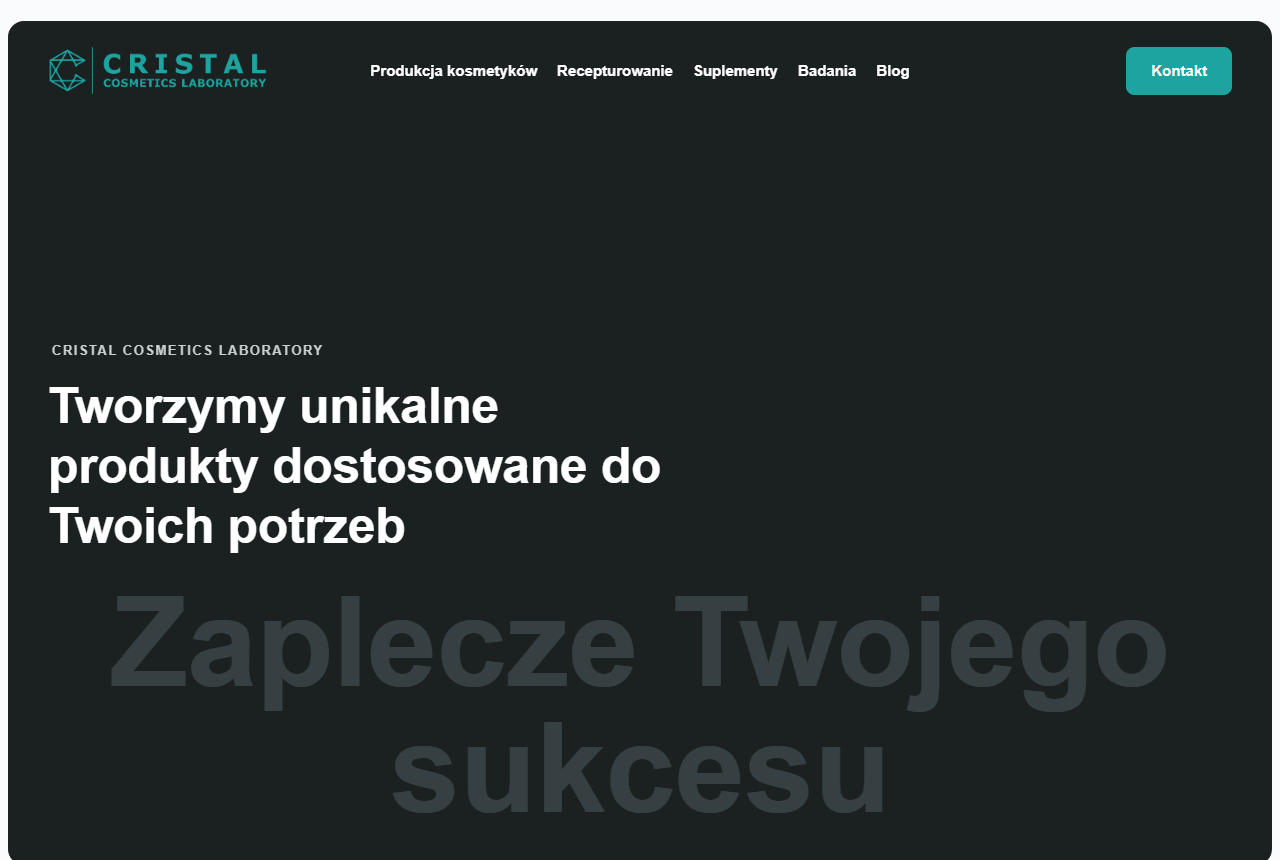
HQ: Kraków · Type: Family-owned contract laboratory · Best known for: Dual cosmetic and supplement production
Cristal is a family business running contract manufacturing for cosmetics and dietary supplements alongside formula development, registration and testing. Beauty-from-within is one of the fastest-moving segments in the Malaysian market, and a supplier that can handle a serum and its companion collagen drink removes an entire second sourcing relationship. Be aware that ingestibles cross into a different Malaysian regulatory track — supplements are registered products, not notified ones — and that the company’s website is Polish-only, so establish the working language in your first email.
Dr. Miele Cosmed Group — retail-scale private label
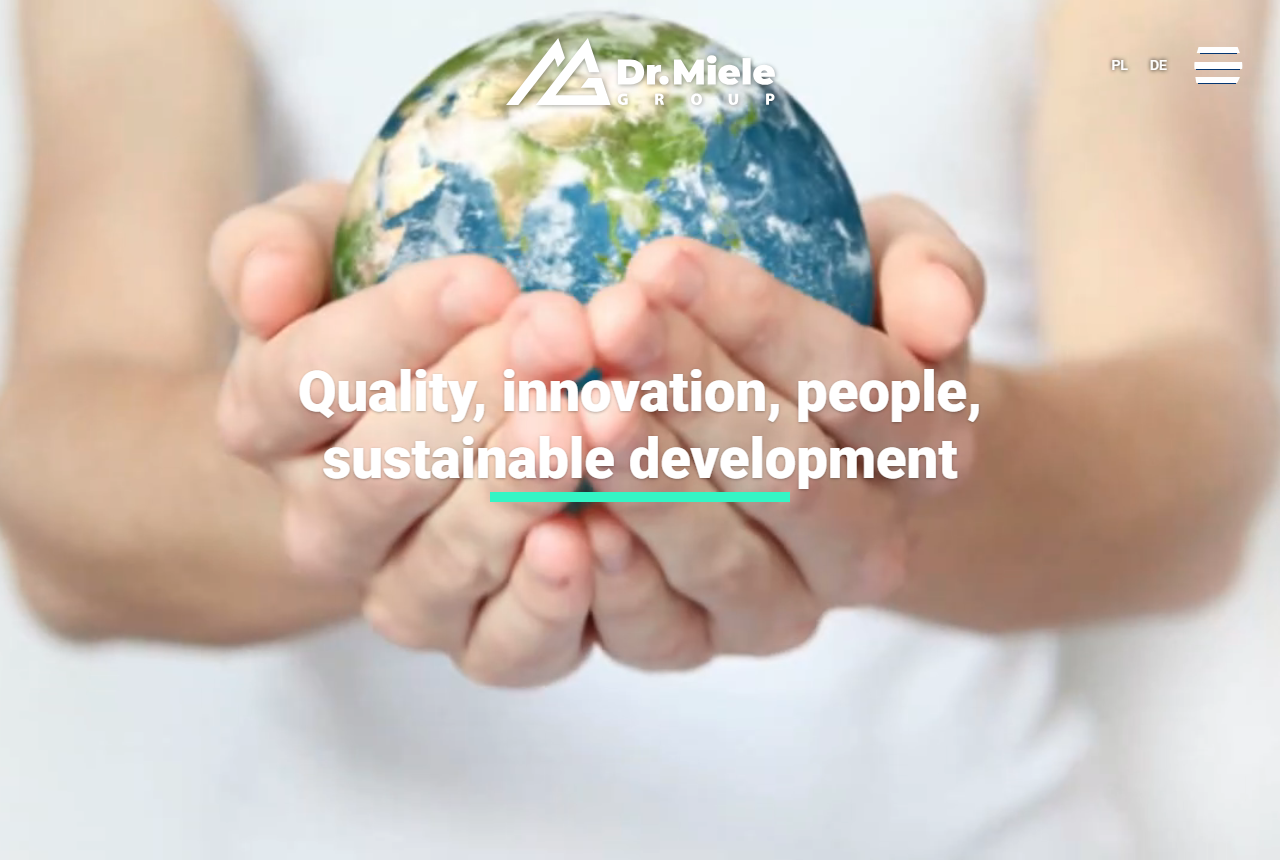
HQ: Plants at Radom, Jawor and Gniezno · Type: Listed FMCG group with a B2B arm · Best known for: Private label for European retail chains
Formerly Global Cosmed and renamed after a 2024 merger, this is the largest company profiled here and the only one listed on the Warsaw Stock Exchange. It develops and produces private label for major European retailers alongside its own household and personal-care brands. That tells you exactly who it is built for: buyers ordering at chain-retail volumes, not founders launching a first line. If your Malaysian business is a distributor or a retail group building a multi-SKU own label, it belongs on your list; if you are pre-launch, it almost certainly does not.
NAAN Laboratorium Biokosmetyki — natural positioning, no lock-in
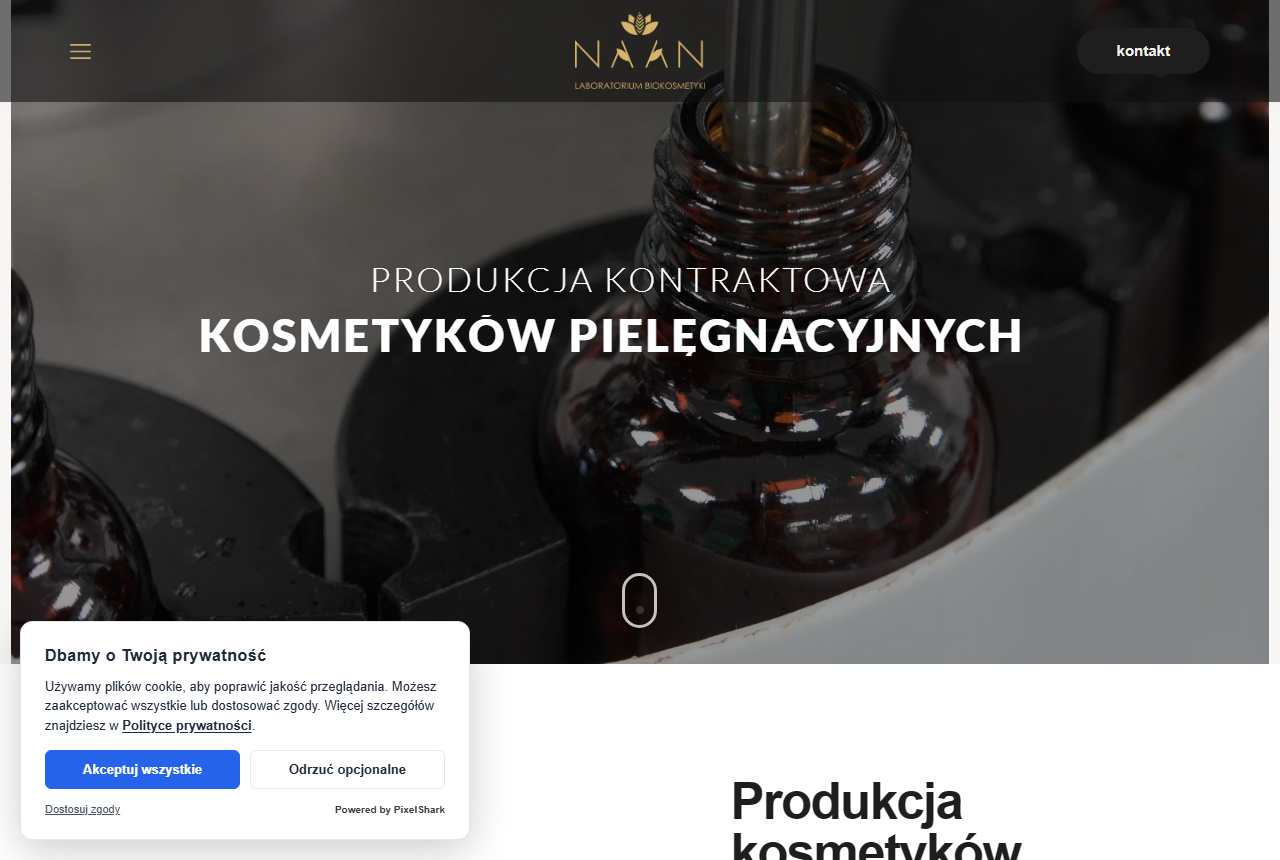
HQ: Łódź · Type: Contract laboratory · Best known for: Bio-positioned formulas from 60 kg
NAAN covers the full chain from formula development and testing through documentation, raw-material sourcing, production, packaging and logistics, with production starting at 60 kg and no long-term commitment required. The absence of a contractual lock-in matters more than it sounds for a young brand: you can produce when demand appears rather than forecasting a year ahead. The natural-ingredient positioning is clear from the branding, but specific organic or GMP certificate references are not published, so request them in writing before you build marketing claims on them.
NISHA Manufacturing — custom formulation for niche brands
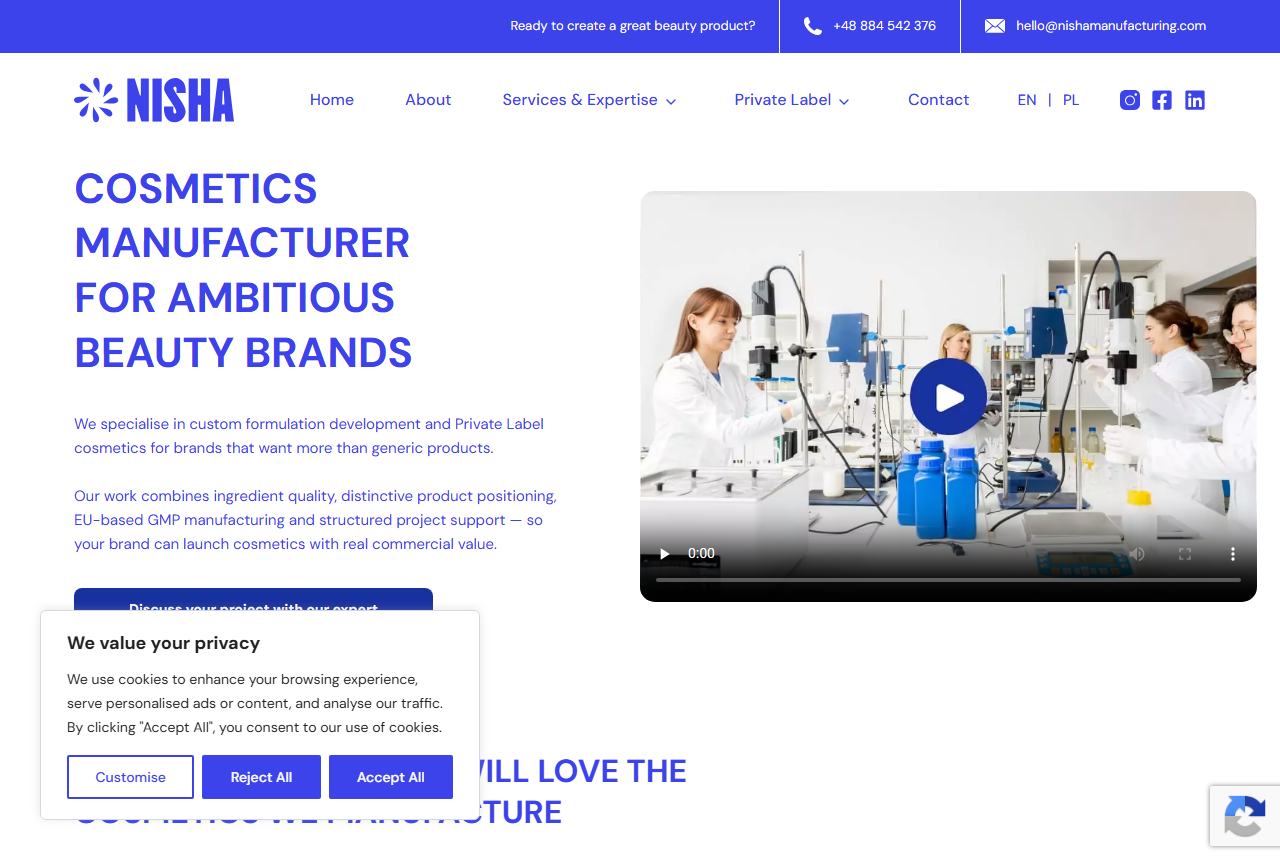
HQ: Puszczykowo, near Poznań · Type: Custom formulation and private label · Best known for: Brands that want a distinctive formula
NISHA states plainly that it works with brands wanting more than generic products, and supports that with an in-house R&D team, a library of more than ten thousand tested ingredients and a GMP facility audited annually to ISO 22716. Coverage runs from serums and creams through body and hair care into powder colour cosmetics. Minimum order quantity is described as flexible rather than published, which in practice means negotiated per project — reasonable for bespoke development, and a number to pin down early so it does not surprise your costing.
Passage Cosmetics Laboratory — the broadest certification list
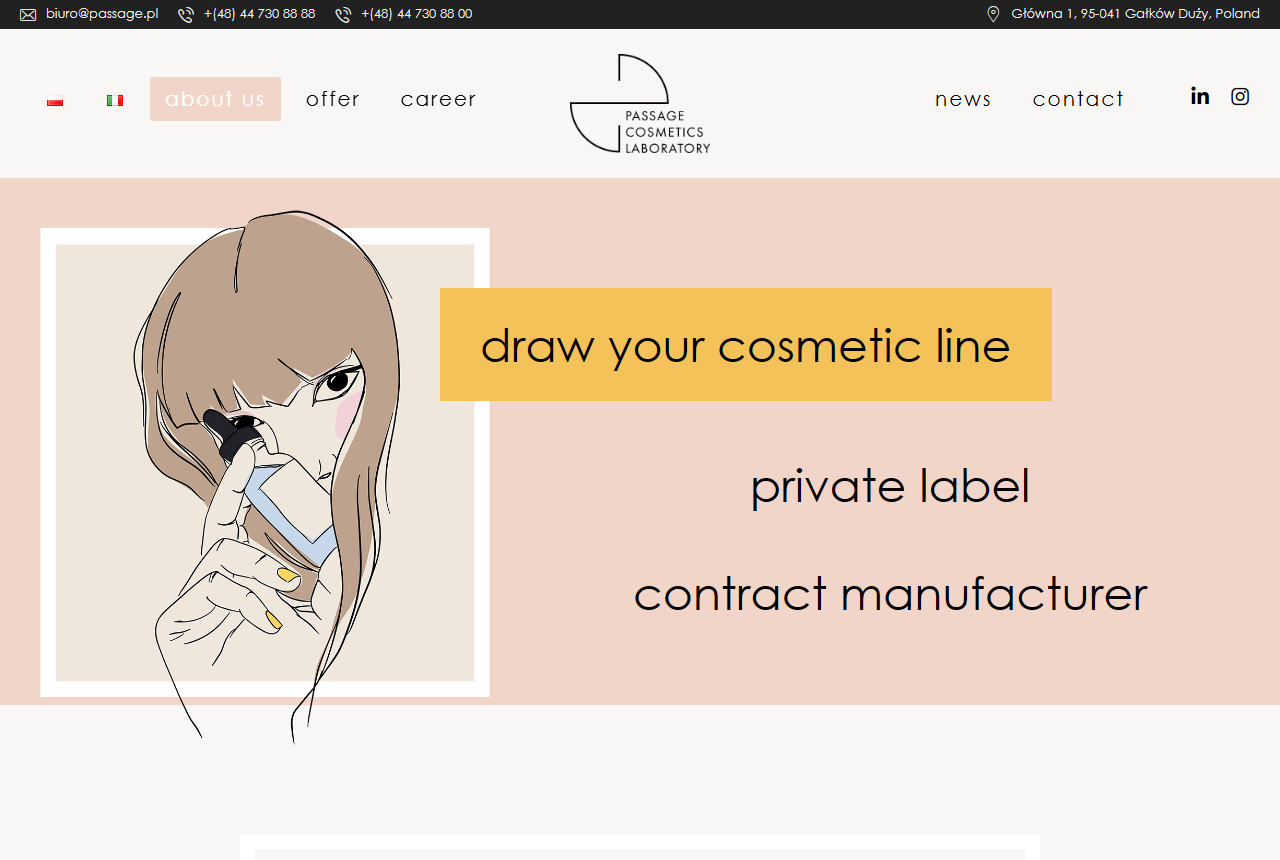
HQ: Gałków Duży, near Łódź · Type: Full-service private-label manufacturer · Best known for: Category breadth and a long certification list
Trading since 1988, Passage covers skincare, hair care, body care, colour cosmetics and natural and vegan lines, with its own microbiology laboratory. For Malaysian brands the standout detail is its published certification set: ISO 9001, ISO 22716, ISO 14001, ISO 45001 and a Halal certificate dated 2025. It is the only factory on this list publishing Halal certification, which makes it the natural first call if a Halal claim is central to your positioning — though you will still need to confirm the certifying body is recognised by JAKIM before using the logo in Malaysia.
Popławska Group — professional and salon channel
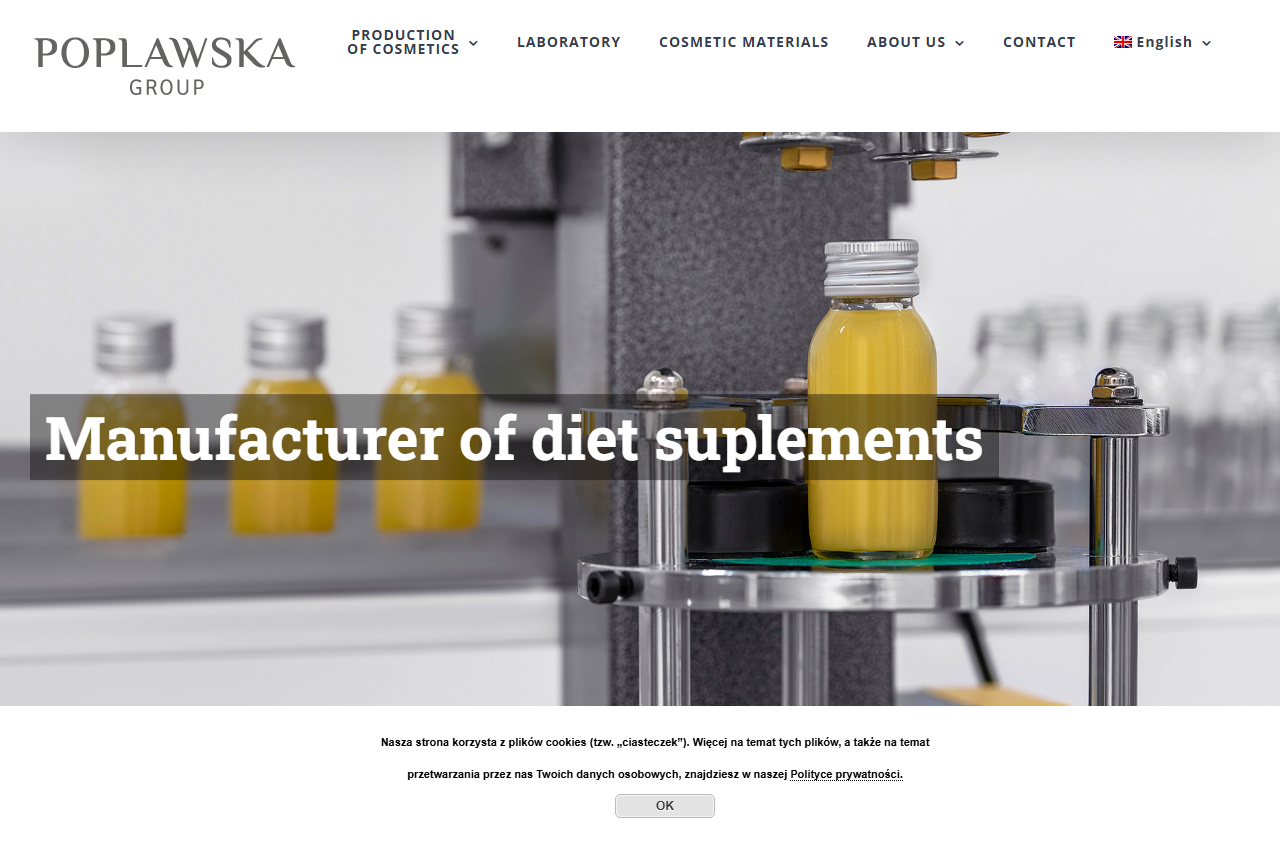
HQ: Wilczyce, near Wrocław · Type: Family group across cosmetics, liquid supplements and devices · Best known for: Professional beauty-salon lines
Popławska Group has operated for more than twenty-five years and spans professional and home-care cosmetics, liquid supplements, active raw materials, and treatment devices and disposables for salons. Forbes named it one of Poland’s hundred most valuable family companies in 2022. If you are building a clinic or salon-channel brand in Malaysia where the product and the device are sold together, that combination is genuinely useful. For a straightforward retail skincare range, the breadth can make the relationship less focused than a dedicated skincare laboratory.
Your Private Label — cosmetics, fragrance and household in one group
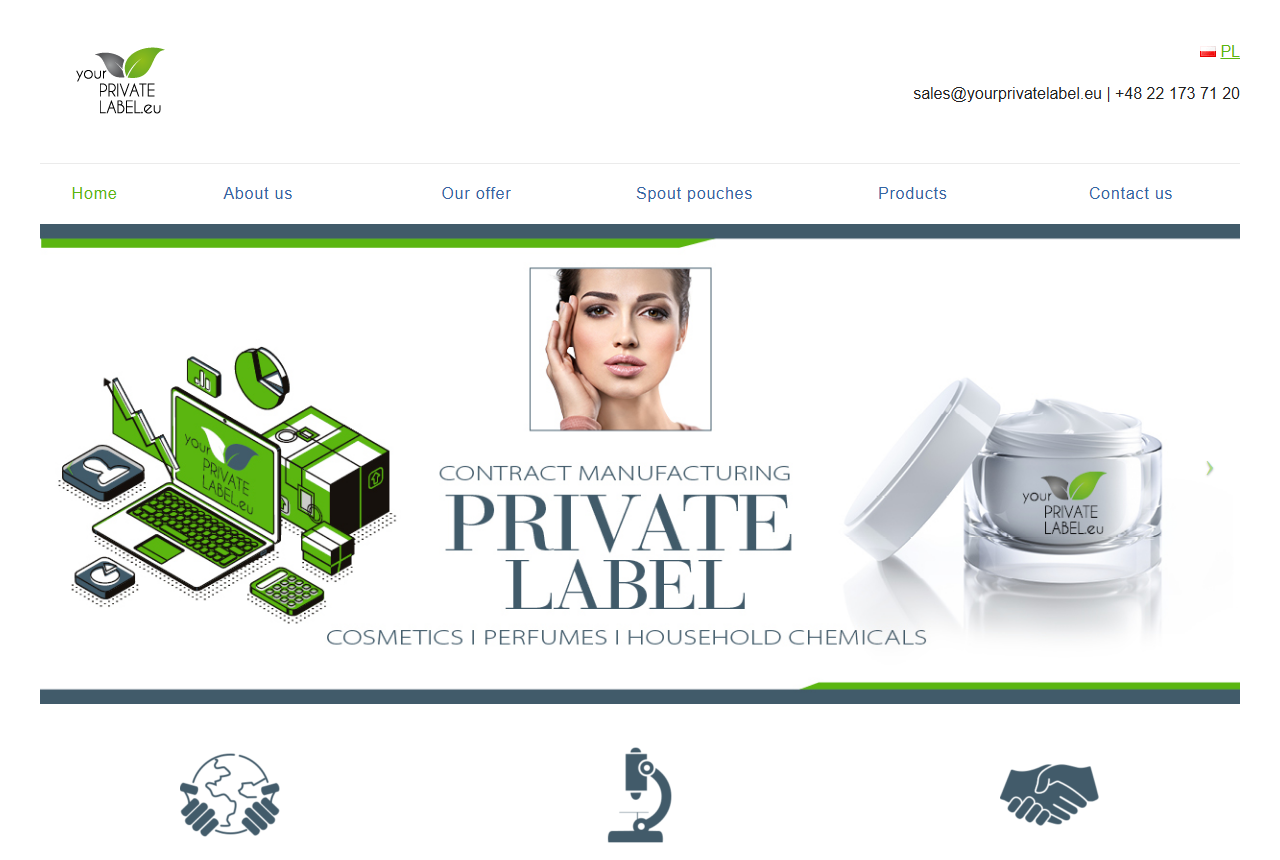
HQ: Warsaw, plants at Halinów and Morąg · Type: Private-label and OEM/ODM arm of ŚWIT Group · Best known for: Multi-category own-label programmes
Your Private Label is the contract-manufacturing face of ŚWIT Group, a Polish producer whose history runs back to 1944. The offer is tiered across ready-made private-label formulas, custom development through an internal R&D department, and full OEM/ODM production, with GMP, ISO 22716 and ISO 9001 cited alongside CPSR documentation. The unusual element is scope: perfumes, personal care and household products can be produced within the same group, which suits Malaysian distributors building a broad own-label range rather than a single-focus beauty brand.
Getting a Polish-made product notified with the NPRA
This is the step Malaysian brands most often underestimate. A cosmetic product manufactured in Poland and notified through the EU’s CPNP portal has no standing in Malaysia. Every product must be notified separately with the National Pharmaceutical Regulatory Agency through the Quest3+ system, under the Control of Drugs and Cosmetics Regulations 1984, before it can legally be supplied here. The notification is made by a Malaysian-registered company holding the notification, and it is that entity — not the Polish factory — that carries responsibility to the authority.
Practically, you will need a full ingredient list with INCI names and percentages, the manufacturer’s details and GMP evidence, product specifications, and the label artwork you intend to use. A well-organised European factory will already hold most of this in its Product Information File, but it will be formatted for EU requirements, so budget time to reformat it. Ingredient restrictions differ too: a preservative or UV filter permitted under EU rules is not automatically permitted under the ASEAN Cosmetic Directive, and that check needs to happen before the formula is locked, not after the first container ships. Our simple guide to cosmetic product notification in Malaysia walks through the Quest3+ process in more detail.
Lead times, MOQ and shipping realities from Poland
Distance changes the shape of the project. Development and sampling typically run six to twelve weeks with a European laboratory, similar to Asia, but courier cycles for samples are longer and more expensive, so each iteration costs more calendar time. Once production is complete, sea freight from a Polish port or via a northern European hub to Port Klang generally takes considerably longer than a regional shipment from Thailand or China, and you should assume a full replenishment cycle of three to four months from purchase order to warehouse.
That has direct working-capital consequences. You are financing more inventory in transit, and a stockout cannot be fixed quickly. Air freight exists as an emergency option but rarely survives contact with a mass-market price point. On minimums, remember that the low bulk figures quoted by Polish laboratories — 25 kg here, 60 kg there — describe the mass they will make, not the number of filled units you can order. Custom packaging components usually carry their own minimums in the thousands, and that is what actually sets your first order size and your landed cost per unit.
When sourcing in Malaysia still makes more sense
Poland is not the right answer for every brief, and it is worth being honest about where local manufacturing wins. If Halal certification recognised by JAKIM is central to your brand, a Malaysian factory that already holds it removes an entire workstream. If you need to iterate quickly — visiting the plant, adjusting a texture, seeing a pilot batch the same week — a supplier two hours’ drive away is worth more than a marginally better unit cost. If your first order is genuinely small, domestic freight and a shorter cash cycle usually beat any ex-works saving from Europe.
Local sourcing also simplifies the regulatory file. A Malaysian manufacturer already works to ASEAN Cosmetic Directive requirements and knows what the NPRA expects in a Quest3+ submission, so the documentation arrives in the right shape. Many established Malaysian brands run a hybrid: a hero product manufactured in Europe or Korea for its origin story, with the volume lines produced locally. You can browse Malaysian options in our cosmetics, skincare and personal care guides, and compare an Asian alternative in our roundup of cosmetic factories in China for Malaysian brands.
How to shortlist and approach a Polish factory
Start by writing a one-page brief before you contact anyone: product category, target texture and claims, pack format, first-order quantity, target landed cost and launch date. European laboratories respond well to specific briefs and slowly to vague ones. Send it to three or four factories from this list whose category focus matches, and ask each the same four questions: minimum order in filled units of your pack, total lead time from approved sample to shipment, what documentation they provide for a non-EU regulatory submission, and who holds the formula if the relationship ends.
That last question is the one most founders forget. If the factory developed the formula, it may treat it as its own intellectual property, which means you cannot move production later without reformulating. Settle ownership in writing before development starts, not after. Also confirm who acts as the EU Responsible Person if you also intend to sell in Europe, and make sure that arrangement does not quietly bind you to a single supplier. For a wider view of how manufacturing partnerships are structured, see our guide to scaling a beauty brand with contract manufacturing.
Costing a Polish project honestly
Ex-works unit price is the least useful number in the quotation. Build your costing from the delivered cost of a saleable unit in Malaysia: bulk and filling, primary and secondary packaging, artwork and plates, stability and compatibility testing, the safety assessment, freight and insurance, import duty and SST where applicable, plus the NPRA notification cost and your own time. A European quotation that looks twenty per cent above an Asian one can end up comparable once you account for the documentation quality and the lower rework risk, and it can equally end up far worse once freight and financing are added.
Run the calculation on realistic first-order volumes rather than a hopeful year-two forecast. Most first launches from Europe fail commercially not because the product was wrong but because the founder priced against a volume they never reached. If the numbers only work at ten thousand units, and you can honestly sell two thousand in year one, the project is not ready — and a local run may be the better first step.
Frequently asked questions
Can I use an EU CPNP notification instead of notifying with the NPRA?
No. The two systems are independent. A cosmetic product notified through the EU’s Cosmetic Products Notification Portal has no legal standing in Malaysia, and it must be notified separately with the NPRA through Quest3+ under the Control of Drugs and Cosmetics Regulations 1984 before it can be supplied here. The EU dossier is still useful because it contains most of the technical data you need, but it will require reformatting and an ingredient check against ASEAN Cosmetic Directive restrictions. Verify current requirements with the NPRA before you commit to a formula.
Are Polish cosmetic factories Halal certified?
Most are not, because their core market has no Halal requirement. Among the ten profiled here, only Passage Cosmetics Laboratory publishes a Halal certificate, dated 2025. If a Halal claim is central to your brand you must confirm that the certifying body is recognised by JAKIM, since a foreign Halal certificate from an unrecognised body cannot be used in Malaysia. Where Halal is non-negotiable, a Malaysian manufacturer that already holds JAKIM certification is normally the faster and lower-risk route.
What is a realistic minimum first order from a Polish manufacturer?
Published bulk minimums start around 25 kg at Clover Cosmetics and 60 kg at NAAN Laboratorium Biokosmetyki, with others negotiating per project. However, bulk mass is not your order size. Custom bottles, jars, caps and cartons usually carry supplier minimums in the low thousands of units, and that is what sets your real first order. Ask every factory to quote a minimum expressed in filled units of your chosen pack, together with the landed cost at that quantity, before you plan a launch.
How long does shipping from Poland to Malaysia take?
Plan on a full cycle of roughly three to four months from purchase order to goods in your Malaysian warehouse, covering production, quality release, inland transport to port, ocean freight and customs clearance at Port Klang. Sea freight alone is typically several weeks longer than a shipment from within Asia. Because a stockout cannot be corrected quickly at that distance, hold more safety stock than you would with a regional supplier and place replenishment orders earlier than instinct suggests.
Disclaimer: this article is general information based on each manufacturer’s published material as at July 2026 and is not regulatory or commercial advice. Certifications, minimums and capabilities change — verify them directly with the manufacturer, and confirm current cosmetic notification requirements with the National Pharmaceutical Regulatory Agency (NPRA) before importing or supplying any product in Malaysia.
About the author
Arif Hakim is a regulatory and compliance specialist who writes about cosmetic product notification, GMP and cross-border sourcing for Malaysian beauty brands.