By Daniel Yeoh · OEM Sourcing & Supply Chain Writer · Published 22 Jul 2026
Sunscreen has become one of the busiest sourcing requests we see from Malaysian and regional beauty founders right now, and it makes sense: the country sits close to the equator with a year-round UV index most Western markets never see, so local buyers already understand why sun protection sells. The harder question is finding an OEM sunscreen factory in Malaysia that can actually formulate SPF products well, rather than a general skincare line that lists “sunscreen” as an afterthought on a services page.
This guide walks through seven Malaysian sun-care and skincare manufacturers worth shortlisting, then goes further than a simple list — covering MOQ and sampling realities, the NPRA and Halal steps a sunscreen product actually needs, rough cost and lead-time expectations, and the formulation questions that separate a factory that merely says “we do sunscreen” from one that can back it up.
Key takeaways
- Genuine SPF/sun-care specialists are rarer in Malaysia than general skincare OEMs — most factories fold sun protection into an existing cream or serum line rather than running a dedicated sun-care programme.
- Everfresh Premium and PE Cosmeceutical stood out for documented, dedicated sunscreen/SPF formulation work.
- Dr Orizi is a solid generalist pick if you want sunscreen made alongside a wider skincare or personal-care range, not a specialist sun-care house.
- Always ask for the specific SPF/PA testing method and stability data — a factory quoting “SPF 50” without test documentation is a red flag.
- NPRA notification and JAKIM Halal status apply to sunscreen the same way they apply to any Malaysian cosmetic — budget time and paperwork for both.
Why source sunscreen manufacturing out of Malaysia
Malaysian contract manufacturers build products for a climate that punishes weak formulations — heat, humidity and intense UV all year round — which forces a baseline of stability and sweat/humidity resistance that factories in temperate markets rarely have to solve for. That local pressure-testing is a genuine advantage if your own target market (Malaysia, wider ASEAN, or similarly humid export markets) shares those conditions.
On top of climate fit, Malaysia offers a mature GMP and Halal manufacturing base, English-language business communication, and reasonably fast air/sea freight into Singapore, Indonesia, Thailand and the rest of ASEAN — useful if sun care is one SKU in a wider regional launch rather than a single-market product.
Weighing a temperate-market alternative to Malaysian sun-care sourcing? Our roundup of Germany’s OEM/ODM sunscreen manufacturers profiles three German specialists and explains why dedicated sun-care contract manufacturing is a narrower niche there than in Malaysia.
1. Everfresh Premium
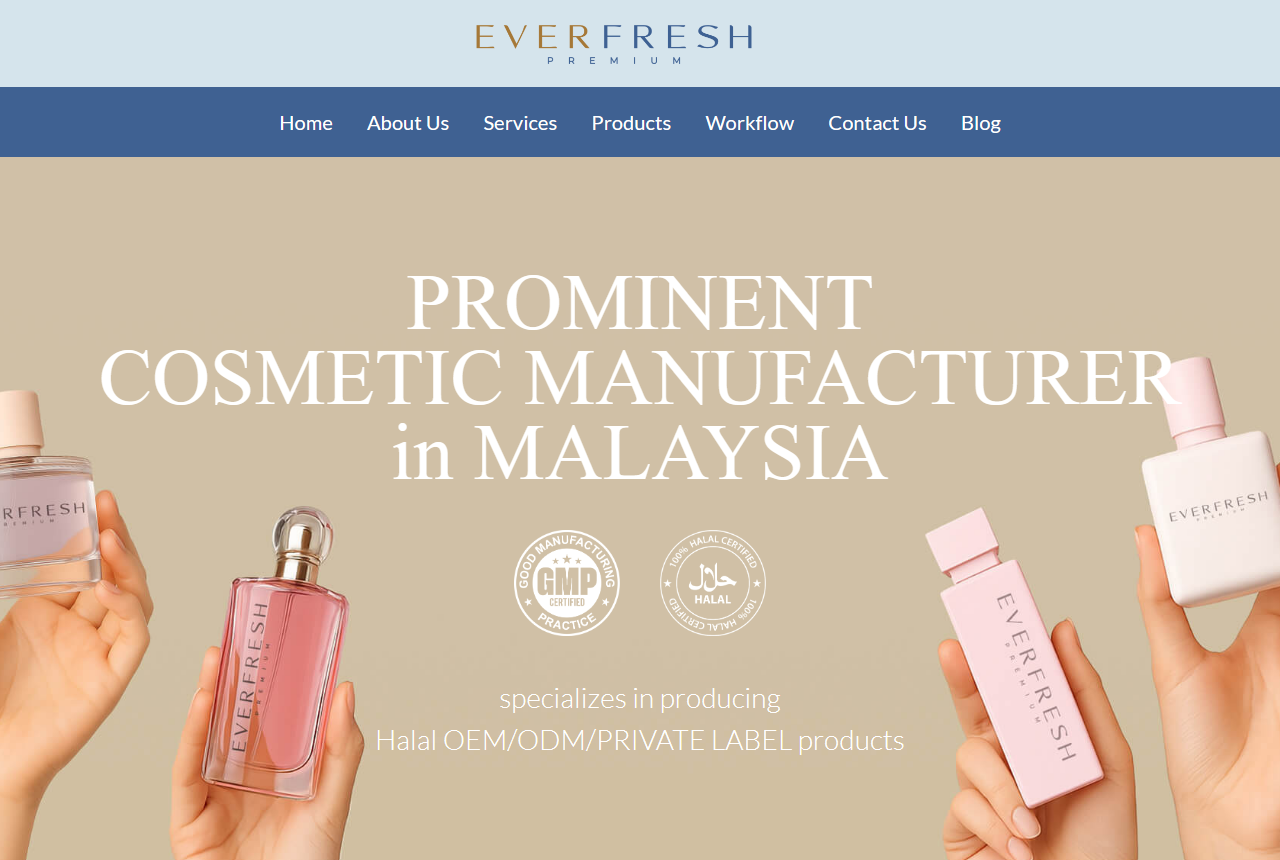
Based in: Lunas, Kedah · Website: www.everfreshpremium.com
Of everyone on this list, Everfresh Premium is the one that treats sun care as its own product line rather than a variant of a moisturiser. It formulates serums, mists, sticks, tinted sunscreens and BB-cushion sun formats, working with both chemical and physical (mineral) filter systems and quoting SPF ranges up to 30–50 with PA+++ ratings. If your brand concept is a sun-care range first and everything else second, this is the factory to open a conversation with.
2. PE Cosmeceutical
Based in: Bayan Lepas, Penang · Website: www.pecosmeceutical.com
PE Cosmeceutical has been running since 1998 and carries both cGMP and Halal certification, with a face-care catalogue that includes a sunscreen foundation alongside cleansers, serums, peels and masks. The angle here is different from Everfresh: this is a factory built around complexion and treatment products where sun protection is one line in a broader face-care programme, which suits a brand that wants its SPF product to sit naturally next to a serum or foundation from the same maker.
3. Dr Orizi (M) Sdn. Bhd. | ORIZI Group
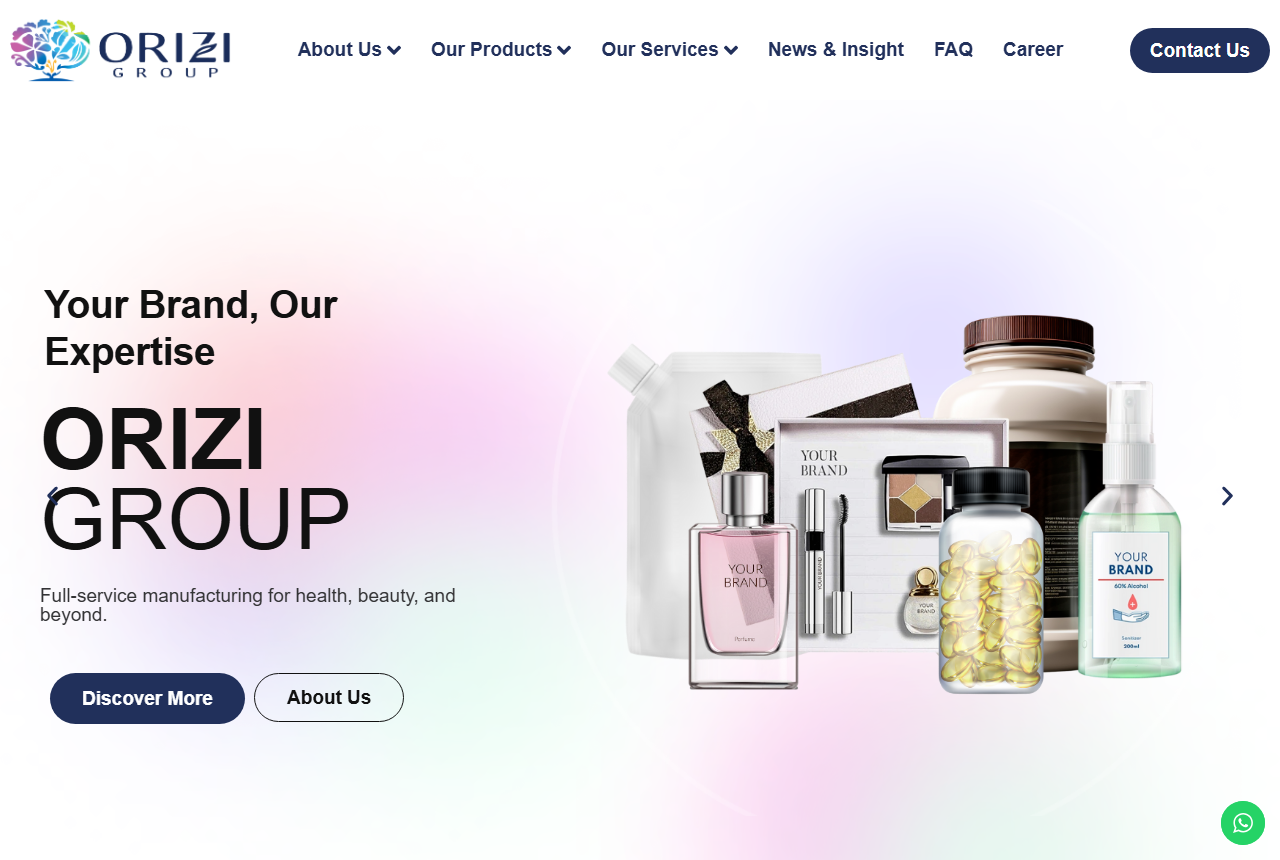
Based in: Ipoh, Perak · Website: www.orizigroup.com
To be upfront: Dr Orizi is not marketed as a sunscreen specialist the way Everfresh or PE Cosmeceutical are. What it offers instead is breadth — an OEM/ODM ecosystem spanning skincare, personal care and colour cosmetics, with formulation support and NPRA/KKM plus Halal documentation handled end to end. For a founder who wants a sunscreen manufactured under the same roof as the rest of a personal-care range, rather than juggling a separate sun-care specialist and a separate skincare factory, Dr Orizi is a genuinely convenient option — just go in knowing you’re buying convenience and range, not a dedicated SPF lab.
4. Ewence Bio-Tech Resources Sdn. Bhd.
Based in: Kuala Lumpur · Website: www.ewencegroup.com
Ewence has been an OEM/ODM skincare manufacturer since 2000, listing GMP, ISO 9001 and halal certification among its credentials (company-stated; we found no JAKIM directory record under Ewence Bio-Tech Resources Sdn. Bhd. on 13 September 2026), with a formulation catalogue that runs through whitening, anti-ageing, anti-acne treatments and a UV cream. That UV cream line is the relevant piece here — it reads more as a lightweight daily-wear UV cream than a beach-day SPF 50 lotion, so this is a better fit for brands wanting a UV-protective step in a daily skincare routine than for a dedicated outdoor sun-care collection.
5. Sky Resources Sdn. Bhd.
Based in: Penang · Website: sky-resources.com
Sky Resources traces back to 1991 and has grown from a straightforward skincare OEM into a wider private-label partner touching personal care, body care and related categories. It doesn’t market sun care as a headline specialty, but its long skincare formulation history means adding a sun-protection SKU into an existing order — alongside a moisturiser or body-care line you’re already sourcing from them — is a realistic ask rather than a stretch.
6. MM Cosmetic Sdn. Bhd.
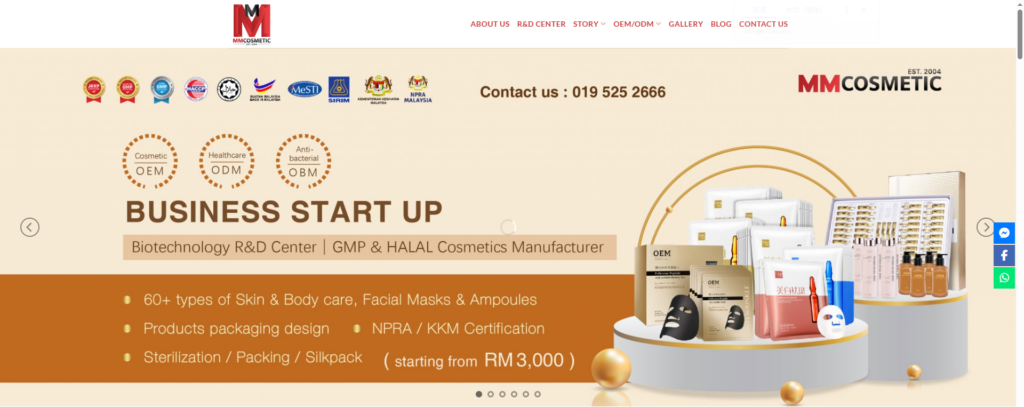
Based in: Ulu Tiram, Johor · Website: www.mmcosmeticgmp.com
MM Cosmetic runs a GMP factory built around speed — ready formula concepts for creams, serums, ampoules and toners that let a brand skip a lengthy custom-development cycle. If your priority is getting a sun-protection cream to market on a tight timeline rather than commissioning a bespoke SPF formula from zero, MM Cosmetic’s ready-concept approach is worth a conversation, with the trade-off that you’re working from an existing base rather than a fully custom one. One check before you sign: MM’s website lists a halal credential, but JAKIM’s halal directory showed no record under MM Cosmetic Sdn. Bhd. or its related entity MM Biotechnology Sdn. Bhd. on 13 September 2026, so a halal-positioned sunscreen should start with a certificate number, not a website badge.
7. Intercosmetic Asia Pacific Sdn. Bhd.
Based in: Sungai Buloh, Selangor · Website: www.intercosmeticasia.com
Intercosmetic Asia Pacific has been operating since 1998 and is first and foremost a colour cosmetics and perfumery manufacturer, with technology partnerships spanning Italy, Switzerland, France, Korea and Japan. It earns its spot here for a narrower reason: if your product concept is a tinted sunscreen, a sun-protective BB cushion, or another hybrid that blends makeup coverage with SPF, its colour cosmetics expertise is more relevant than a plain sunscreen lotion would need.
Choosing between a sun-care specialist and a generalist skincare OEM
The seven factories above split roughly into two camps: dedicated or near-dedicated sun-care formulators (Everfresh, PE Cosmeceutical), and broader OEMs that can fold sunscreen into a wider order (Dr Orizi, Ewence, Sky Resources, MM Cosmetic, Intercosmetic). Neither camp is objectively better — a specialist likely has deeper SPF-testing experience and a tighter formulation library to start from, while a generalist can be more convenient if sunscreen is one SKU among many you’re sourcing and you’d rather not manage two separate factory relationships.
If sun care is your entire brand concept, lean toward the specialists. If it’s one line item in a broader skincare or personal-care launch, a capable generalist that already understands your other products may save you real coordination overhead.
MOQ and sampling: what to expect for a sunscreen line
Sunscreen formulations, particularly ones using UV filter combinations at higher SPF, tend to carry slightly higher minimums than a basic moisturiser because of the more complex, tightly-specified raw material mix. Ask each factory for the MOQ per SKU (not a blended average across your whole order), whether a stock or semi-custom base formula lowers that minimum, and what a paid sample round costs and how long it takes to turn around. Getting these numbers in writing before you commit to formulation direction avoids an unpleasant surprise once you’re ready to place a production order.
NPRA notification and JAKIM Halal: sunscreen isn’t exempt
Sunscreen sold in Malaysia is regulated as a cosmetic product and falls under the same NPRA (National Pharmaceutical Regulatory Agency) notification requirement as any other cosmetic — there is no separate “drug” classification for SPF products here the way there is in some other markets, but that also means you can’t skip notification because a product happens to carry sun-protection claims. JAKIM Halal certification, where relevant, is granted per product line and per ingredient set, so a factory’s general Halal status doesn’t automatically cover a brand-new sunscreen formula until it’s specifically certified. Our simple guide to cosmetic product notification in Malaysia walks through the NPRA process step by step if this is new territory for your team.
Cost and lead time: what a private-label sunscreen run actually takes
Expect a longer runway than a simple cream or serum: sunscreen formulations typically need more stability and SPF-verification testing before a factory will commit to a production run, which adds weeks to the front end of the timeline even before packaging and NPRA notification are factored in. Landed cost per unit should be built up from the full picture — formula, active UV filters (which are not cheap raw materials), packaging, filling, testing and notification — rather than judged on a single quoted unit price. A factory that is transparent about testing timelines up front is usually a better long-term partner than one that quotes the fastest turnaround without mentioning stability data.
Chemical vs physical filters: a formulation question worth asking early
Chemical (organic) UV filters tend to give a lighter, more cosmetically elegant finish and are generally easier to formulate at higher SPF, while physical (mineral) filters like zinc oxide or titanium dioxide are often positioned as gentler and more suited to sensitive-skin or “clean beauty” claims, at the cost of a heavier or whiter cast that needs careful formulation to manage. Ask each shortlisted factory which filter systems they have direct formulation experience with, not just which ones are theoretically available — this is one area where a factory’s actual track record matters more than a capabilities list.
Packaging, stability and shelf life for a tropical market
A sunscreen that performs well in the lab but degrades in a hot delivery van or a shop shelf near a window isn’t actually solving your customer’s problem. Ask about accelerated stability testing under heat and humidity, whether the packaging (tube, pump, stick) has been validated with the specific formula rather than assumed compatible, and what shelf-life claim the factory is willing to put in writing. This matters more for sun care than for many other product categories, since SPF products are disproportionately bought and used in exactly the conditions — heat, humidity, direct sun exposure — that stress a formulation hardest.
Questions to ask before you sign
Before committing to a factory, get clear answers on: the MOQ per SKU and whether it changes for a semi-custom vs fully bespoke sunscreen formula; the SPF/PA testing method used and whether third-party lab verification is included or billed separately; who holds the NPRA notification and Halal certificate once the product is live; the realistic lead time from an approved sample through to delivered stock; and how a batch that fails stability or SPF verification is handled. A factory with genuine sun-care experience will have ready answers to all of these; vague responses on testing specifically are worth treating as a warning sign.
Frequently asked questions
Which of these factories is best for a first sunscreen product?
For a brand built entirely around sun care, Everfresh Premium and PE Cosmeceutical have the most directly relevant formulation experience. If sunscreen is one product in a wider skincare launch, a generalist like Dr Orizi may be more convenient.
Do Malaysian sunscreen manufacturers handle NPRA notification for you?
Most established OEM manufacturers support or advise on NPRA notification, but the exact scope varies by factory. Confirm in writing who prepares and holds the notification before production begins.
Is a higher SPF always better for a Malaysian or ASEAN market?
Not necessarily — the right SPF and PA rating depends on your target customer, marketing claims and how the product will actually be used. Discuss target specifications with your factory rather than defaulting to the highest number available.
Can a factory add sunscreen to an existing skincare order?
Often yes, particularly with the broader OEMs on this list, though sunscreen’s more complex UV-filter formulation and additional stability testing usually mean a longer lead time than adding a simple moisturiser SKU. Confirm timeline expectations upfront rather than assuming it slots in at the same pace as your other products.
Update, 13 September 2026: halal statements for MM Cosmetic and Ewence Bio-Tech Resources corrected after a check of JAKIM’s halal directory.
This article is general information only; certifications, MOQs and regulatory requirements change — always verify current NPRA status, Halal scope, SPF testing documentation and capabilities directly with each manufacturer and the relevant authorities before committing.
About the author
Daniel Yeoh writes on OEM sourcing and supply chain topics for beauty brands entering the Malaysian and ASEAN manufacturing landscape.